Craster to Dunstanburgh Castle Walk: Parking and Kippers
A flat-ish mile and a bit of grass, sheep and sea, with a ruined castle at the end and kippers on the way home. Here's where to park, what it costs and where the loos are.

A flat-ish mile and a bit of grass, sheep and sea, with a ruined castle at the end and kippers on the way home. Here's where to park, what it costs and where the loos are.
The Craster to Dunstanburgh Castle walk is about 1.3 miles each way along a grassy coast path over farmland, starting from the council car park at the entrance to Craster (£3.30 for 1 hour to £9.50 all day). There are public toilets in the car park and two at the castle, which is paid entry and free for English Heritage and National Trust members.
Checked 23 October 2026. Opening times, prices and parking charges change, so the official link on each place is the one to trust.
The Craster to Dunstanburgh Castle walk is about 1.3 miles each way along the coast, from the fishing village of Craster to a ruined castle on its own headland. English Heritage, which runs the castle, calls it a 1.3-mile walk across working farmland; its directions page rounds it up to about a mile and a half of rugged coast path. Either way, it's flat enough for six and seven year olds, short enough to do before lunch, and it ends at a castle, which is the best bribe ever invented.
This guide covers where to park in Craster and what it costs, what the path is actually like underfoot (grass, sheep, the odd cow, no tarmac), the castle's toilets and snack shop, where to eat kippers or crab soup afterwards, and a handful of quieter places nearby that most people drive straight past. Half term starts on Saturday 24 October and the clocks go back on Sunday 25 October, so I've written it with short autumn afternoons in mind.
Park in the big council car park at the entrance to the village. It's in an old quarry, which the Geological Society points out was dug into the same hard dolerite rock that the castle stands on. You'll be walking on it all morning, so you may as well start by parking on it.
The council's coastal car park page (updated 16 September 2026) lists the charges as £3.30 for an hour, £5.50 for two, £7 for three and £9.50 all day, from 8am to 6pm every day including bank holidays. All the machines take coins, and the one nearest the old Tourist Information Centre also takes contactless. PayByPhone uses location code 804138, but the council itself warns the signal there is weak or patchy, so don't rely on it. Bring coins. You knew that already, really. Every car park in Northumberland is secretly a coin collection.
The Tourist Information Centre closed for good in April 2024, but the county council said at the time that the public toilets next to it would keep running, and its current toilet list shows them open all year, 24 hours. Go before you set off. There's nothing between here and the castle except grass, sheep and a lot of very open sky.
Coming by bus? English Heritage lists the Arriva X18 and the Travelsure 418 to Craster, and says showing a Travelsure, Arriva or Glen Valley bus ticket gets you 20% off a walk-up castle ticket. That's a rare reward for leaving the car at home, and it saves you the coin hunt.
From the car park, walk down towards the harbour, then turn left onto Dunstanburgh Road. That's the National Trust's own route description, and once you're past the last cottages it's simply the coast path north through the fields with the rocky shore on your right and the castle in front of you the whole way. You can't get lost. There is one path, one sea and one ruin, and even my map reading can manage that.
It's grass, not tarmac. English Heritage describes uneven ground and trip hazards at the castle, and the path out there is a farm field with a trodden line through it. In a wet week it's muddy. The National Trust says there may be cows in the field, and English Heritage asks walkers to follow the Countryside Code and the farmers' advice on livestock. Dogs on short leads, children holding hands near any cattle, and everyone walking calmly past rather than through them.
How long does it take? An adult walking steadily will do it in well under an hour. With a six and seven year old, allow longer, because the path is lined with rock pools, sheep to discuss and at least one stick of great importance. The way back always takes longer than the way out, for reasons nobody has ever explained, except that the ice cream is now behind you.
Children's legs give up about 200 metres from any castle. They recover instantly when someone mentions a gift shop.
Buggies: English Heritage says pushchairs are allowed at the castle but there are steps and uneven paths. On the path out, a chunky all-terrain buggy will cope on a dry day; anything with small wheels will hate you. A baby carrier is the easy answer. Wheelchair users will find the path hard going over grass, and the castle itself has grassed slopes.
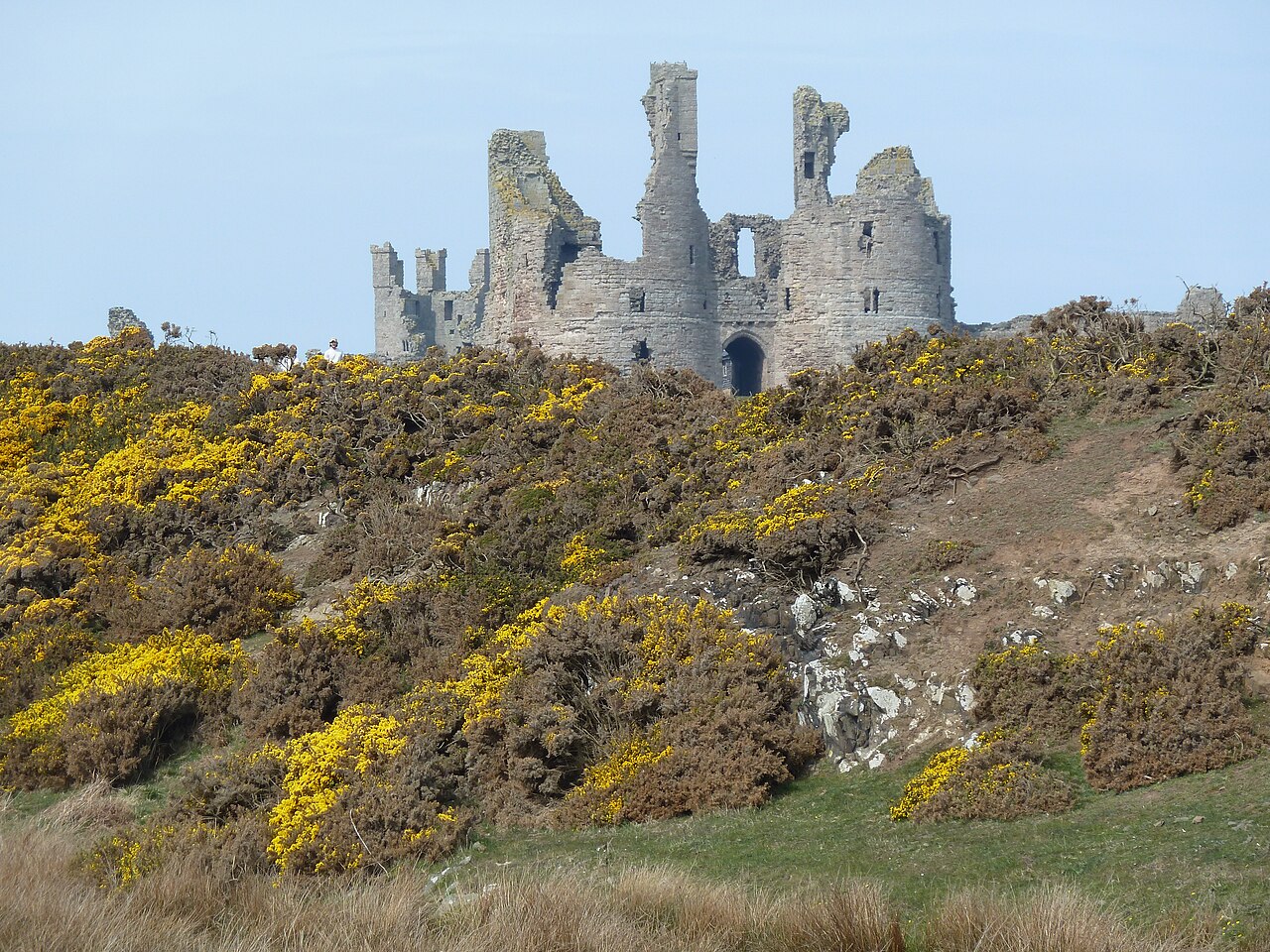
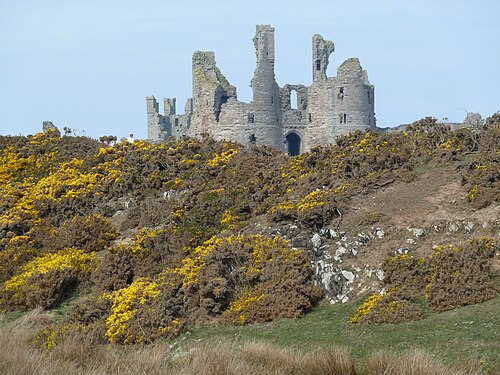
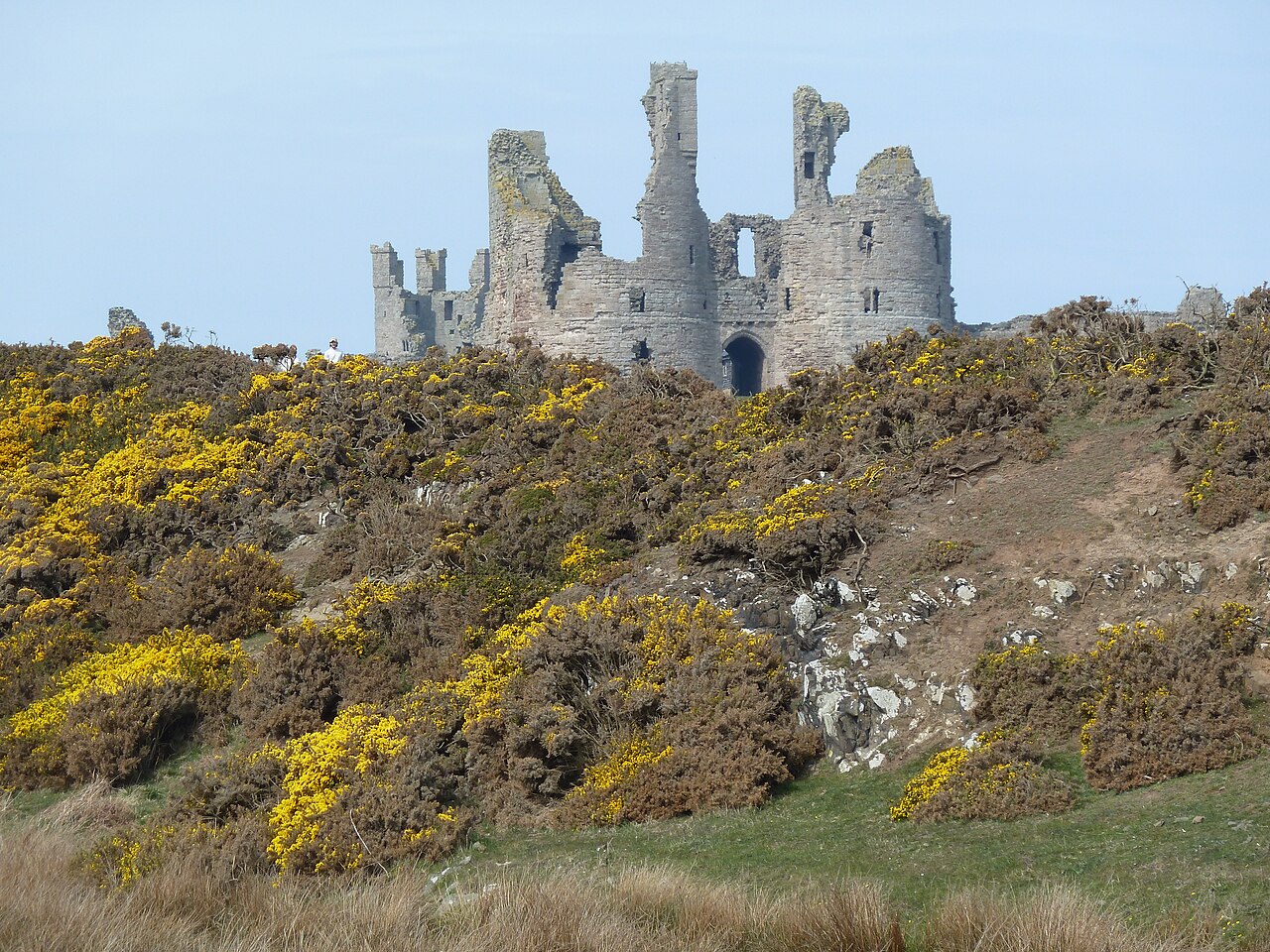
The reason you're here. English Heritage manages it for the National Trust, which owns it, so members of either get in free. It was begun in 1313 by Earl Thomas of Lancaster, the cousin and leading baronial enemy of Edward II, and English Heritage says he built it on a massive scale to proclaim his rivalry with the Crown. Which is a very long way to go to annoy your cousin, though every parent of siblings will recognise the energy.
Inside, it's a big grassy ruin with towers, walls and steep drops to the sea on the north side, so keep small hands held near the edges. There are picnic benches and tables on the site, and the shop by the entrance sells hot and cold drinks, snacks and sweets. There are two unisex toilets at the castle, which on this coast is practically luxury.
Tickets bought online by midnight the day before are 15% cheaper than on the day, and they're valid all day. When I checked, the castle page listed it as open daily, 10am to 5pm with last entry at 4pm, but winter days can change, so check the date picker on the prices page before you set off.
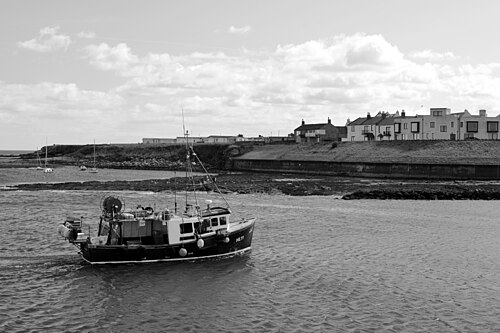
Yes, even without the castle. Craster is a small village about eight miles from Alnwick, with a stone harbour and a memorial on the harbour wall to Captain John Charles Pulleine Craster, who was killed in Tibet in 1904. It is also, more importantly for some of us, the home of the Craster kipper. You'll smell the smokehouse before you see it. Whether that's a good thing depends entirely on how you feel about kippers.
The smokehouse was built in 1856, and Historic England listed it at Grade II in November 2023. The Robson family bought it in 1906 and still run it: Neil Robson, the great-grandson, is in charge now, and they still make Craster kippers the traditional way. According to Living North's profile, the split herring are soaked in brine and then left to smoulder over oak sawdust for around 12 to 16 hours.
They're cold smoked, not cooked, so a kipper from here is something to take home and grill, not eat on the harbour wall. That makes it a good souvenir for grown-ups and a baffling one for children, who will ask why you've bought a smelly fish for the car.
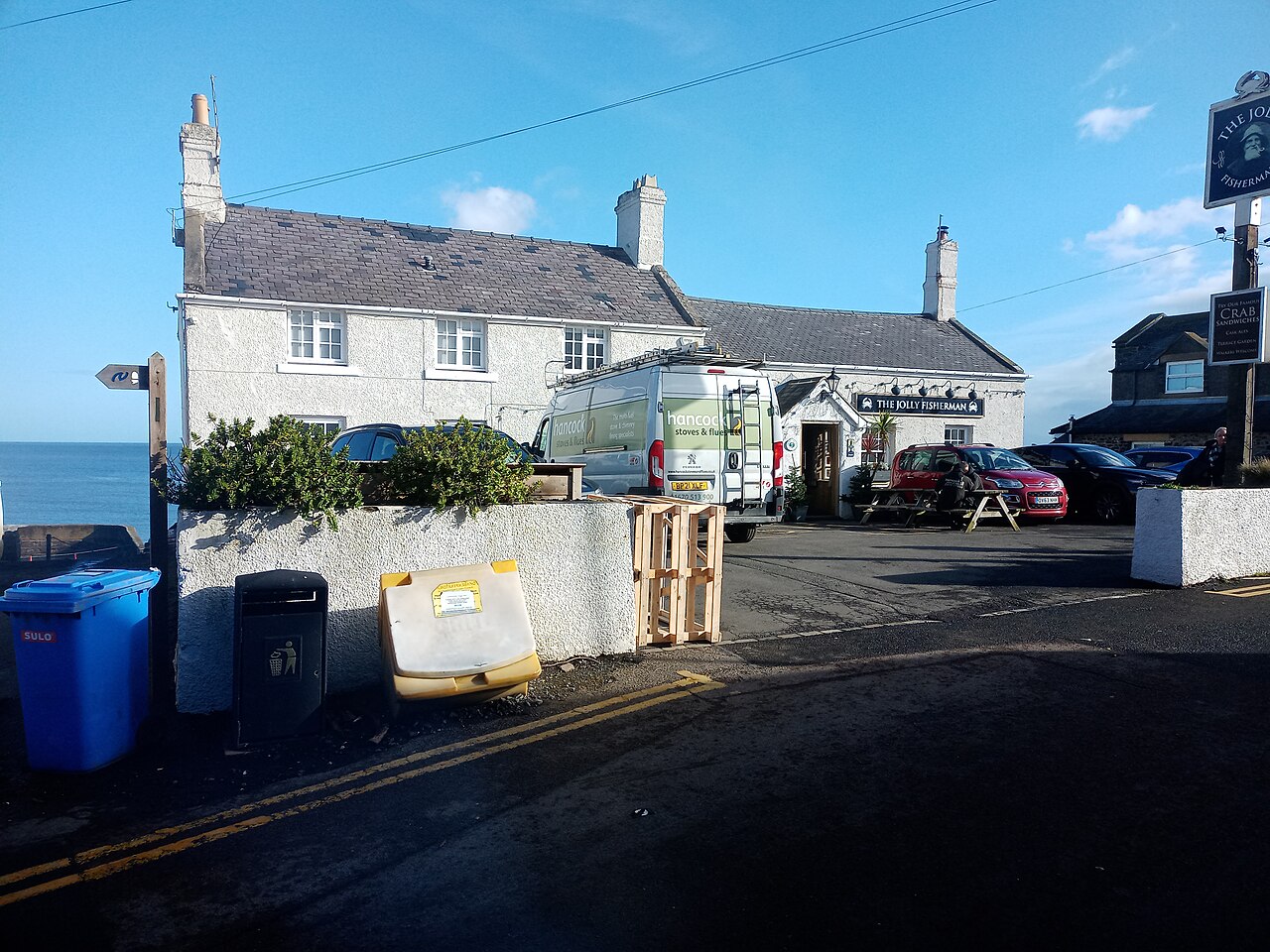
The village pub, and the answer to the question everyone types: yes, Craster has a pub. Its own site talks up its crab soup and a North Shields dressed crab salad, and promises views of Dunstanburgh Castle and the North Sea from the restaurant and the beer garden. There's a children's menu too.
The bar opens at 11am Monday to Saturday and noon on Sunday, with coffee and cake from 10am (11am on Sundays). Lunch is 11am to 3pm and dinner 5pm to 8.30pm Monday to Saturday, and Sunday lunch runs from noon to 5pm. You can book the restaurant and bar; the beer garden is walk-in only. Dogs are allowed in the bar but not in the restaurant. On a half term Saturday, book. On a wet Tuesday in November you might be fine, but I wouldn't bet my crab soup on it.
Most people do the castle, the kipper and the car. These are the quieter bits, all within a short walk or drive, that turn a two hour outing into a proper day.
Right next to the car park, behind the old Tourist Information building, and almost nobody looks in. It's a one hectare former quarry that Northumberland Wildlife Trust has let go back to scrub and woodland, with sycamore, ash, gorse and foxgloves. The Trust says it's a key stopover for migrant birds in winter, and warblers and chiffchaffs breed here.
The path through it is level and well surfaced, which after the castle field feels like walking on carpet. It's the place to go while one grown-up queues for the toilet, or when somebody small needs ten minutes of trees rather than wind.
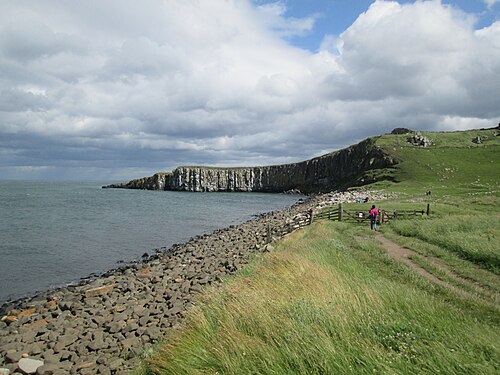
Everyone turns left out of Craster towards the castle. Turn right instead and the coast path heads south to Cullernose Point, a headland of strongly jointed cliffs made of the Whin Sill, the same dolerite that the castle sits on. The Geological Society lists the coast around Craster as one of its 100 great geosites and notes the cliffs make crowded nesting sites for seabirds in season.
The Society says the coast path can be followed at any state of the tide, while the rock platform on the shore is a low-tide-only job. Stay on the path with children, keep them well back from the cliff edge, and save the shore for when you've checked the tide. Go4awalk publishes a 4.5 mile loop from Craster via Cullernose Point and Howick, graded easy, at about two hours.
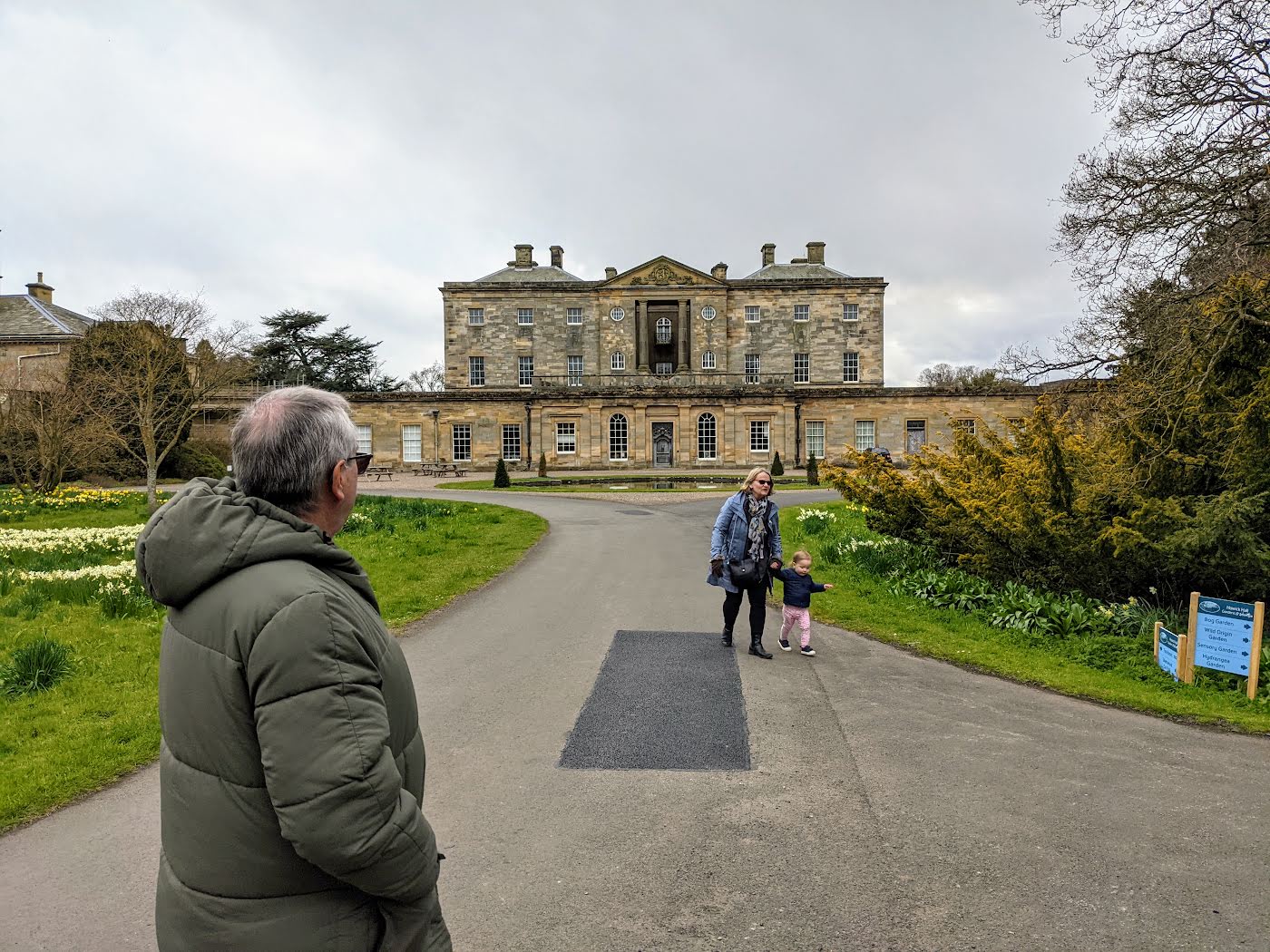
A short way south of Craster, the home of the Earl Grey whose name went on the tea, and the gardens are a lovely calm place for an hour when the coast path has blown everyone inside out. The late season runs from 1 October to mid November, open daily from 10.30am with last entry at 4pm. The East Arboretum runs down towards the coast, there's a bog garden round a pond, and the Earl Grey Tea House (garden visitors only, last orders 4pm) does teas, coffee, cakes, scones and light lunches.
I'd go for the tea. It would be rude not to, given whose house it was. There's a Family Explorer Challenge for children, though the site doesn't give details, so ask on arrival.
If the castle has been reached and the legs still work, keep going. Past the castle the path drops down to Embleton Bay, a long empty curve of sand, and carries on to the tiny village of Low Newton-by-the-Sea. The National Trust's full circuit from Craster is 7.7 miles, which is too far for most six year olds but fine for teenagers, grown-ups and anyone who's been promised a pub.
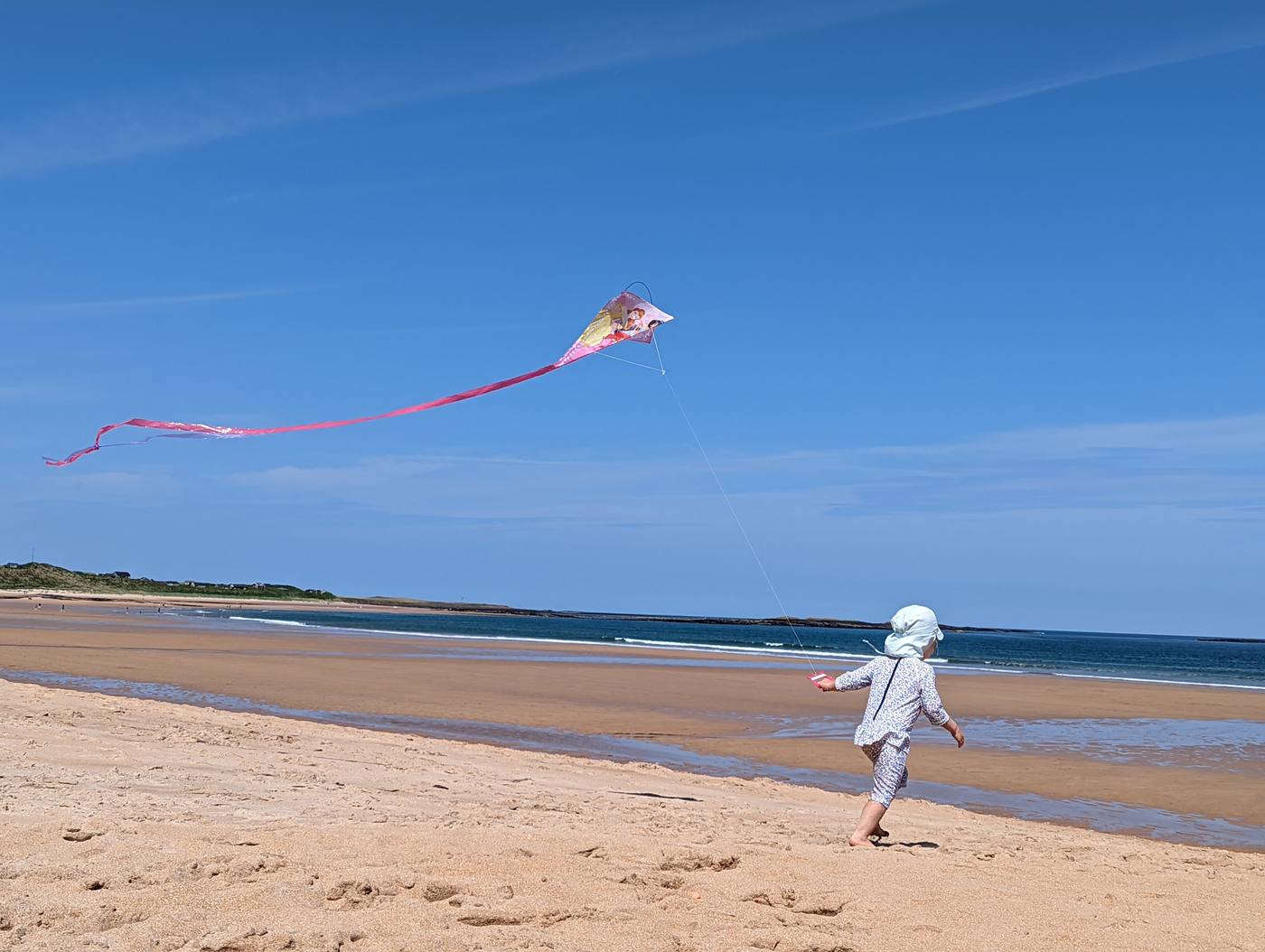
The beach on the other side of the castle, part of the National Trust's Embleton and Newton Links, with dunes behind and Dunstanburgh at the south end. It is one of the best views on the coast and, in late October, often nearly empty.
The National Trust says there's often livestock grazing in the dunes, so keep dogs on a lead through the grass. If cattle come towards you, its advice is to let the dog off and call it back when it's safe. On the sand itself, dogs are welcome. There are no toilets on the beach, and no lifeguards.
The long version: a 7.7 mile circular walk the National Trust rates as challenging, taking about three hours. It goes from Craster car park past the castle, round its inland side, past the golf course, down onto Embleton beach, across Embleton Burn, along the bay to Low Newton, then back via the Newton Pool hides, Dunstan Steads and a higher track to Craster.
It's mostly rugged, uneven ground with some firmer grass and gravel, softer dunes and a short scramble down to the beach. With October daylight going around half past four after the clocks change, start in the morning and treat it as a full day, not an afternoon stroll that gets out of hand. (Every family walk has a moment where somebody says it's only ten more minutes. It is never ten more minutes.)
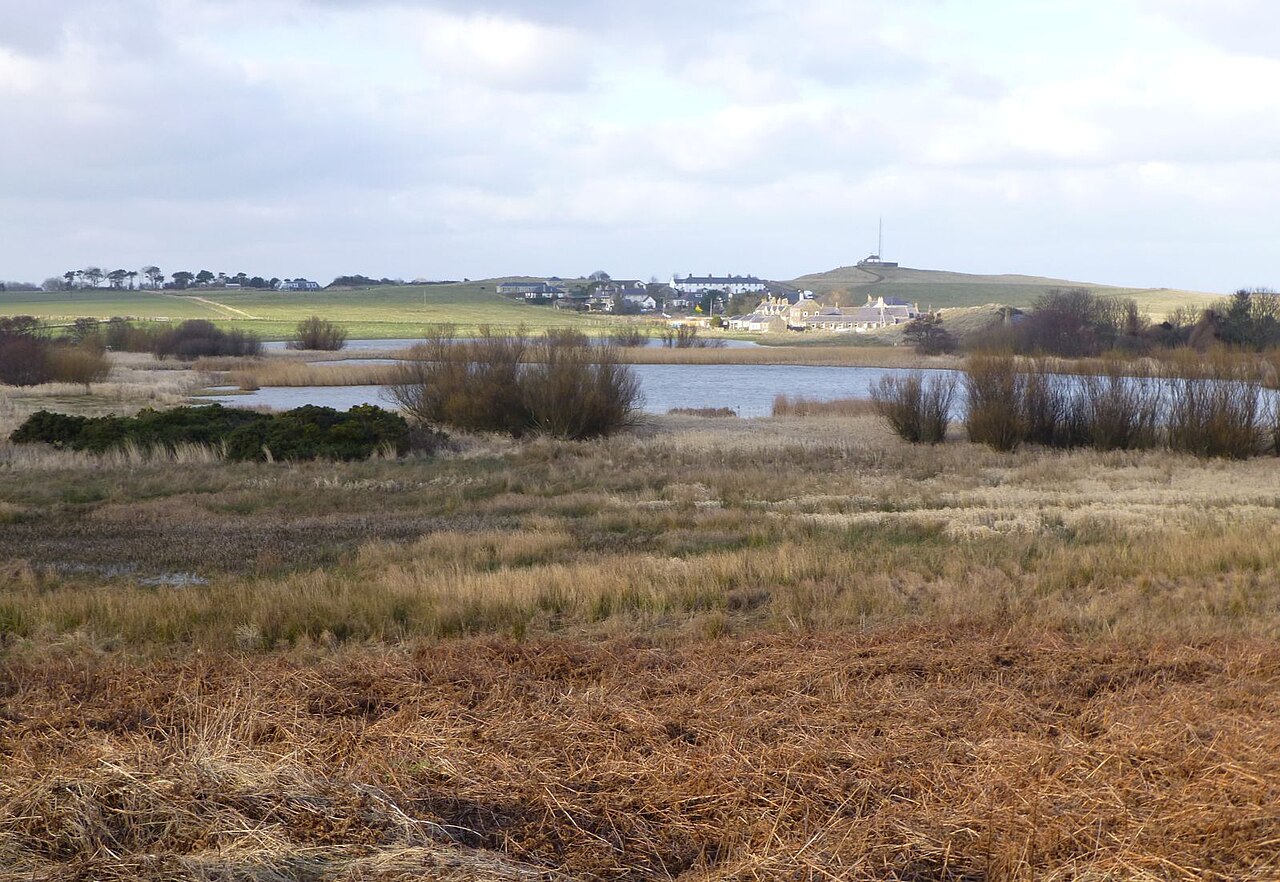
A freshwater pool behind the dunes at Low Newton with two bird hides, and the National Trust's one mile Newton Pool walk takes 30 to 40 minutes. The first 0.3 miles to the hides is surfaced and suitable for wheelchairs, and one of the hides is fully wheelchair accessible (the other has steps). After that it's uneven grass, and there's a steep hill on the road down from the car park and steps to the beach.
Look for oystercatchers and other shorebirds round the Emblestones rocks, and sometimes seals hauled out at the far end. A hide is a brilliant invention for children: a shed with a window where you're allowed to whisper. It lasts about four minutes before someone needs a snack, but they are four excellent minutes.
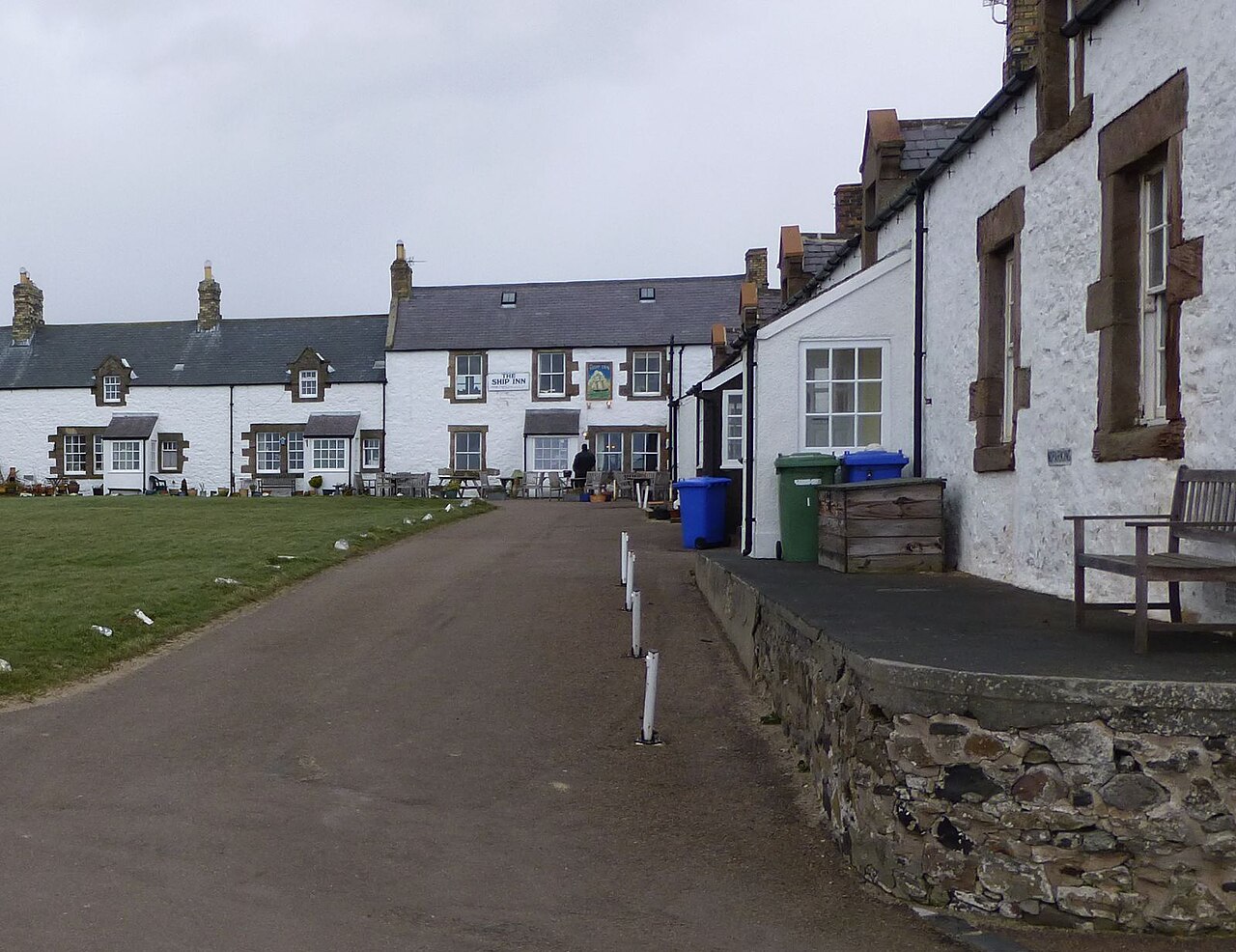
The pub in the corner of Low Newton's square, and the traditional reward for doing the long walk. Its October hours are 11am to 6pm on Mondays and Tuesdays, 11am to 10pm Wednesday to Saturday, and 11am to 7pm on Sundays. In November it's 11am to 6pm Sunday to Wednesday and 11am to 10pm Thursday to Saturday.
There's a folk night on Monday 26 October, with music from about 8pm, and Erin Harpe and Countryman Jim play on Saturday 7 November at 8pm, £25 including the Saturday night pie. A gig with a pie included. That's North East value right there.
On a wet day, swap it round: the castle is almost all outdoors, so it isn't a rain plan. Do the Arnold reserve and Howick's tea house, and save Dunstanburgh for the first dry morning. It's been there since 1313. It'll wait.
Free, two short emails a week, and you choose which. Read the latest one first.
No spam, no ads. Unsubscribe from any email with one click. Privacy
About 1.3 miles each way along the coast path, according to English Heritage, so roughly 2.6 miles there and back. It's mostly grass over farmland with uneven ground.
In the council car park at the entrance to the village (NE66 3TW). Charges are £3.30 for 1 hour, £5.50 for 2 hours, £7 for 3 hours and £9.50 all day, 8am to 6pm daily.
Most adults walk each way in well under an hour. With young children allow longer, and allow at least three hours in total if you're going into the castle.
Yes. It has the walk to Dunstanburgh Castle, the Grade II listed L. Robson and Sons kipper smokehouse, a harbour and the Jolly Fisherman pub, all within a few minutes of the car park.
Yes, the Jolly Fisherman, known for its crab soup and views of Dunstanburgh Castle. It has a children's menu and allows dogs in the bar but not the restaurant.
Mostly yes. Dogs on leads are welcome at Dunstanburgh Castle and in the Jolly Fisherman's bar, but the path crosses working farmland with livestock, so keep dogs on a short lead in the fields.
It was begun in 1313 by Earl Thomas of Lancaster, cousin and leading baronial enemy of Edward II. English Heritage says he built it on a massive scale to proclaim his rivalry with the Crown.
English Heritage allows pushchairs but warns of steps and uneven paths, and the walk from Craster is over grass. An all-terrain buggy can manage on a dry day; a baby carrier is easier.
Facts checked against 23 pages on Friday 23 October 2026. Opening times and prices change, so confirm with the venue.