Craster Kippers, Stotties and Pease Pudding in Northumberland
The famous kipper smokehouse, the other kipper village up the coast, and where to find a proper stottie with ham and pease pudding, with prices where they're published.

The famous kipper smokehouse, the other kipper village up the coast, and where to find a proper stottie with ham and pease pudding, with prices where they're published.
Craster kippers are herring split, salted and smoked over oak at L. Robson and Sons on Haven Hill, Craster's only smokehouse, open Monday to Saturday 9am to 4pm and Sunday 11am to 4pm, with a vacuum-packed pair from £12.50. Cook them by standing them in a jug of boiling water for six minutes. For the rest of Northumberland's food, eat a stottie with ham and pease pudding, try pan haggerty, and buy Lindisfarne mead on Holy Island.
Checked 10 November 2026. Shop hours change with the seasons, so the smokehouse, bakery or market's own page is the one to trust.
Craster kippers are the reason a small harbour village on the Northumberland coast smells, gloriously, of oak smoke on a weekday morning. They are also the front door to a whole larder of North East food that visitors hear about and then quietly don't order: the stottie, pease pudding, pan haggerty, a glass of Lindisfarne mead. This guide covers what each one actually is, where to buy it in Northumberland, what it costs where a real price is published, and how to cook a kipper in a holiday cottage without setting off the smoke alarm (results not guaranteed).
If you grew up on Tyneside, as I did in Gateshead, a stottie needs no introduction and pease pudding is simply what goes with ham. Everyone else deserves a proper explanation, so here it is, with the shops attached.
A kipper is breakfast, lunch and a long conversation with your car upholstery. Buy the vacuum pack.
A kipper is a whole herring split down the back from tail to head, gutted, salted and cold-smoked over smouldering wood, usually oak. In Craster that job has belonged to one family since 1856. L. Robson and Sons say they still cure the fish in the original smokehouses, which are over 130 years old, and their ingredients list runs to three items: herring, salt and oak smoke. That matters more than it sounds. Plenty of kippers elsewhere get their orange glow from dye; the Robson label lists no colouring at all.
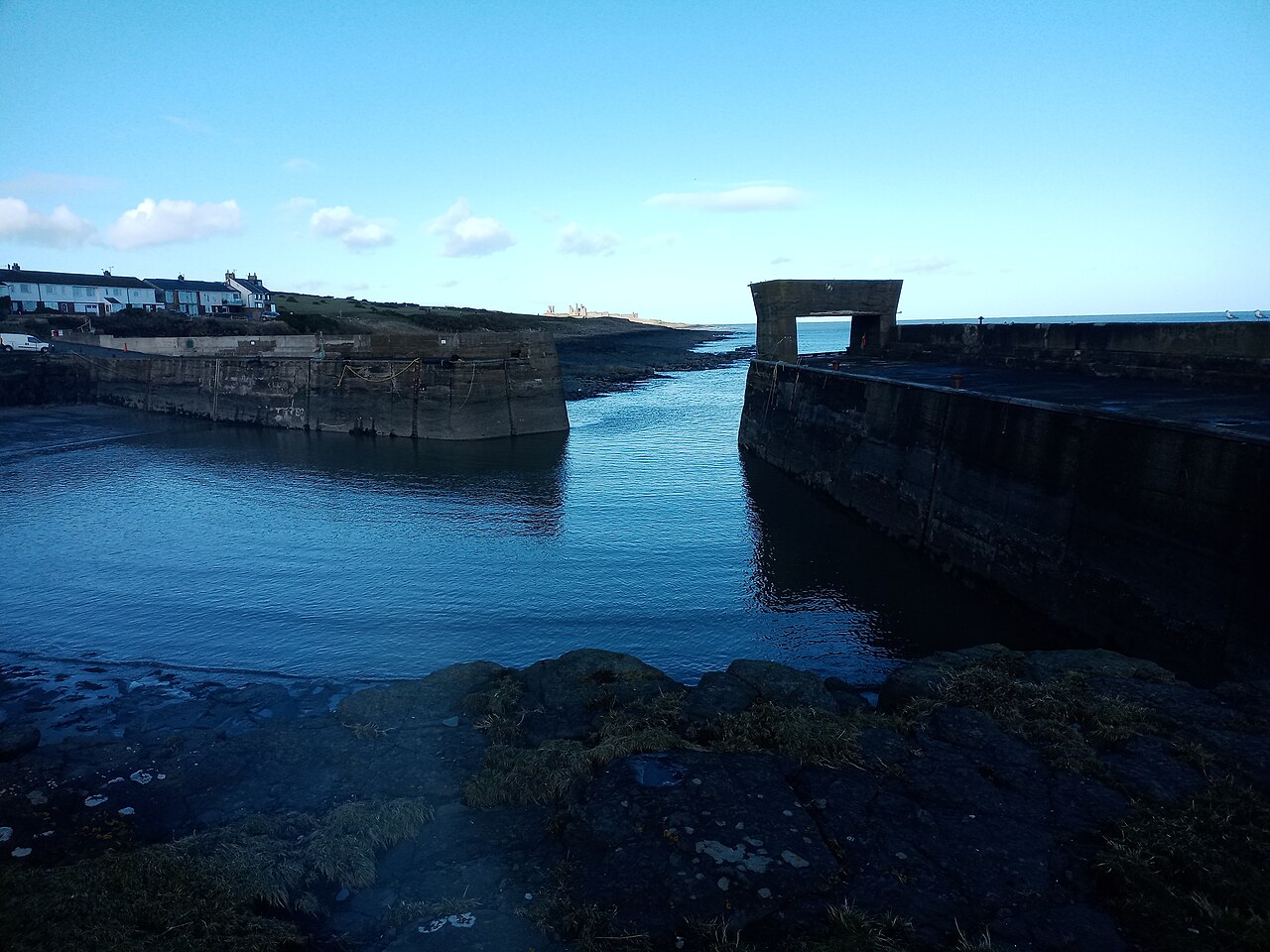
Herring used to be landed at Craster's little harbour and carried straight to the curing sheds, and the smokehouse still sits above the harbour on Haven Hill with, in the family's own words, minimal signage. You won't need the signage. Your nose will find it long before your phone does, which in Craster is just as well, because the signal is patchy.
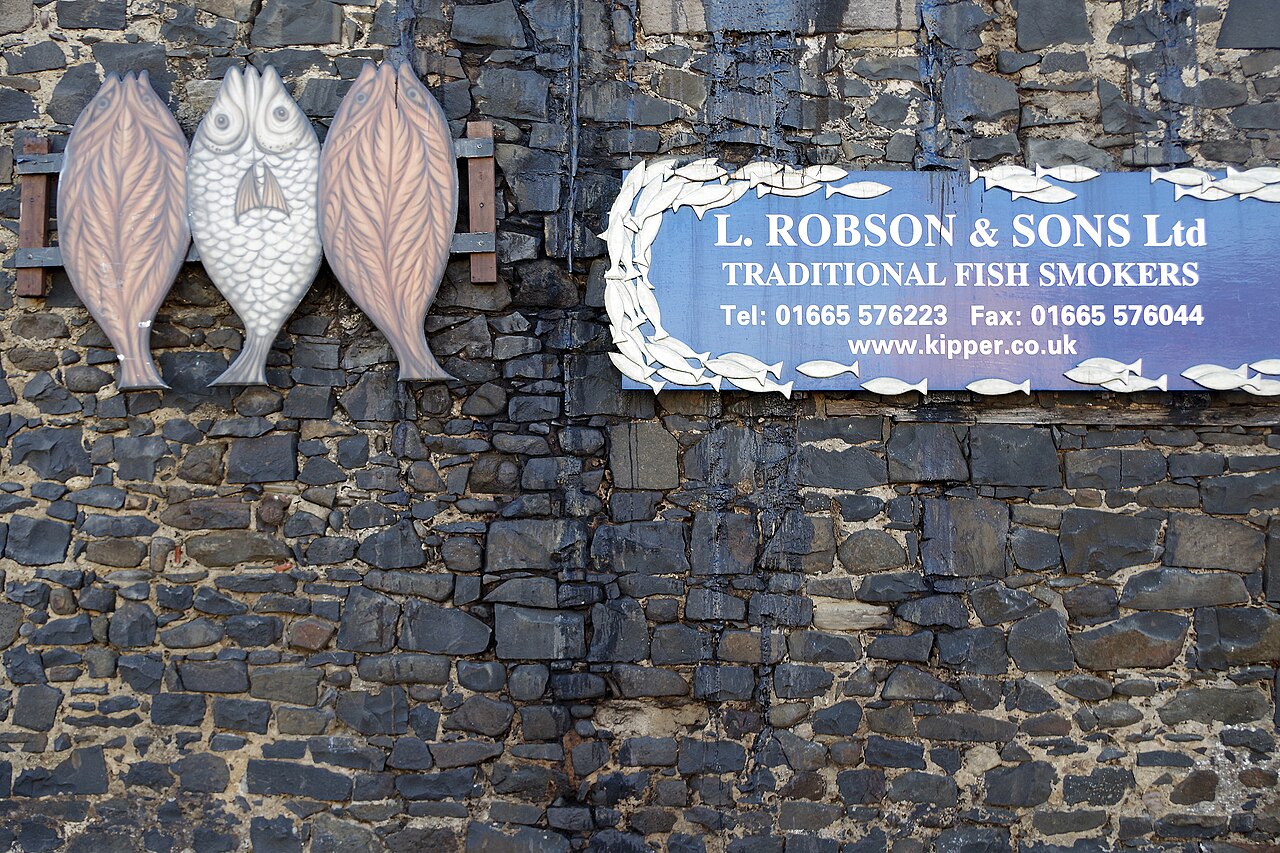
The only smokehouse in Craster, a fourth-generation family business with its shop next door to the smoke at 9 Haven Hill (NE66 3TR). The shop opens Monday to Saturday 9am to 4pm, Sundays 11am to 4pm and bank holidays 10am to 4pm. A vacuum-packed pair of oak-smoked kippers is £12.50 online, with a minimum of 400g a pair, and kipper fillets start at £17.
They also sell smoked salmon and natural smoked haddock and cod. If anyone in the car is unsure about kippers, the smoked haddock is the gentler way in.
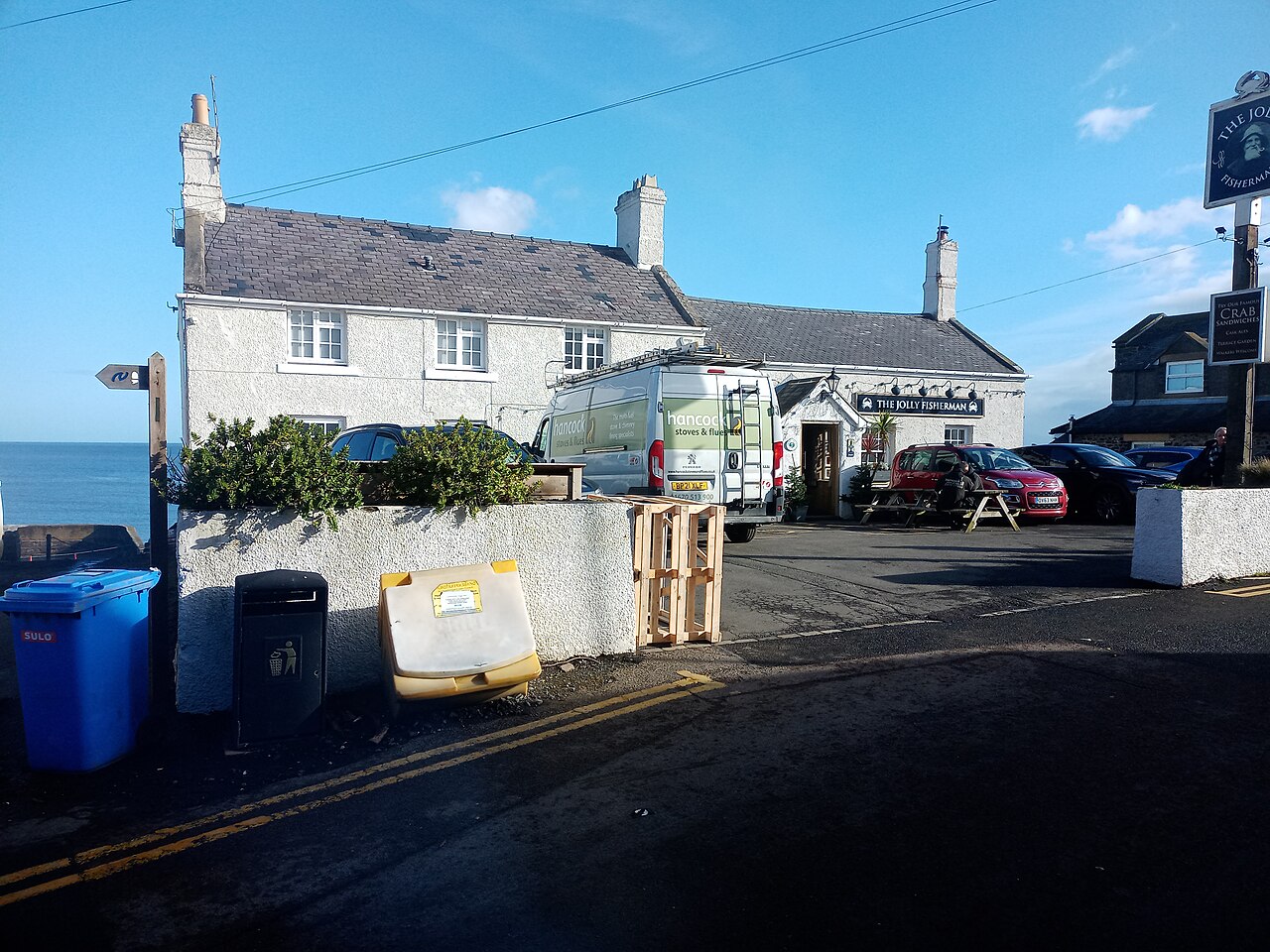
The pub on Haven Hill, with views to Dunstanburgh Castle and the North Sea from the restaurant and the beer garden, and a menu built on its crab soup, Craster-landed lobster and Lindisfarne oysters. Among its local suppliers it names Trotters Family Bakers in Seahouses, which tells you how seriously the North East takes a bread roll.
Food runs Monday to Saturday 11am to 3pm and 5pm to 8.30pm, and Sunday 12 to 5pm. Dogs are welcome in the bar but not the restaurant, there's a children's menu, and the pub recommends booking. Buy your kippers on the way out, so they don't spend lunch warming up in the car.
Kippers are cold-smoked, so they need cooking before you eat them. The Robson family's own instructions give four ways, and the first is the one to use in a holiday cottage.
Their serving suggestion is the simplest of the lot: grilled, with butter and a squeeze of lemon. Swallow Fish in Seahouses adds baking in foil and the barbecue to the list, and suggests turning leftovers into pâté, quiche or chowder, which is optimistic thinking in a house with a seven-year-old in it.
Now the bones. A whole kipper is the whole split herring, backbone and all, plus a great many fine bones. Grown-ups lift the backbone out in one piece after cooking and pick carefully around the rest. For children, or anyone who wants breakfast without a forensic investigation, buy kipper fillets instead (Robson's start at £17), and still check each forkful for the odd stray bone.
If you're taking them home, Robson's says vacuum-packed kippers keep up to 14 days unopened in the fridge and loose ones about seven, and both freeze for up to three months. They also post them, with free delivery to mainland UK and dispatch on Mondays and Wednesdays, which is handy when the cool box has somehow ended up full of wet towels.
Craster has the fame, but Seahouses has a claim of its own. Swallow Fish on South Street has smoked fish on the same site since 1843, and says the site is credited as one of the possible birthplaces of the modern kipper. The story usually told (Wikipedia repeats it) is that a Seahouses man, John Woodger, left fish overnight in a room with a smoking stove in 1843 and came back to a new breakfast. Whether that's history or simply a very good shop story, I can't tell you. It is still a better origin story than anything in my fridge.
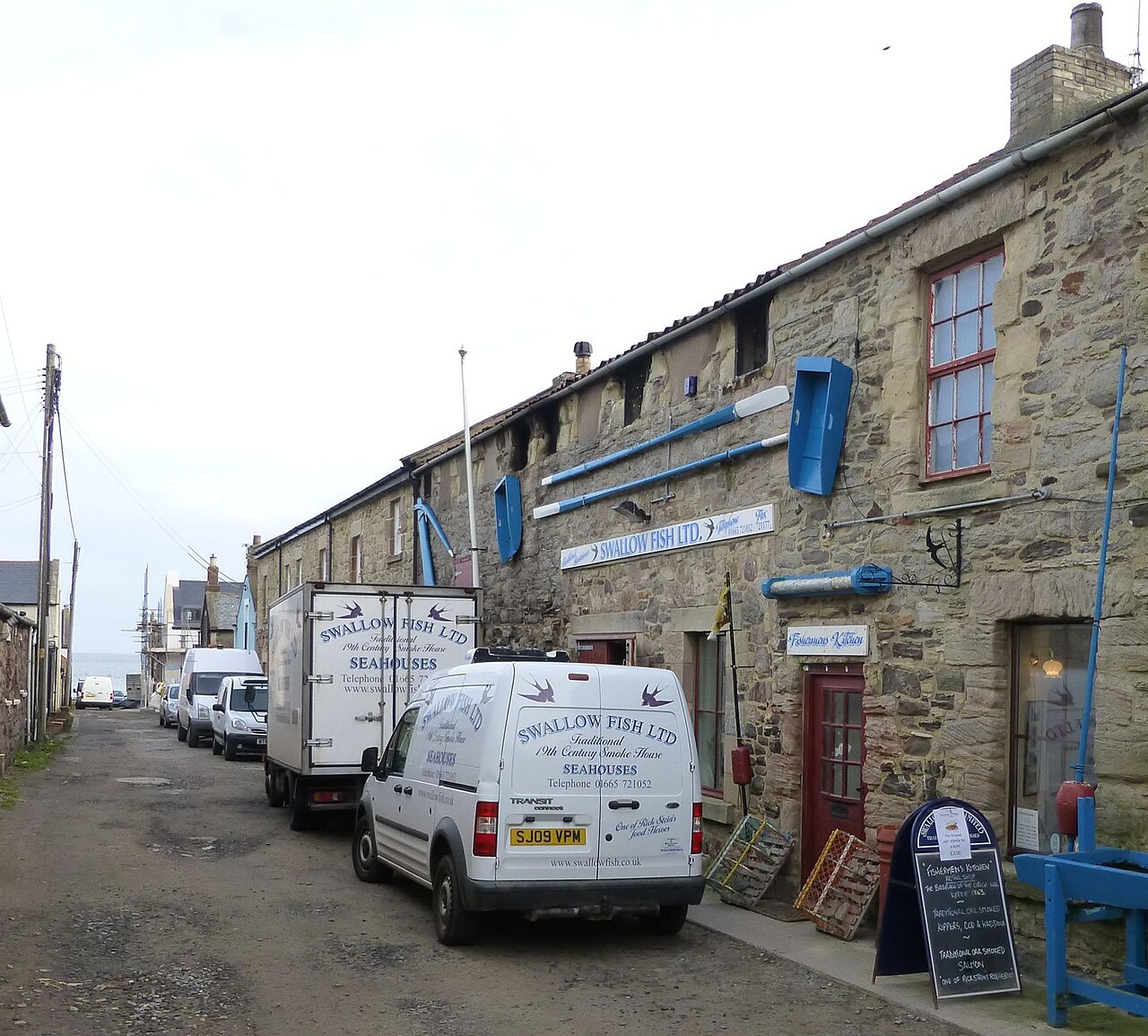
A traditional smokehouse and fish shop in the Fisherman's Kitchen at 2 South Street (NE68 7RB), smoking over oak sawdust with no additives, preservatives or colourings. A pair of kippers is £10.50 online (about 450g), and alongside the smoked fish there's fresh North Sea fish and locally caught crab and lobster.
It's worth the detour because it is the other half of the kipper story, a short walk from the harbour where the Farne Islands boats leave, and far less famous than Craster. The shop opens Monday to Friday 9am to 4.30pm, Saturday 9am to 4pm and Sunday 10am to 3pm.
A stottie is a round, flat white loaf from the North East, about 20cm across and 2.5cm deep, given a single rise rather than two, so it bakes dense and chewy rather than airy. One theory has the name coming from the dough being thrown, or stotted, onto the floor of the oven. You cut it into wedges, split them and fill them. The classic filling is ham and pease pudding; bacon, egg and sausage do very well too.
It is not a dainty object. Whatever you put in it will try to leave by the far side, and a six-year-old holding a whole one looks like they've been handed a steering wheel. Northumberland takes them seriously, too: Turnbull's butchers in Alnwick recently raised £800 for the town's Christmas lights selling sausage stotties with onions at £3.50 each, with the stotties donated by Alnwick Bakery, according to the Northumberland Gazette. The lights go on in Bondgate Within on Friday 20 November at 7pm.
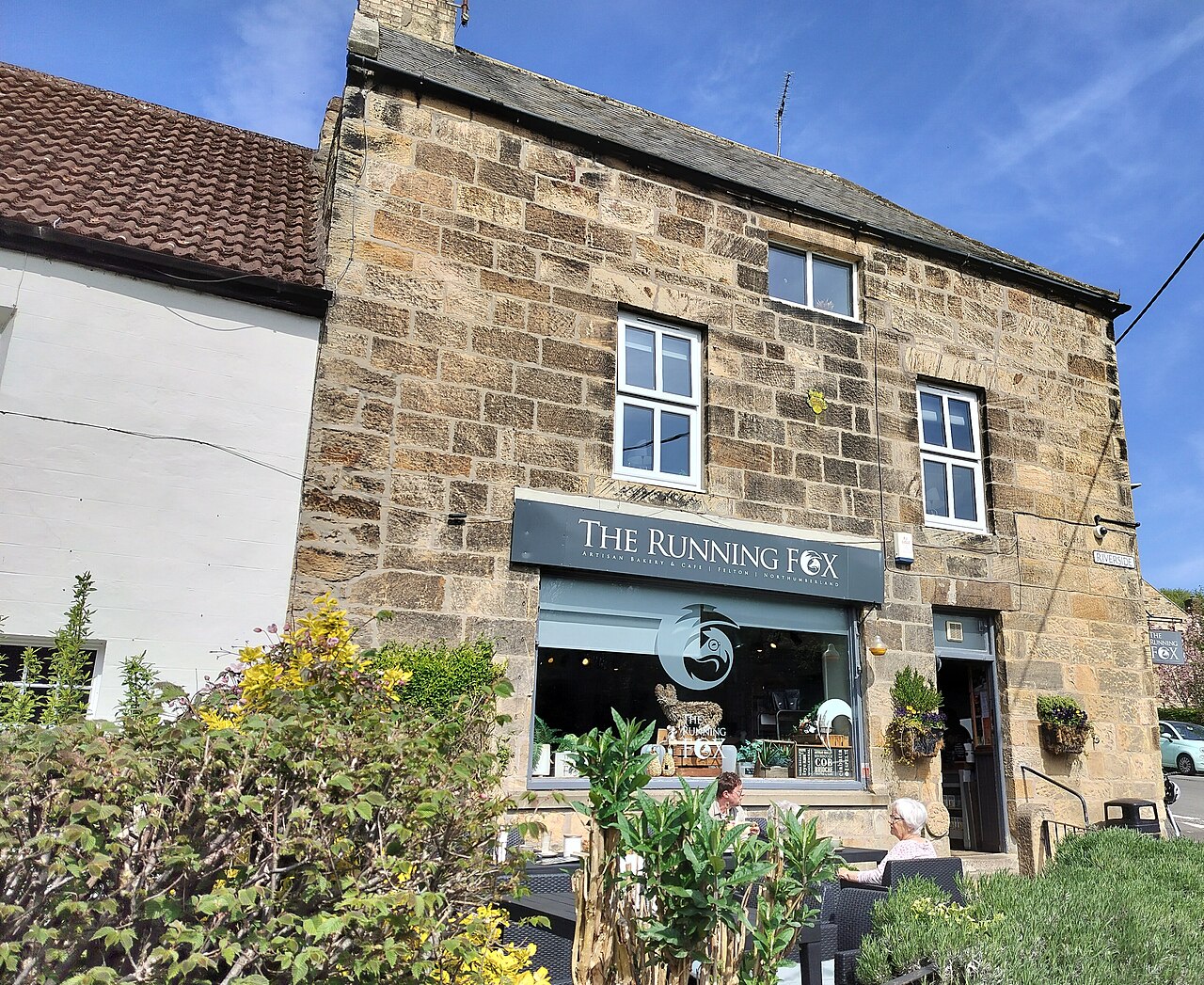
The Running Fox started in Felton in 2011 and now has five cafes, at Felton, Longframlington, Longhoughton, Powburn and Kirkharle Courtyard. Its menu has a whole section of all-day stotties: bacon or sausage at £8.95, fried egg at £6.50, the Mr Fox (sausage, black pudding, egg and cheese) at £11.95 and the Mrs Fox (hot smoked salmon, avocado and scrambled egg) at £12.95. Any lunch sandwich can come in a stottie instead of sliced bread.
It's also the easiest place to try pan haggerty without cooking it: the pie version (cheese, potato and caramelised onion) is £14.50, served with wedges, a jug of gravy and mushy peas, which by the end of this guide you'll know are not pease pudding. The Felton cafe sits by the River Coquet, opens 8.30am to 4pm on weekdays and until 5pm at weekends, and welcomes dogs in its outdoor areas.
A family bakery that bakes everything fresh each day at its own bakery in Seahouses, with a shop and cafe on Main Street. Graeme Trotter came second in the Scotch Pie World Championship in 2002, a fact the bakery is still entitled to mention, and the Jolly Fisherman in Craster lists Trotters among its suppliers.
Visitor reviews mention granary stotties alongside the pies and custard rounds, but the bakery doesn't publish a product list, so ask at the counter. A stottie and a pie for a beach picnic is about as North East as lunch gets.
Pease pudding is split yellow peas cooked long and slow, traditionally with a ham or bacon joint, until they collapse into a smooth, pale yellow spread with a mild, savoury taste and a texture a bit like hummus. It is eaten with ham, bacon and beetroot, and most famously spread thick inside a stottie with sliced ham. It has a nursery rhyme to itself (Pease Porridge Hot) and a mention in Food, Glorious Food from Oliver!, which is more fame than most side dishes ever get.
The one rule is that it is not mushy peas. Confuse the two at a Tyneside butcher's counter and you will get a very patient explanation. Butcher's shops are the traditional place to find it, thanks to the ham connection, and tinned pease pudding is sold well beyond the North East if you need emergency supplies at home.
Turnbull's has been a family butcher in Alnwick since 1880 and is now on its sixth generation, with a food hall on Taylor Drive at Willowburn Retail Park (NE66 2DJ) that puts the butcher's counter, a bakery making over 3,000 pies a week by hand and a delicatessen under one roof. It opens Monday to Saturday 7.30am to 6pm and Sunday 10am to 4pm.
It's where I'd start for proper ham for a stottie, and I'd ask whether there's pease pudding in the chiller that day; the website doesn't list it, so I won't promise. For a cottage fridge, it beats a trolley dash round a supermarket by some distance.
Two more things you can only really get here, one for the grown-ups and one for everybody.
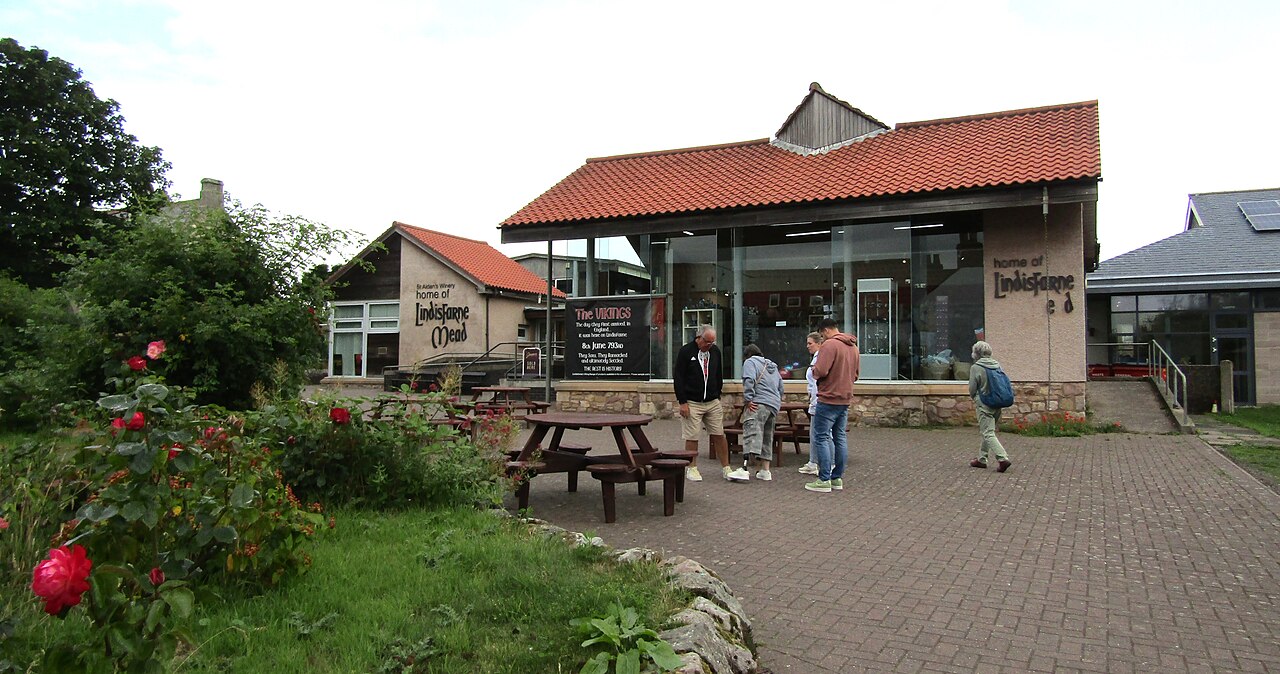
Lindisfarne Mead is made at St Aidan's Winery in the centre of Holy Island village, next to the Market Place, from fermented white grapes, honey, herbs and water from the island's artesian well, fortified with spirits. The showroom has been open since 1968, gets over 200,000 visitors a year, and every adult can try a free sample. A litre of the original mead is £19.25 online.
The free samples are strictly for the grown-ups, so pack a snack for the bairns. And on Holy Island the tide sets the shopping hours: the causeway floods twice a day, so check the council's safe crossing times before you set off and plan everything else around them, never the other way round.
A roadside milk bar at 11 South Road, Wooler (NE71 6QE), built by a local dairy farmer in the 1930s on what is now the A697, halfway between Newcastle and Edinburgh. Doddington Dairy now uses it to sell its own ice cream, made just down the road from its own cows' milk, along with milkshakes, floats, breakfasts and light lunches, with seating inside and out.
It's worth the detour because it is the dairy's own shop window rather than a freezer of somebody else's tubs, and because ice cream in November shows strength of character. Cyclists on the Sandstone Way and walkers use it as a refuelling stop.
If you're self-catering, a farmers' market is where the stottie-and-ham shopping list gets done in one go, with the added bonus of somebody to ask what to do with it. Two are coming up in the next few weeks.
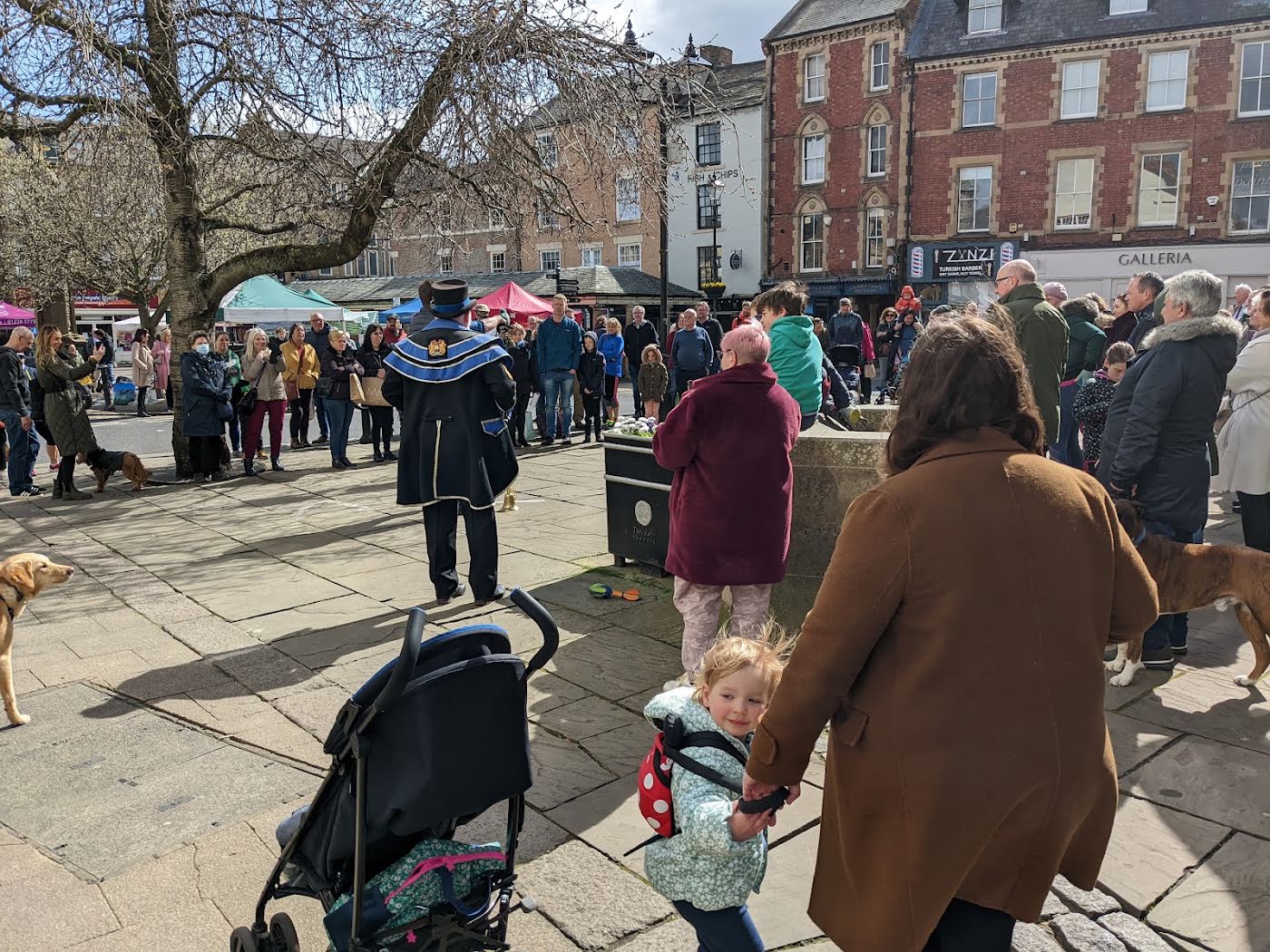
One of the longest-running farmers' markets in the county, now in its 28th year, filling Hexham's Market Place and the area around the Abbey on the second and fourth Saturday of each month, 9am to 1.30pm. Every producer comes from within 50 miles of the town and sells what they made or reared themselves, so the person selling you the bacon is the person who knows the pig. The next markets are Saturday 14 November and Saturday 28 November 2026, both with the free Meet the Makers market at the Queen's Hall from 9.30am to 2pm.
Go early for the bakers, take some cash as well as a card, and let the bairns choose the cheese.
A food and craft market at Northumberlandia, the giant landform sculpture of a reclining woman off Blagdon Lane near Cramlington (NE23 8AU), on Sunday 29 November 2026 from 10am to 3pm. It's hosted by Events2gogo at the Northumberland Wildlife Trust's site, with locally made food, drinks and crafts, and is suitable for all ages.
It's outdoors, so dress for the weather. Afterwards you can walk off the samples on the paths that climb the sculpture, which counts as a mountain to a six-year-old.
Things to do in Hexham and Corbridge The Abbey, the Wall and the rest of a Hexham market day. →
And if the smokehouse has shut by the time you get there, which happens to every family eventually, the Jolly Fisherman's crab soup is just along Haven Hill and has never once asked anyone to take the bones out.
See what's on in The Northumbrian AlmanacFree, two short emails a week, and you choose which. Read the latest one first.
No spam, no ads. Unsubscribe from any email with one click. Privacy
Craster kippers are herring that are split, salted and smoked over oak by L. Robson and Sons, the only smokehouse in Craster, Northumberland, run by the same family since 1856. The ingredients are herring, salt and oak smoke.
Cook them first. The smokehouse recommends standing the kipper head first in a jug of boiling water for six minutes, pan-frying in butter for 6 to 8 minutes or baking at 175C for 8 to 10 minutes, then serving with butter and a squeeze of lemon.
Yes. A whole kipper is a split herring with its backbone and many fine bones, so lift the backbone out after cooking. Kipper fillets, from £17 at L. Robson and Sons, are the less bony option.
Kippers are herring, which the NHS counts as oily fish, high in long-chain omega-3 and a source of vitamin D. They are salty, though: Robson's kippers list 3.0g of salt per 100g, and the NHS says girls and women who may have a baby one day should have no more than two portions of oily fish a week.
A stottie is a round, flat white bread from North East England, about 20cm across, made with a single rise so it is dense and chewy. It is cut into wedges and filled, classically with ham and pease pudding.
Pease pudding is split yellow peas cooked, traditionally with ham or bacon, into a smooth, pale yellow spread. In Northumberland it is eaten with ham in a stottie, and it is not the same thing as mushy peas.
Northumberland is best known for Craster kippers, stotties filled with ham and pease pudding, pan haggerty, Lindisfarne mead from Holy Island, and North Sea seafood such as crab soup and lobster.
In Northumberland, The Running Fox cafes serve filled stotties all day from £6.50 (March 2026 menu), and local bakers such as Trotters Family Bakers in Seahouses sell them. Ask at the counter, as bakeries rarely list their daily bread online.
Facts checked against 31 pages on Tuesday 10 November 2026. Opening times and prices change, so confirm with the venue.