The birds of Northumberland: 63 species, and your list
Sixty-three birds, from the easy ones to the long shots, each with where and how. Tick what you've seen; the ticks save on your device only and never leave it.
Sixty-three birds, from the easy ones to the long shots, each with where and how. Tick what you've seen; the ticks save on your device only and never leave it.
Your Northumberland list
0 of 63 seen
Ticks are saved on this device only. Nothing is sent anywhere.
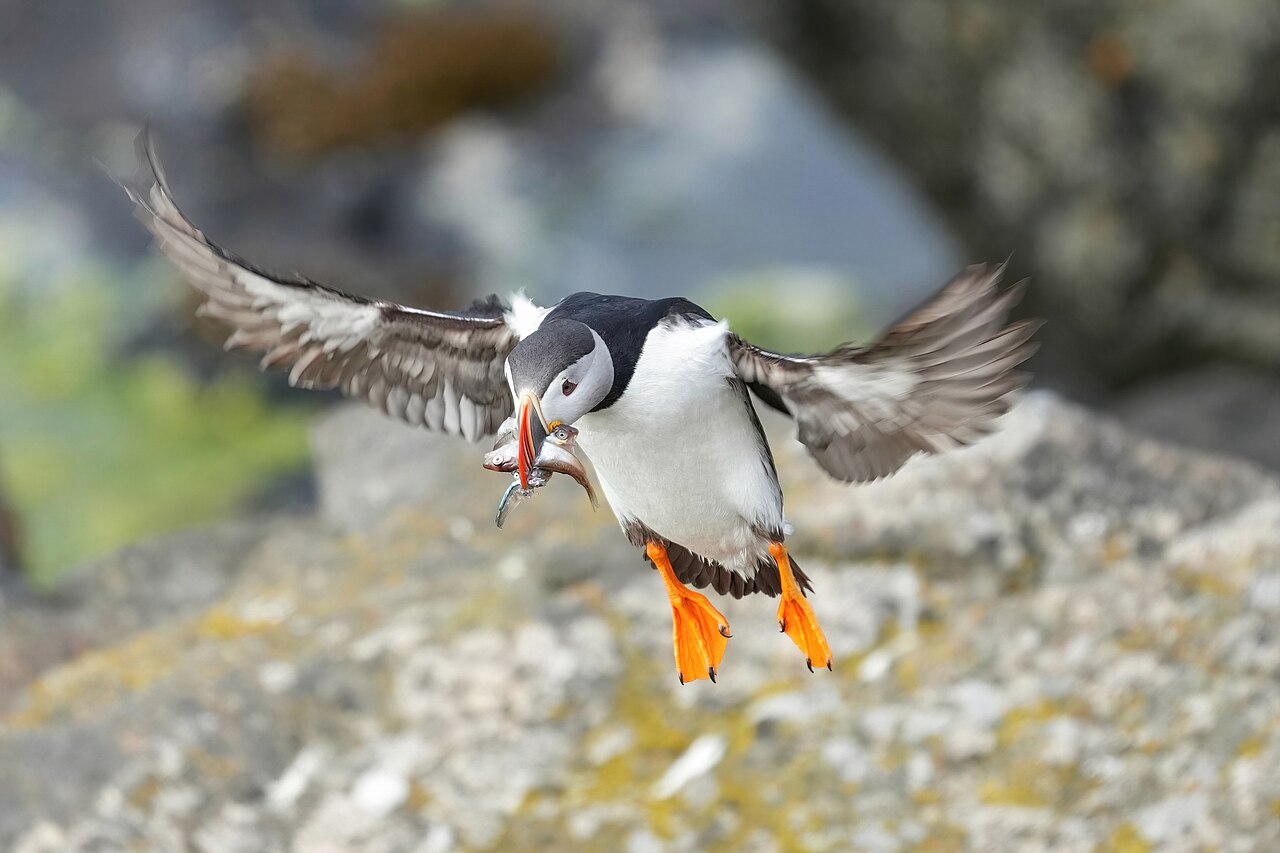
Fratercula arctica
Summer visitorEasy
Take a boat from Seahouses round the Farnes, or land on Inner Farne between April and September (the National Trust landing fee is on top of the boat fare), or do the one hour Puffin Cruises trip round Coquet Island from Amble, where nobody lands. They are back from the end of March, settle to nest from mid April and have mostly gone by the start of August.
Where: Farne Islands (boats from Seahouses), Coquet Island (by boat from Amble)
The National Trust counts around 43,000 breeding pairs on the Farne Islands, part of roughly 200,000 seabirds that nest there between May and July. Source ↗
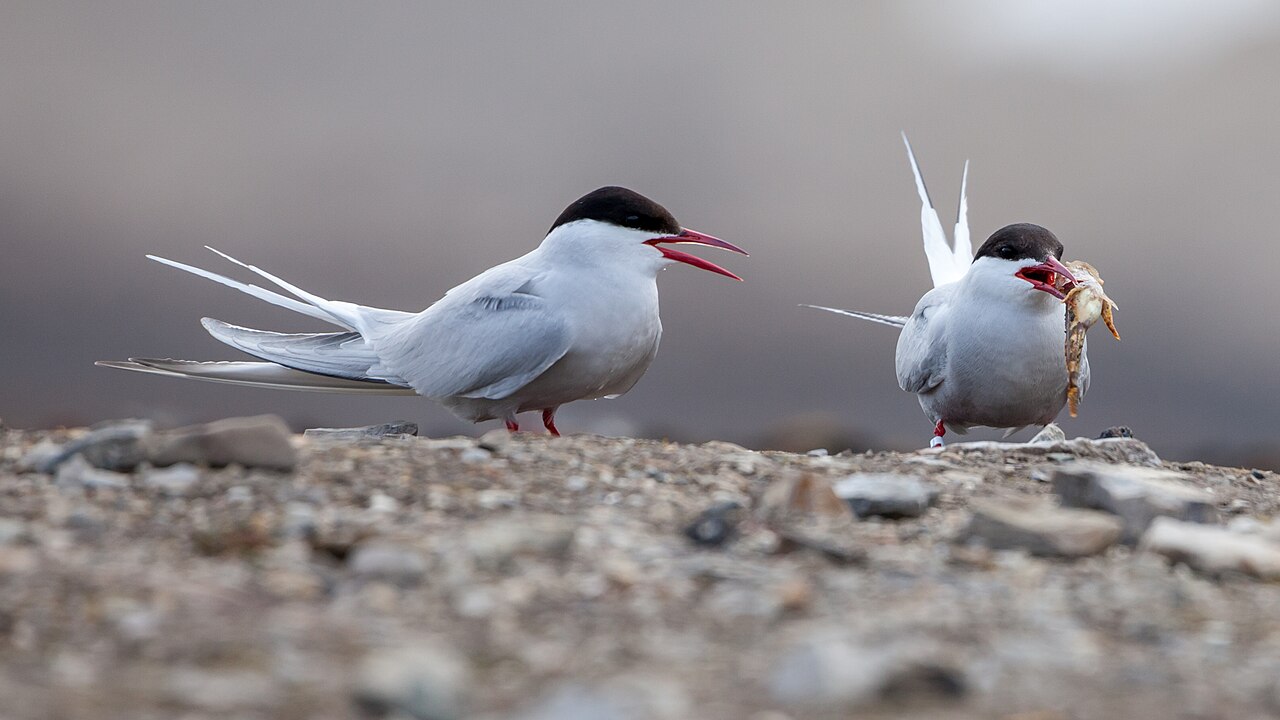
Sterna paradisaea
Summer visitorEasy
On Inner Farne they nest right beside the boardwalk and will dive at your head, so wear a soft hat (the National Trust says not a hard hat or cycle helmet, which can damage their beaks) and keep moving. On the mainland around 2,000 nest at the Long Nanny between Beadnell and High Newton, watched from the rangers' viewing platform from May to July.
Where: Farne Islands (boats from Seahouses), Beadnell Bay and the Long Nanny tern colony, Coquet Island (by boat from Amble)
Arctic terns fly between the UK and the Antarctic every year, and they are on the UK Red List because some colonies have been hit by fish shortages. Source ↗
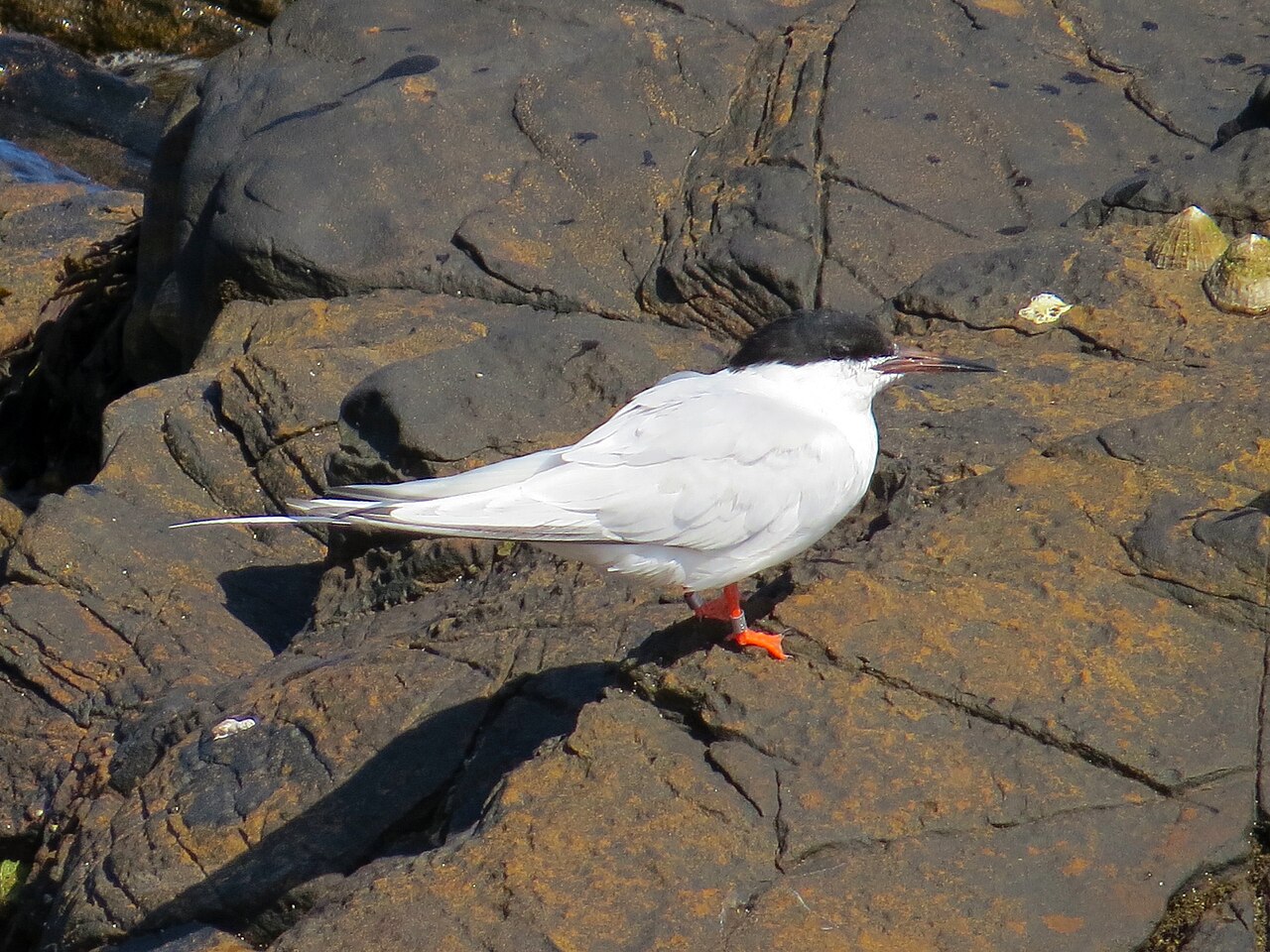
Sterna dougallii
Summer visitorLucky
Coquet Island has the only breeding roseate terns in the UK and it is closed to the public, so take the Puffin Cruises boat from Amble between late May and July and scan the nest terraces with binoculars for a very white tern with long tail streamers. Picking one out among the Sandwich and common terns takes patience; the RSPB's island cameras show them close up in the breeding season.
Where: Coquet Island (by boat from Amble)
One of the UK's rarest seabirds and Red listed; in summer adults have a pinkish tinge to the underparts, which gives them their name. Source ↗
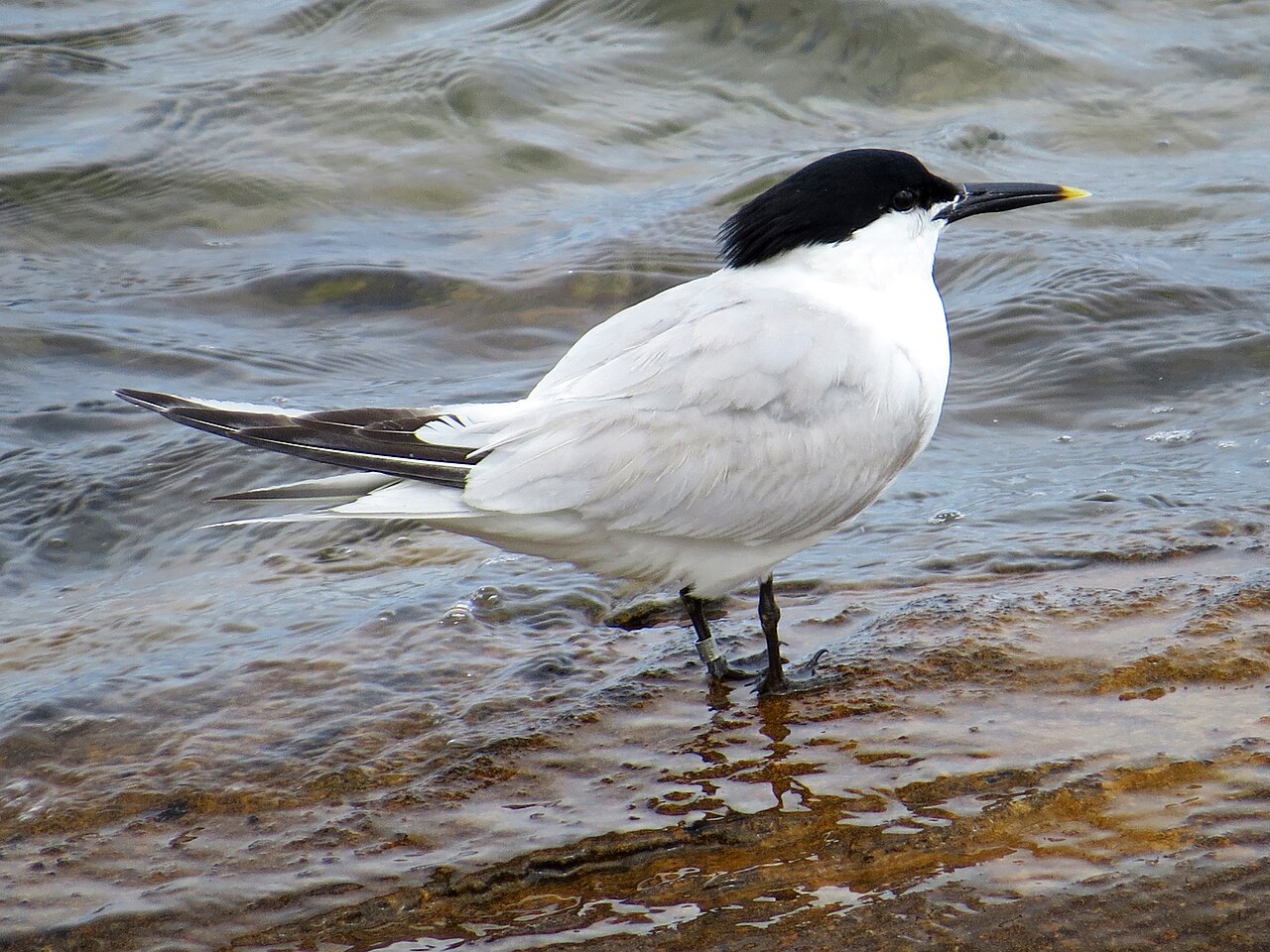
Thalasseus sandvicensis
Summer visitorEasy
The big pale tern with a shaggy black crest and a black bill with a yellow tip, and the loudest, most grating call on the boat. Both Coquet Island and the Farnes hold large colonies, seen from the Amble and Seahouses boats from late April.
Where: Coquet Island (by boat from Amble), Farne Islands (boats from Seahouses)
Coquet Island had a record 2,282 Sandwich tern nests in 2025, according to the RSPB. Source ↗
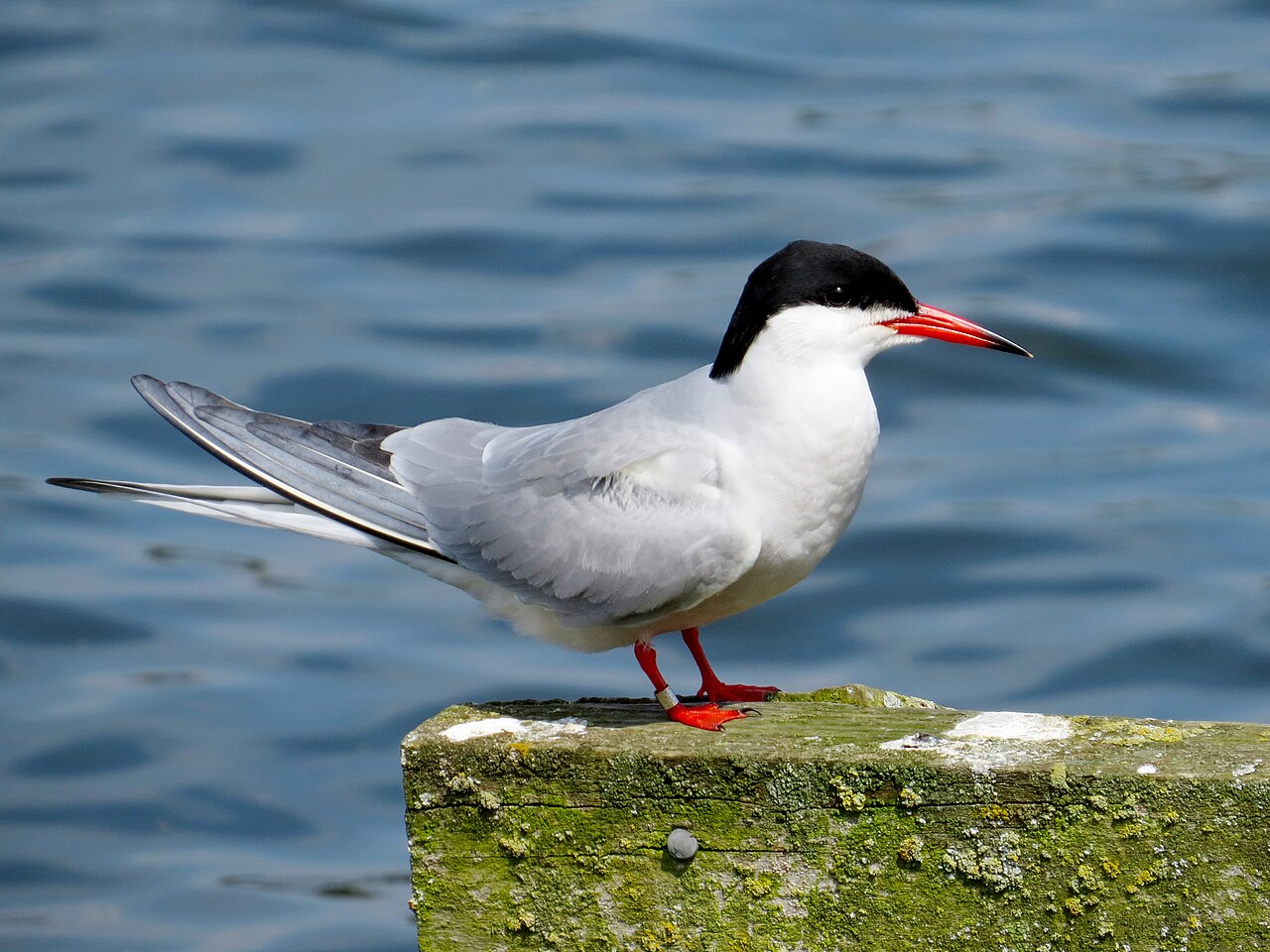
Sterna hirundo
Summer visitorFair chance
On Coquet Island, seen from the Amble boats, on the Farnes, and inland on the nesting rafts at the Whittle Dene reservoirs. Telling one from an Arctic tern is the classic test: the common tern's red bill has a dark tip and its legs are a bit longer.
Where: Coquet Island (by boat from Amble), Farne Islands (boats from Seahouses), Whittle Dene reservoirs
Coquet's common terns crashed with bird flu: 536 pairs in 2025, up from 353 in 2024 but still well short of the 1,875 pairs before the outbreak. Source ↗
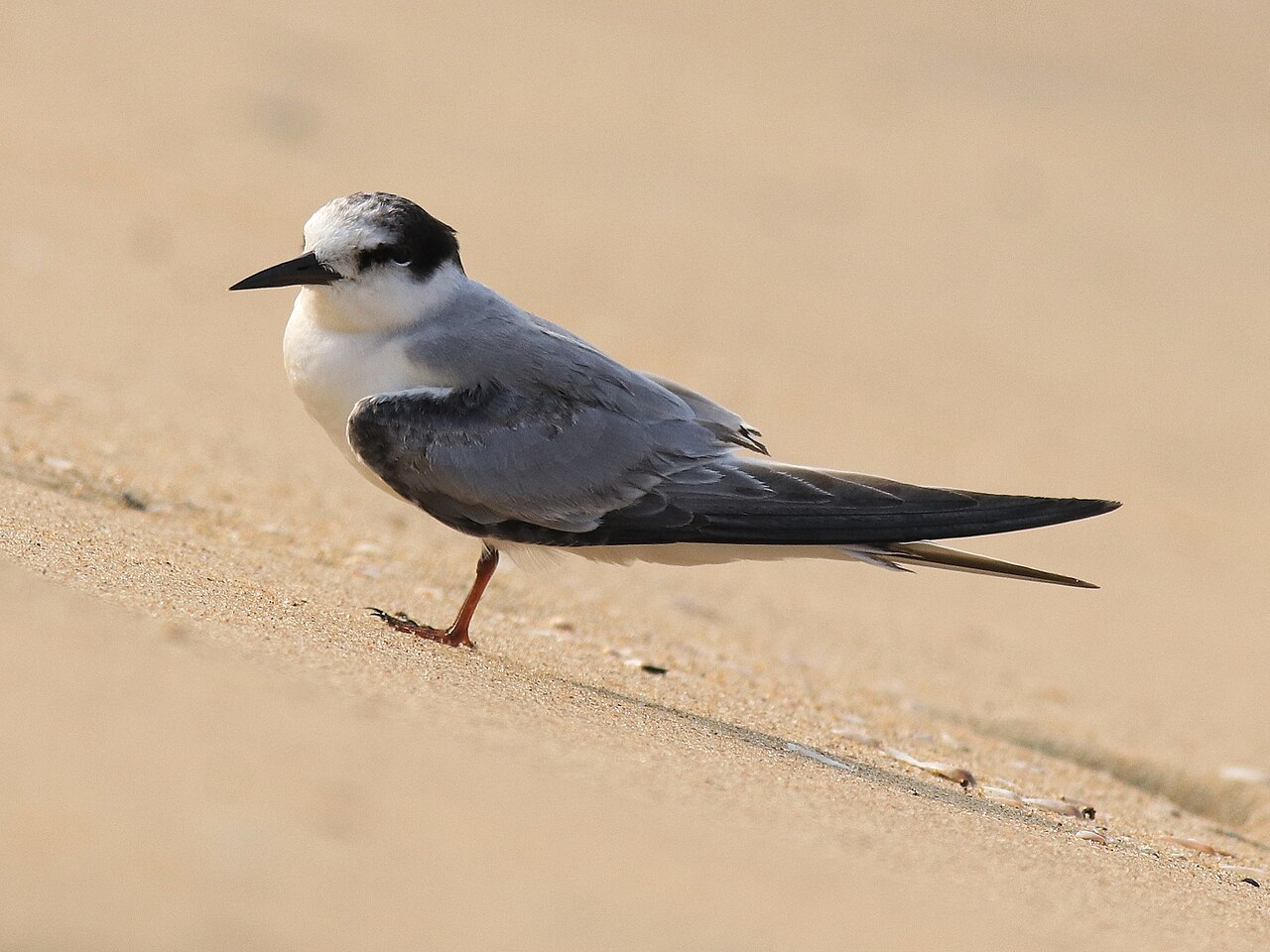
Sternula albifrons
Summer visitorLucky
A handful of pairs nest among the Arctic terns at the Long Nanny, fenced off and guarded by National Trust rangers who camp there 24 hours a day from May to July. Watch from the viewing platform and keep dogs on a short lead near the roped area.
Where: Beadnell Bay and the Long Nanny tern colony
The UK's smallest tern; in courtship the male calls and carries a fish, the female chases him high, and he glides down with his wings held in a V. Source ↗
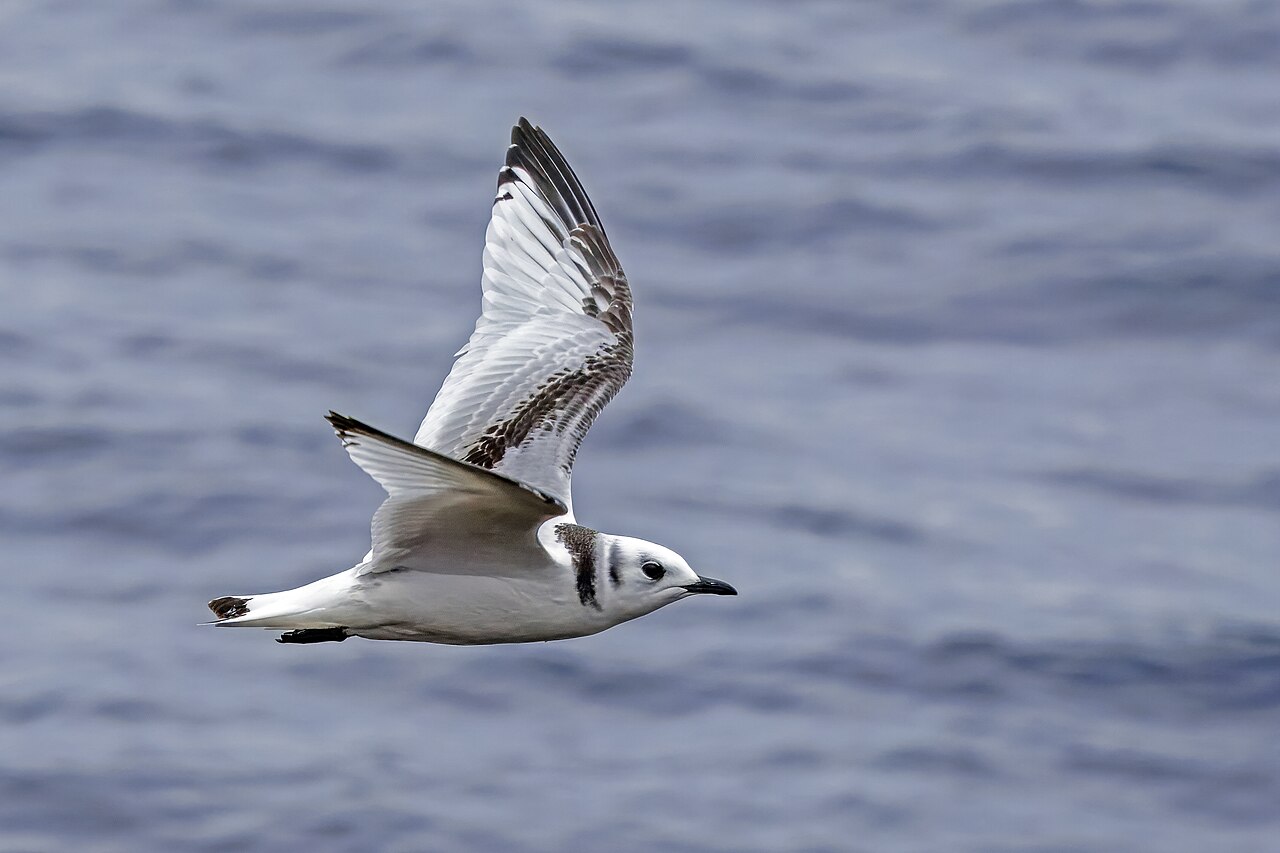
Rissa tridactyla
Summer visitorEasy
The small gull with ink-dipped wingtips and a call that says its own name, nesting on the Farnes cliffs and seen from the Seahouses boats in spring and summer. On the mainland, The Dipper's Nest says the cliffs at Castle Point by Dunstanburgh hold the county's largest mainland colony, over 500 pairs, a walk along the coast path from Craster.
Where: Farne Islands (boats from Seahouses), Coquet Island (by boat from Amble), Craster, the Arnold Reserve and Dunstanburgh
Kittiwakes are Red listed in the UK after serious declines, and the River Tyne holds the most inland urban breeding colonies in the world. Source ↗
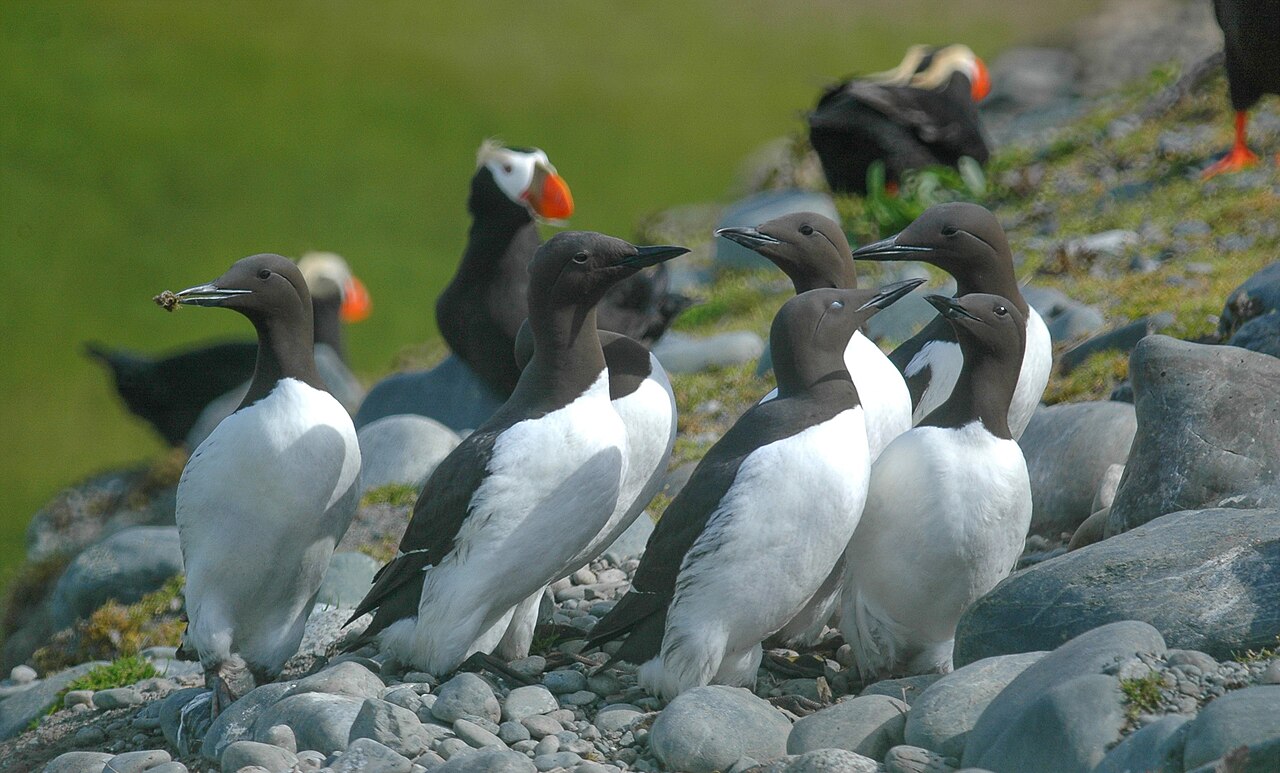
Uria aalge
Summer visitorEasy
Packed shoulder to shoulder on the Farnes ledges from April to July; the round the islands boat trips go close under them. Chocolate brown and white with a thin pointed bill.
Where: Farne Islands (boats from Seahouses)
Guillemots come to land only to nest and spend the rest of their lives at sea, where they are vulnerable to oil spills. Source ↗
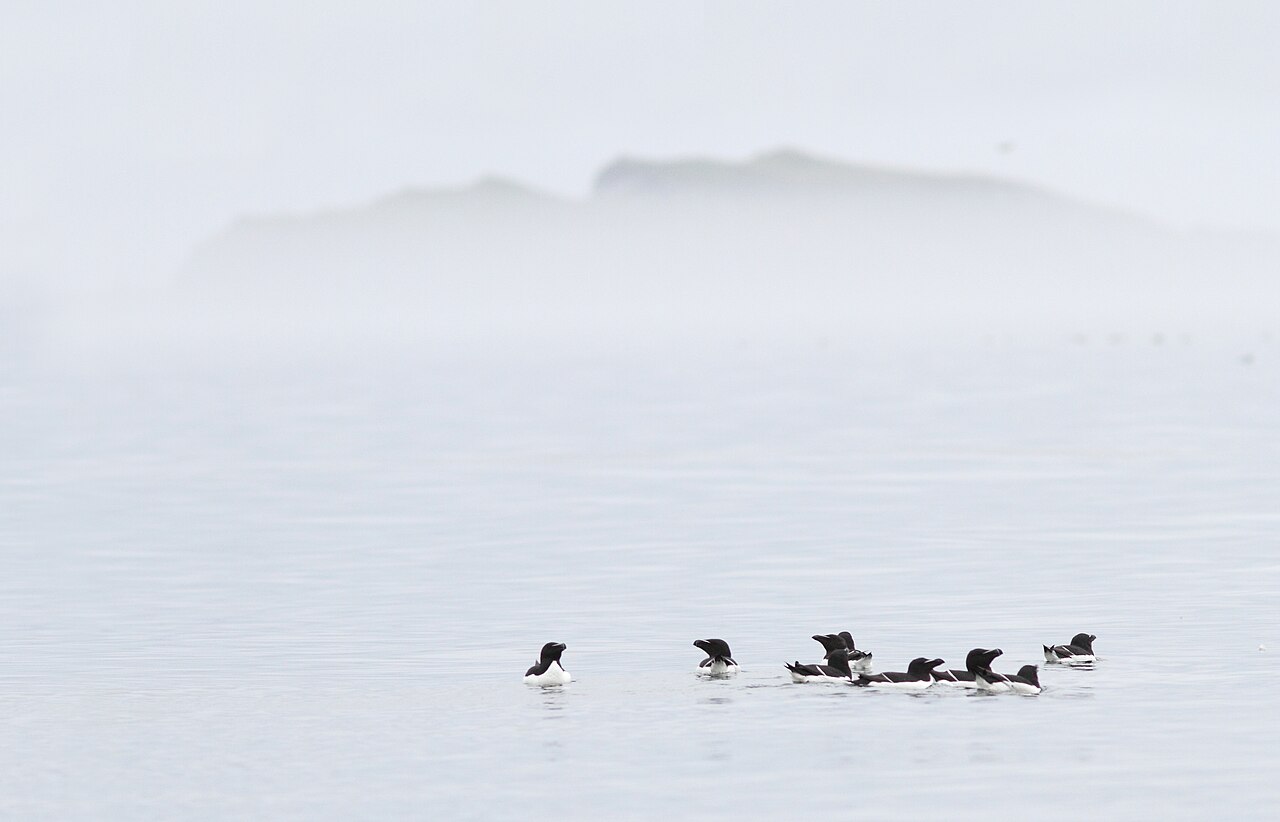
Alca torda
Summer visitorFair chance
Look among the guillemots on the Farnes for the blacker bird with a deep, blunt bill crossed by a white line; a few also use the cliffs by Dunstanburgh. On Coquet Island two razorbill chicks fledged for the first time in 2025.
Where: Farne Islands (boats from Seahouses), Coquet Island (by boat from Amble), Craster, the Arnold Reserve and Dunstanburgh
The RSPB separates it from the guillemot by its thick black beak that is deep and blunt, unlike the guillemot's thinner bill. Source ↗
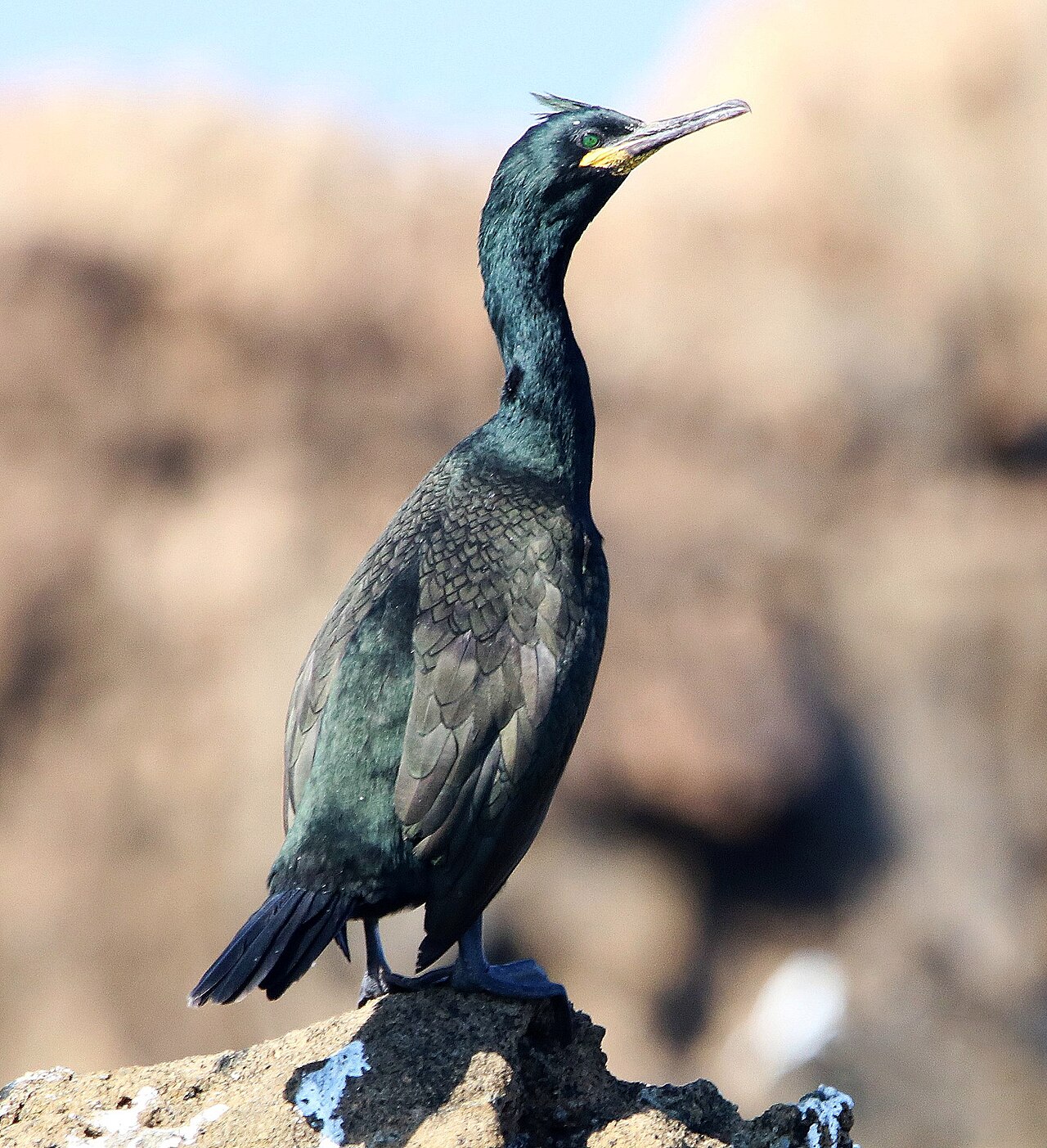
Gulosus aristotelis
ResidentEasy
On the Farnes shags nest in the open on the rocks, often close to where the boats go past, glossy green in spring with a forward curling crest. Smaller and slimmer than a cormorant, with a steep forehead.
Where: Farne Islands (boats from Seahouses), Craster, the Arnold Reserve and Dunstanburgh
More than half of the UK's shags are found at fewer than ten sites, which is why they are on the Red List. Source ↗
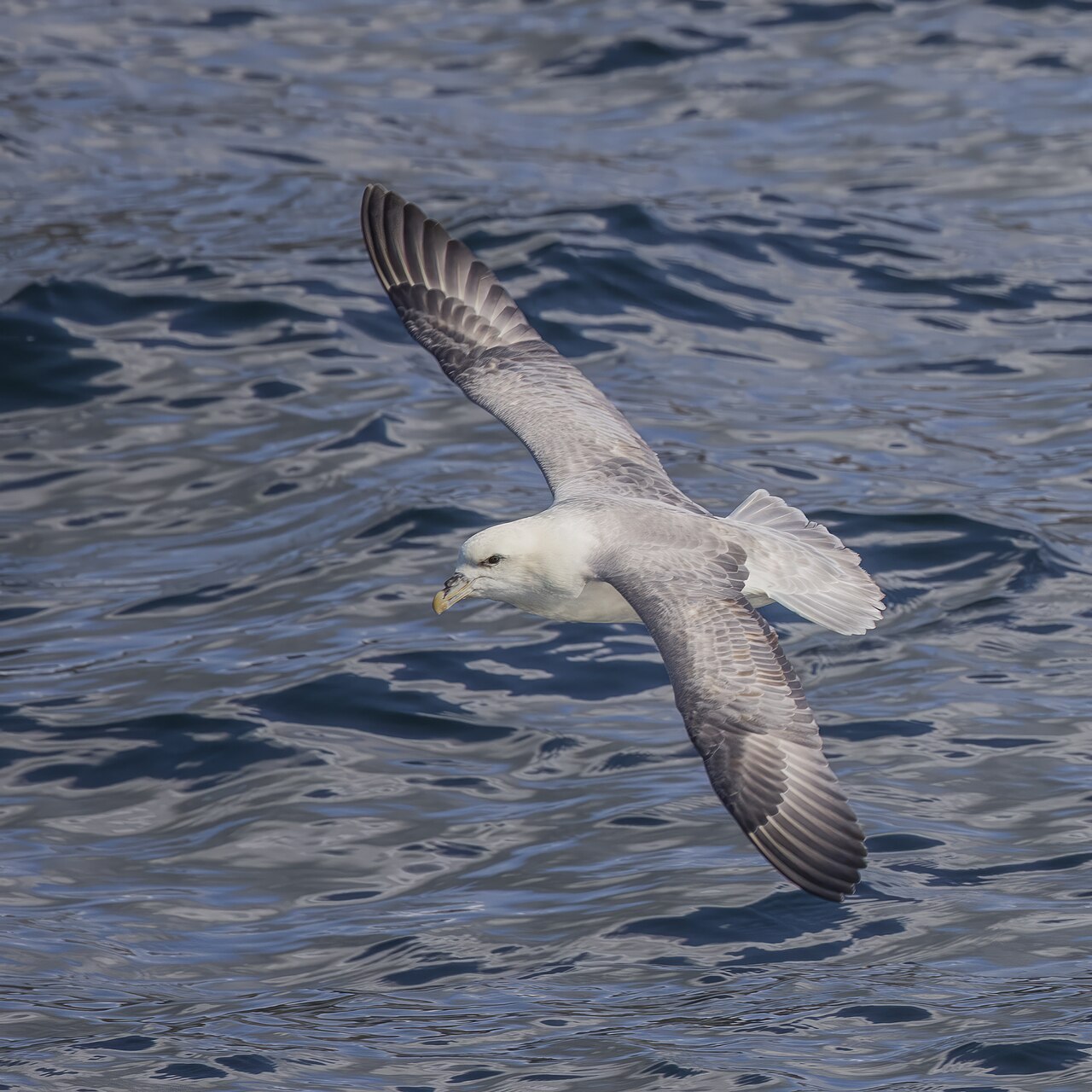
Fulmarus glacialis
Summer visitorFair chance
Stiff-winged and gull-like, gliding along cliff faces rather than flapping; look for the tube on top of the bill. The cliffs at Castle Point by Dunstanburgh are the easy mainland place, and they pass the rocks at Bamburgh.
Where: Craster, the Arnold Reserve and Dunstanburgh, Coquet Island (by boat from Amble), Bamburgh and Harkess Rocks (Stag Rocks)
Related to the albatrosses, fulmars spit a foul-smelling oil at any intruder at the nest, and North Atlantic numbers have expanded over the last 250 years. Source ↗
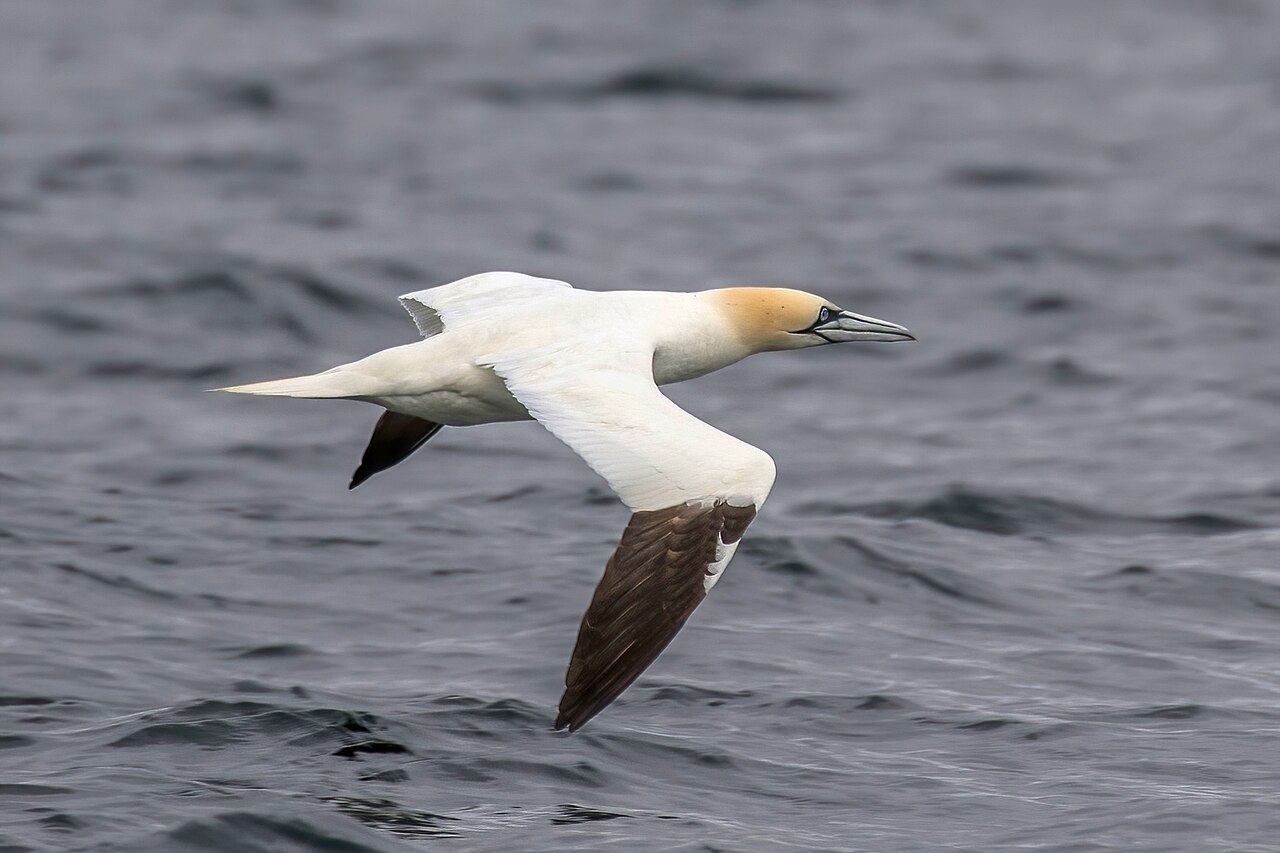
Morus bassanus
Summer visitorFair chance
There is no colony in Northumberland, so these are birds passing offshore and fishing. Seawatch from Church Point at Newbiggin or the rocks at Bamburgh, or scan from a Farnes boat, for big white birds with black wingtips that fold up and plunge straight in.
Where: Bamburgh and Harkess Rocks (Stag Rocks), Newbiggin-by-the-Sea and Church Point
Amber listed in the UK; adults are large and bright white with black wingtips and feed by diving into the sea from a height. Source ↗
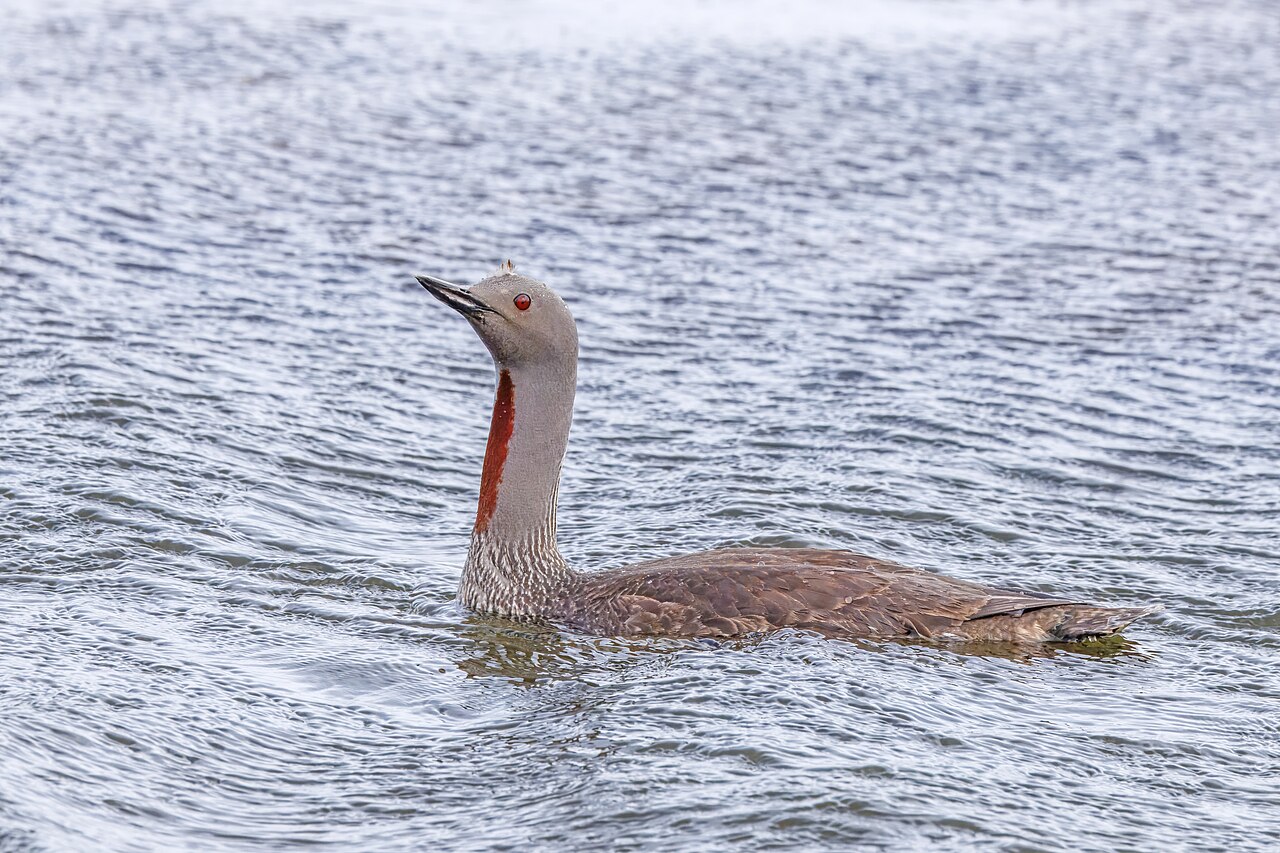
Gavia stellata
Winter visitorFair chance
A slim grey and white bird sitting low on the sea in winter, diving for long spells. Scan calm water off Bamburgh, Budle Bay near high tide and Berwick harbour from October to March; a telescope helps.
Where: Bamburgh and Harkess Rocks (Stag Rocks), The Tweed estuary at Berwick, Budle Bay, Lindisfarne NNR and Holy Island
The smallest of the UK's divers, told by its grey-brown plumage and up-tilted bill, and a Schedule 1 species under the Wildlife and Countryside Act. Source ↗
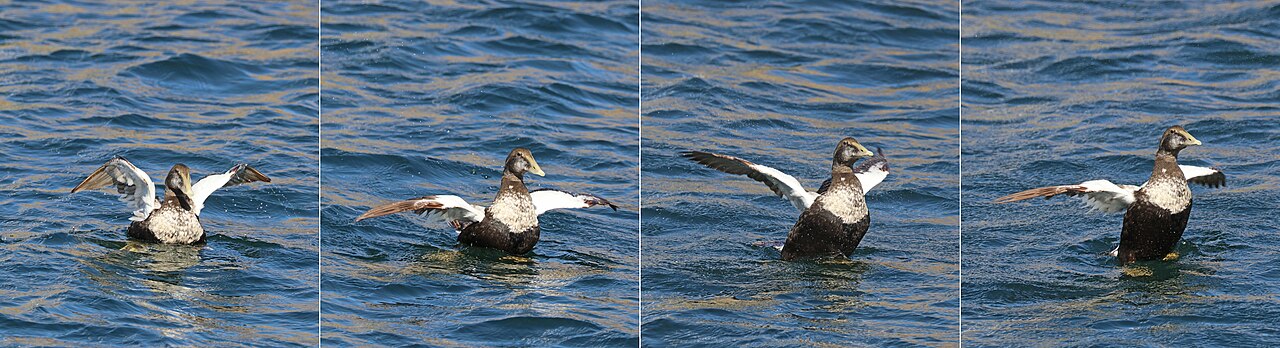
Somateria mollissima
ResidentEasy
The cuddy duck, Northumberland's own, on the sea along the whole coast all year. Males are white and black with a green wash on the neck and make a soft crooning call; females are brown and sit tight on nests on the Farnes and Coquet in early summer. Give rafts on the water at least 50 metres.
Where: Farne Islands (boats from Seahouses), Coquet Island (by boat from Amble), Seahouses harbour, Amble harbour and the Braid, Bamburgh and Harkess Rocks (Stag Rocks)
Called cuddy's duck after St Cuthbert, who lived as a hermit on Inner Farne and in 676 brought in protection for eiders and other seabirds, thought to be among the earliest bird protection laws anywhere. Source ↗
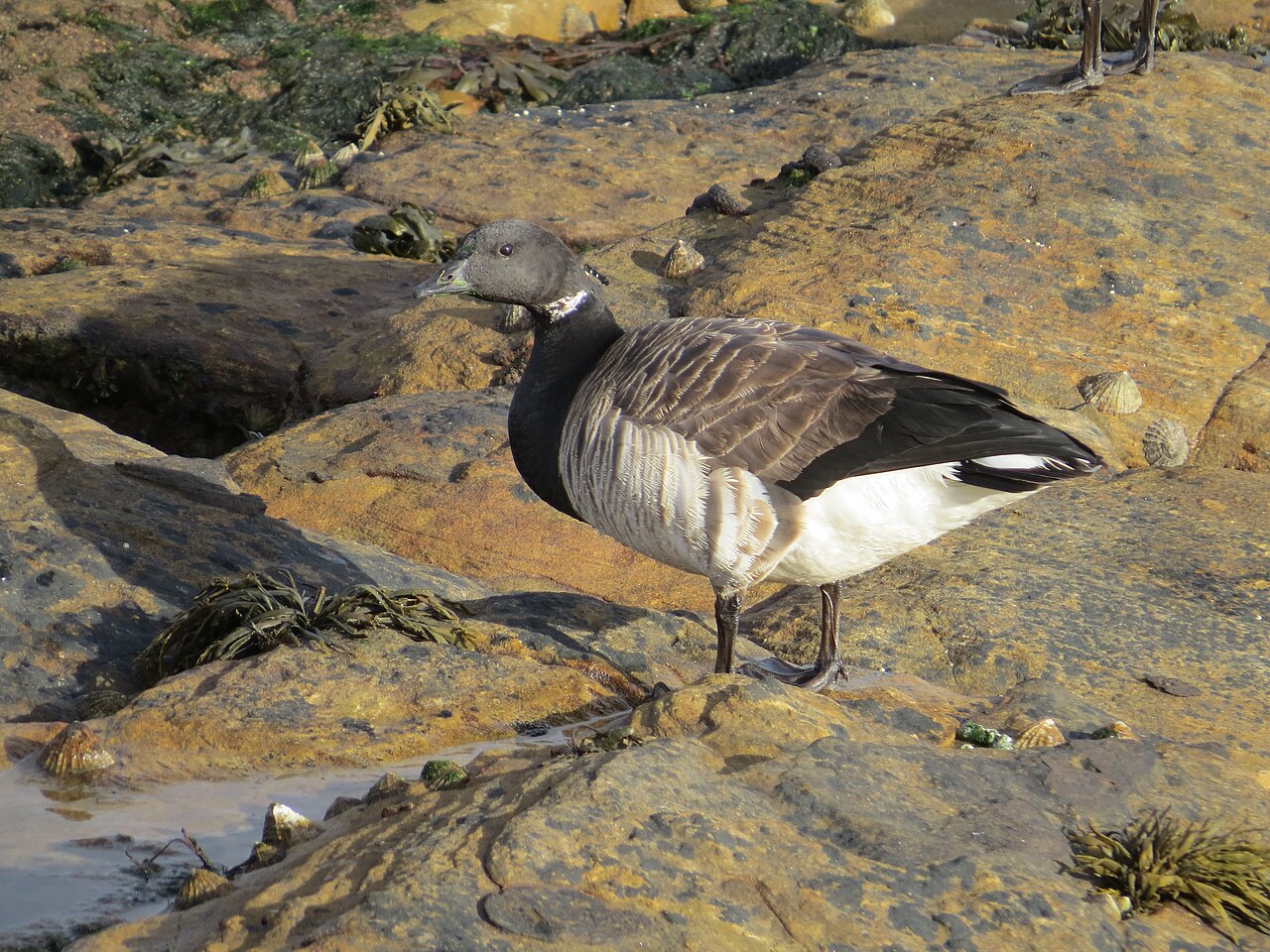
Branta bernicla hrota
Winter visitorEasy
Small dark geese with pale bellies feeding on the Lindisfarne mudflats from autumn to early spring. Watch from the shore, never walk out towards feeding flocks, and check the council's crossing times before you drive over to Holy Island.
Where: Lindisfarne NNR and Holy Island
Natural England says these light-bellied brent geese fly in from Svalbard and that Lindisfarne is their only regular wintering site in Britain, holding 40 per cent of the world population. Source ↗
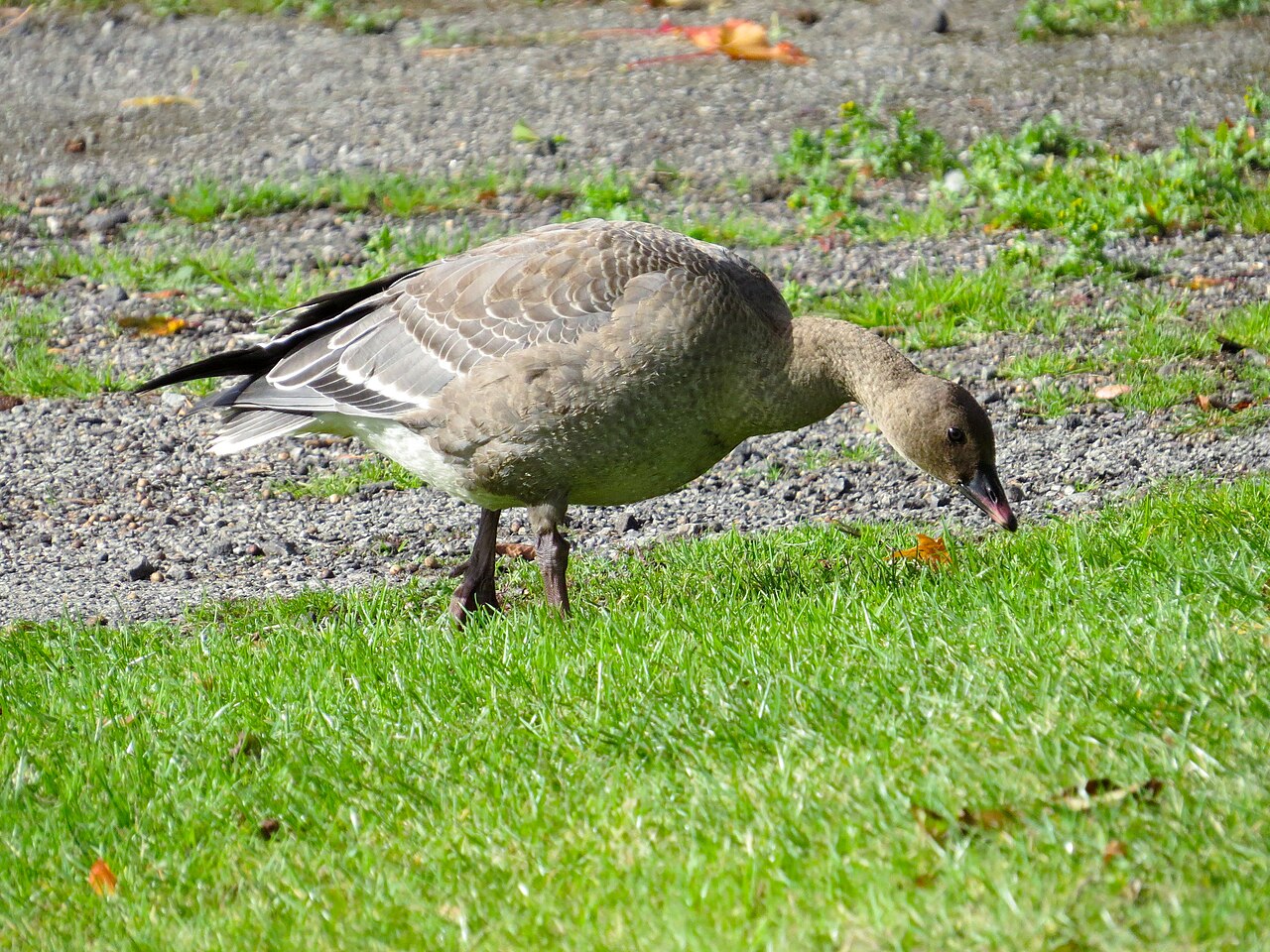
Anser brachyrhynchus
Winter visitorEasy
Listen for the high yapping before you see the skeins. Northumberland Wildlife Trust says large flocks pass over East Chevington in spring and autumn; they commute between roosts and feeding fields at dawn and dusk, so watch the sky then.
Where: East Chevington, Cresswell Pond, Lindisfarne NNR and Holy Island, Grindon Lough, Greenlee Lough and the Wall crags
Breeds in Iceland, Greenland and Spitsbergen and does not nest in the UK. Source ↗
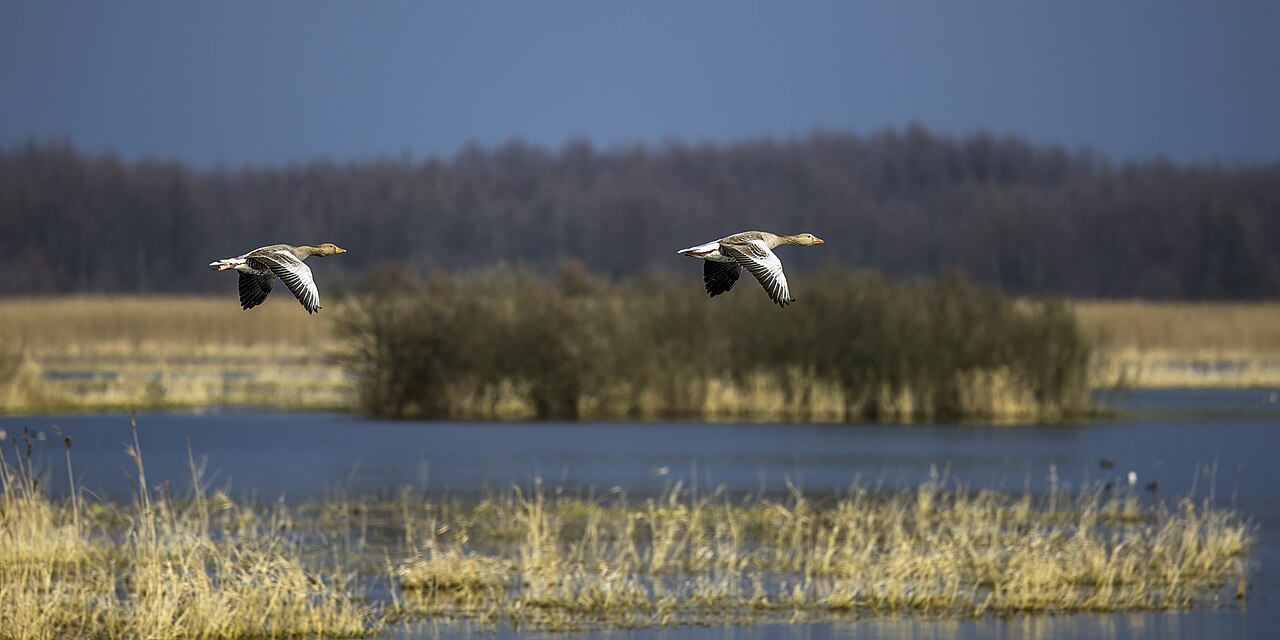
Anser anser
ResidentEasy
The big grey goose with an orange bill, on the lakes and loughs all year and in bigger numbers in winter. Cresswell Pond, East Chevington and Grindon Lough are reliable.
Where: Cresswell Pond, East Chevington, Grindon Lough, Greenlee Lough and the Wall crags, Lindisfarne NNR and Holy Island
Wintering greylag geese are one of the bird features Lindisfarne Special Protection Area is designated for. Source ↗
Cygnus cygnus
Winter visitorFair chance
Wild swans with a wedge of yellow on the bill, on the loughs near Hadrian's Wall in winter and overhead at East Chevington. Grindon Lough can be watched from the roadside along the Stanegate west of Newbrough without leaving the car.
Where: Grindon Lough, Greenlee Lough and the Wall crags, Lindisfarne NNR and Holy Island, East Chevington
Whoopers usually arrive in the UK in October and leave in March and April; an airline pilot once reported a flock of swans, thought to be whoopers, at about 8,000 metres. Source ↗
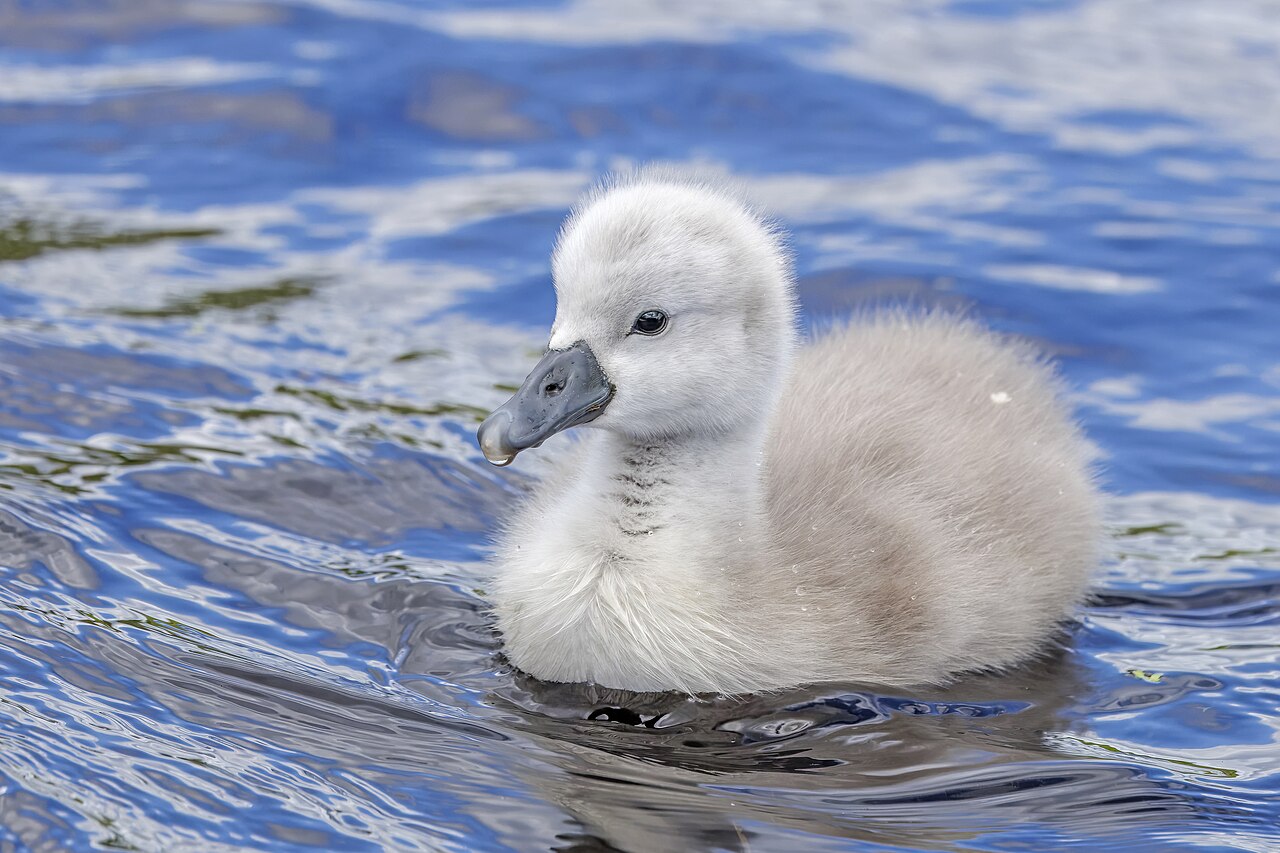
Cygnus olor
ResidentEasy
The Tweed estuary at Berwick holds one of the biggest mute swan flocks in Britain, easy to watch from the riverside paths along the north bank in the town. Numbers build when the flock gathers to moult.
Where: The Tweed estuary at Berwick
Destination Tweed says numbers on the estuary peak at around 800, the second largest swan colony in Britain, with around 200 staying all year. Source ↗
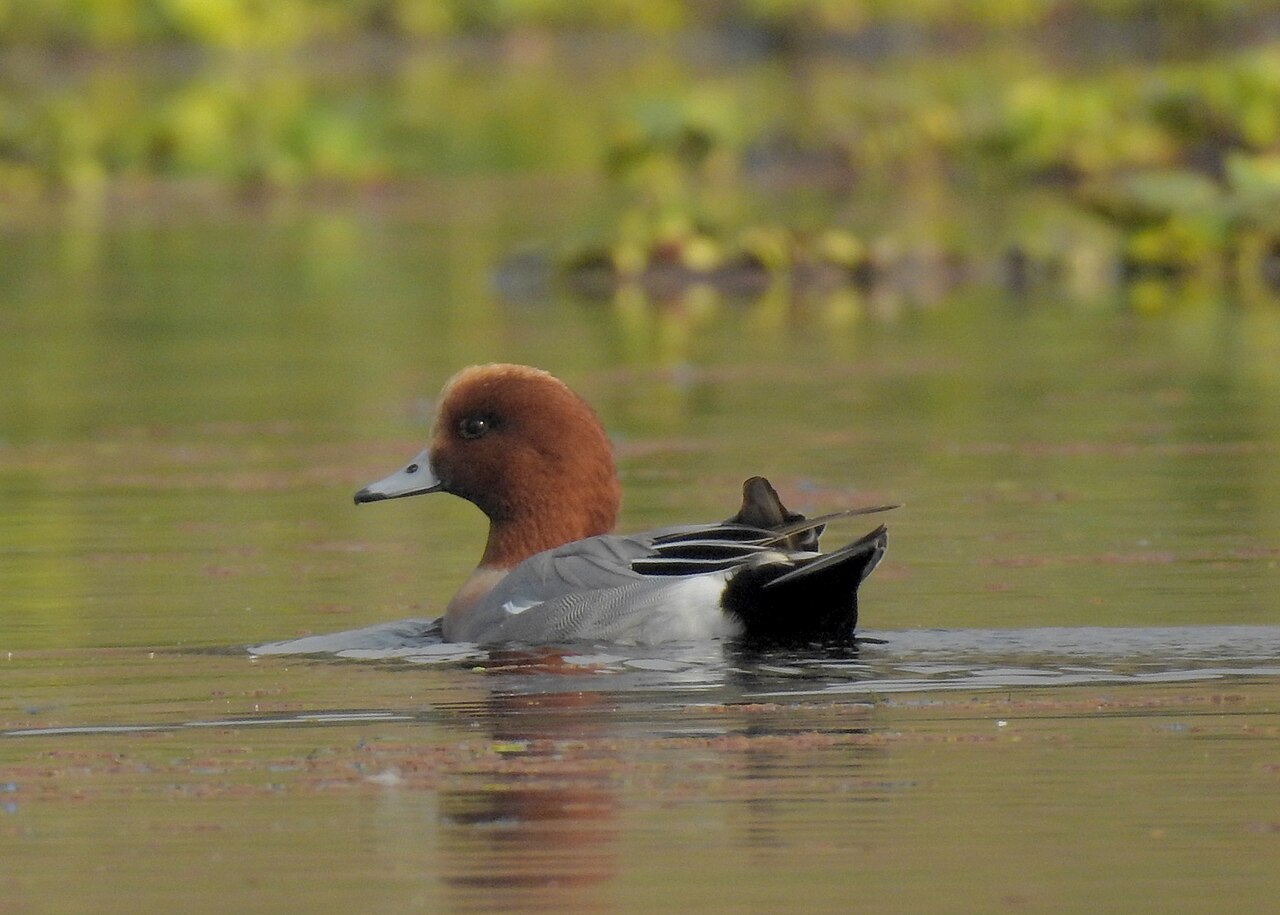
Mareca penelope
Winter visitorEasy
Winter ducks that graze in tight flocks on the mudflats and wet grass; males have a chestnut head with a cream stripe. Listen for the whistling call before you see them.
Where: Lindisfarne NNR and Holy Island, East Chevington, Druridge Pools and Druridge Bay, Cresswell Pond, Grindon Lough, Greenlee Lough and the Wall crags
Amber listed because large numbers winter at a few UK sites; many come from Iceland, Scandinavia and Russia. Source ↗
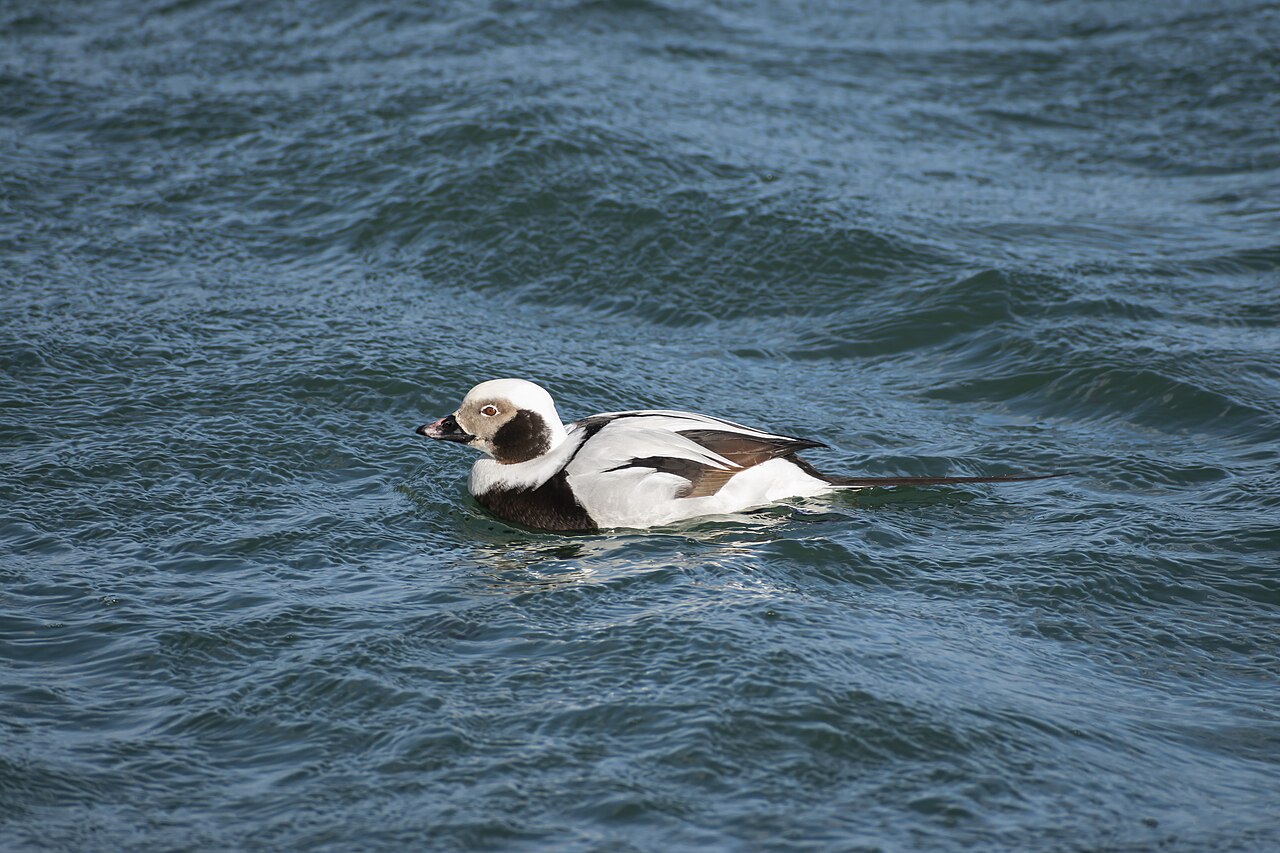
Clangula hyemalis
Winter visitorLucky
A small, busy sea duck that dives constantly, on the sea off Bamburgh and around Holy Island in winter. You will want a telescope and a calm day; look beyond the eider and scoter rafts.
Where: Bamburgh and Harkess Rocks (Stag Rocks), Lindisfarne NNR and Holy Island
A winter visitor most commonly found from Northumberland to northern Scotland, and a Schedule 1 species that is vulnerable to oil pollution at sea. Source ↗
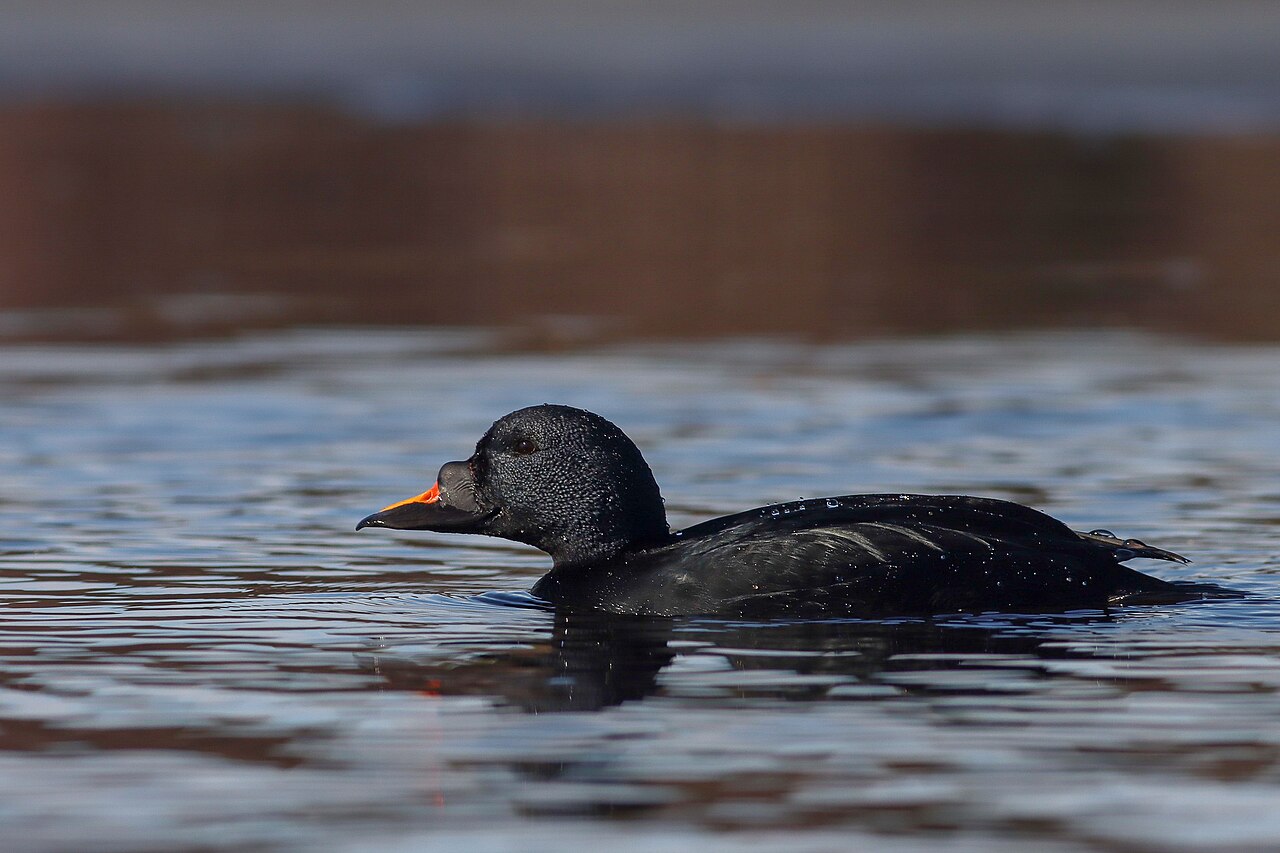
Melanitta nigra
Winter visitorFair chance
Black sea ducks in bobbing rafts offshore, or long straggling lines flying low along the coast. Rafts winter in the shallow water around Holy Island and off Bamburgh; scan from the shore with a telescope.
Where: Bamburgh and Harkess Rocks (Stag Rocks), Lindisfarne NNR and Holy Island
Red listed; the male is totally black and the female lighter with a pale face, and the UK breeding population has fallen significantly. Source ↗
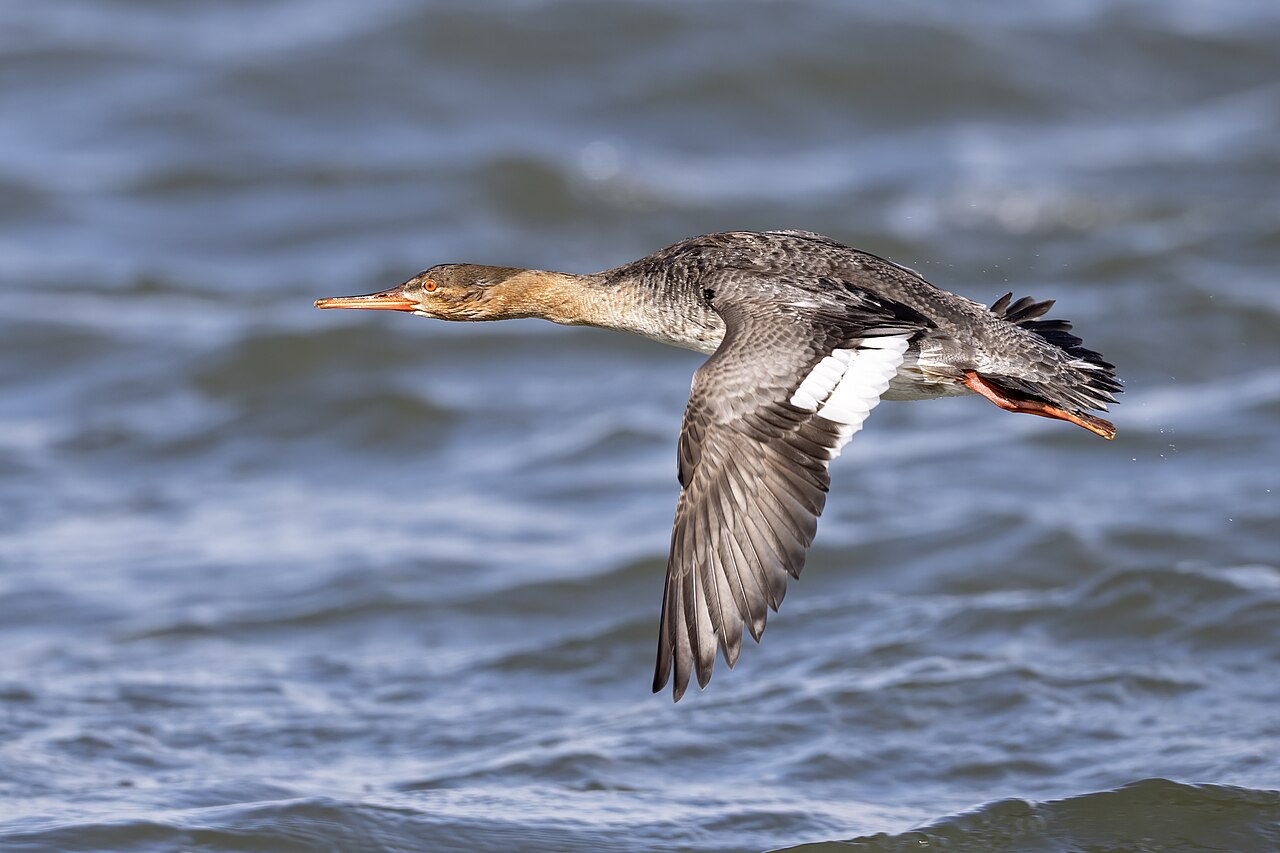
Mergus serrator
Winter visitorFair chance
A slim diving duck with a spiky crest and a thin red bill, fishing in the Tweed estuary at Berwick and the Lindisfarne channels in winter. One of the birds Lindisfarne Special Protection Area is designated for.
Where: The Tweed estuary at Berwick, Lindisfarne NNR and Holy Island
Sawbills are named for their serrated bills, used for catching fish; mergansers are sociable and form flocks of several hundred in autumn. Source ↗
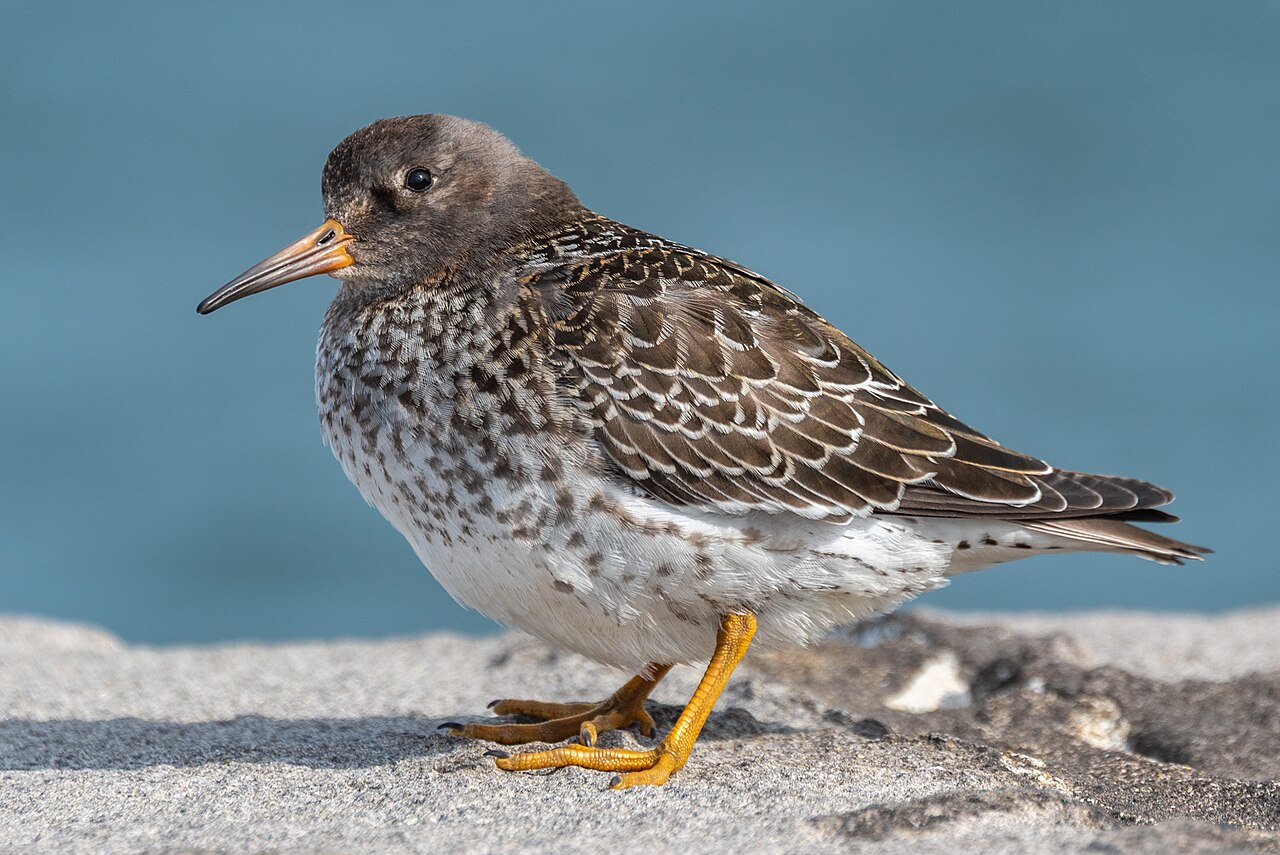
Calidris maritima
Winter visitorFair chance
Dumpy grey waders with orange-yellow legs on wave-washed rocks and seaweed, easiest at high tide. BirdGuides' pick is the rocks by the lighthouse at Bamburgh, where there can be more than 100; Seahouses harbour, Boulmer and Newbiggin get them too. Do not flush roosting flocks.
Where: Bamburgh and Harkess Rocks (Stag Rocks), Seahouses harbour, Boulmer, Newbiggin-by-the-Sea and Church Point, Low Newton and Newton Pool
The Northumbria Coast Special Protection Area is designated for its internationally important numbers of wintering purple sandpipers, which are almost entirely restricted to the rocky shore. Source ↗
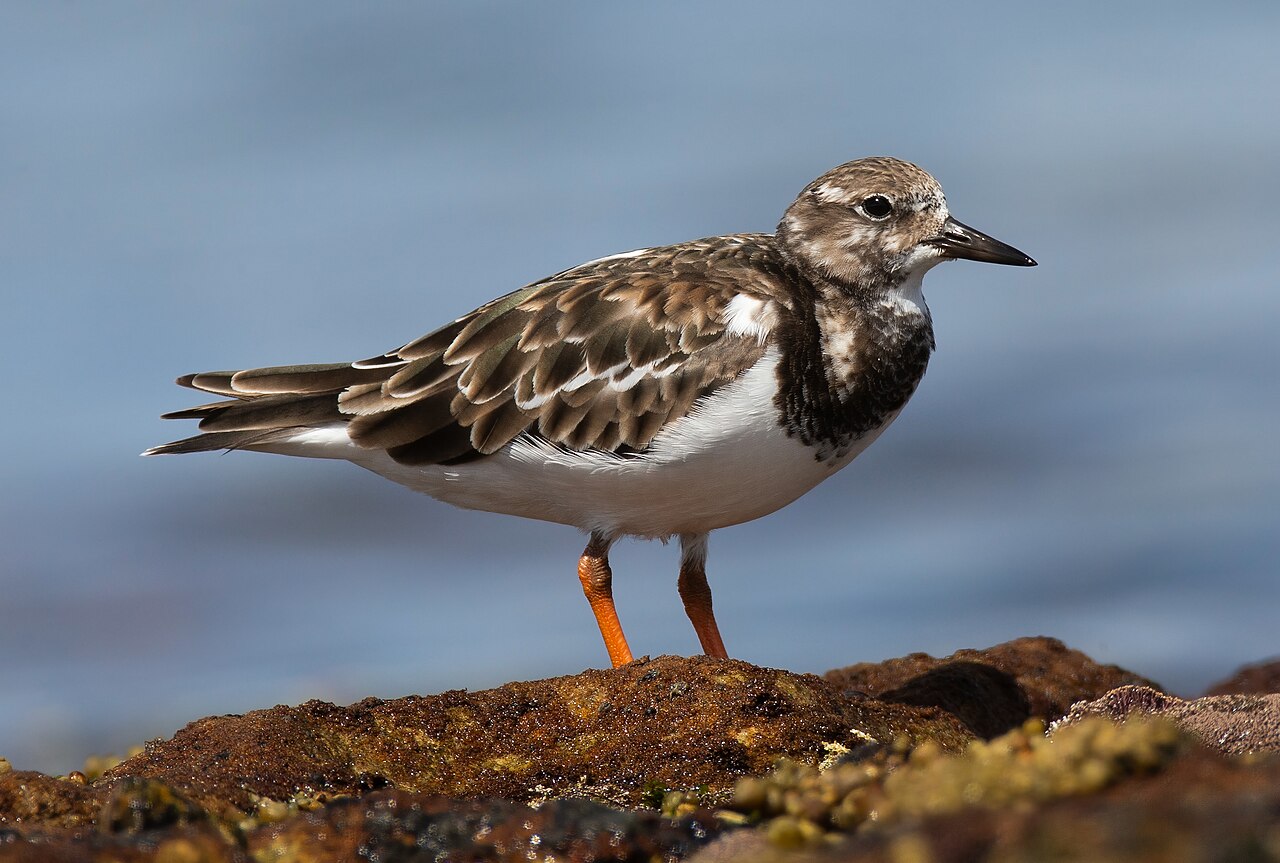
Arenaria interpres
Winter visitorEasy
Tortoiseshell waders flipping seaweed and stones along the tideline and around harbours, often not bothered by people at all. From late summer to spring on almost any rocky or seaweedy bit of shore.
Where: Bamburgh and Harkess Rocks (Stag Rocks), Seahouses harbour, Low Newton and Newton Pool, NWT Hauxley, The Tweed estuary at Berwick
Named for creeping over rocks and picking food out from under stones; Amber listed in the UK. Source ↗
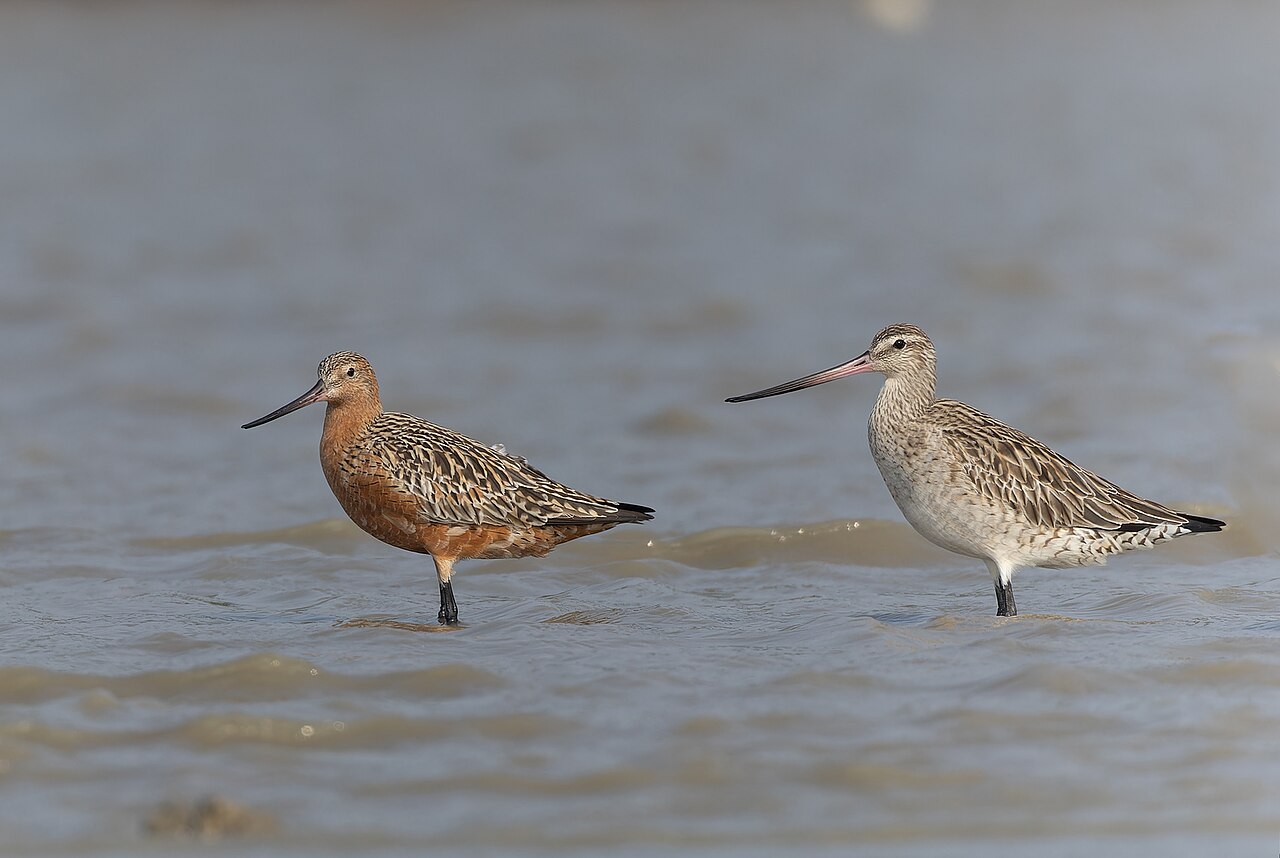
Limosa lapponica
Winter visitorEasy
Long-billed, long-legged waders feeding on the Lindisfarne and Budle mudflats, pushed closer by the rising tide. Watch from the shore; do not walk out onto the flats.
Where: Lindisfarne NNR and Holy Island, Boulmer, The Tweed estuary at Berwick
Breeds in the Arctic of Scandinavia and Siberia, and hundreds of thousands pass through the UK or stay for the winter. Source ↗
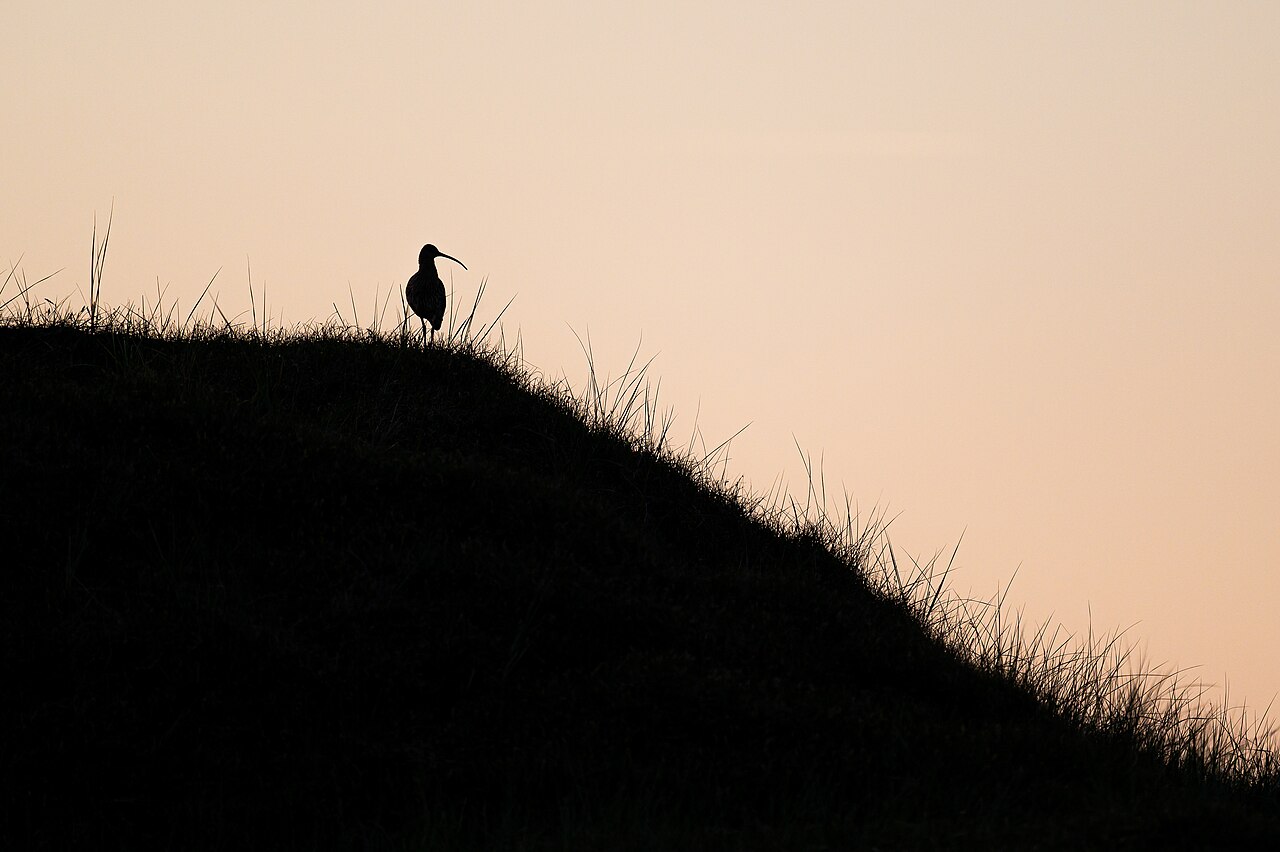
Numenius arquata
ResidentEasy
In spring and early summer the bubbling song drifts over the Cheviot valleys, where they nest on the ground, so keep to paths and keep dogs on leads. From autumn they move down to the estuaries and coast.
Where: College Valley, Harthope Valley, Simonside Hills, Budle Bay, NWT Hauxley, Druridge Pools and Druridge Bay
In the College Valley breeding curlews fell from 8 to 10 pairs to just three, the estate reports; the species has been on the UK Red List since 2015. Source ↗
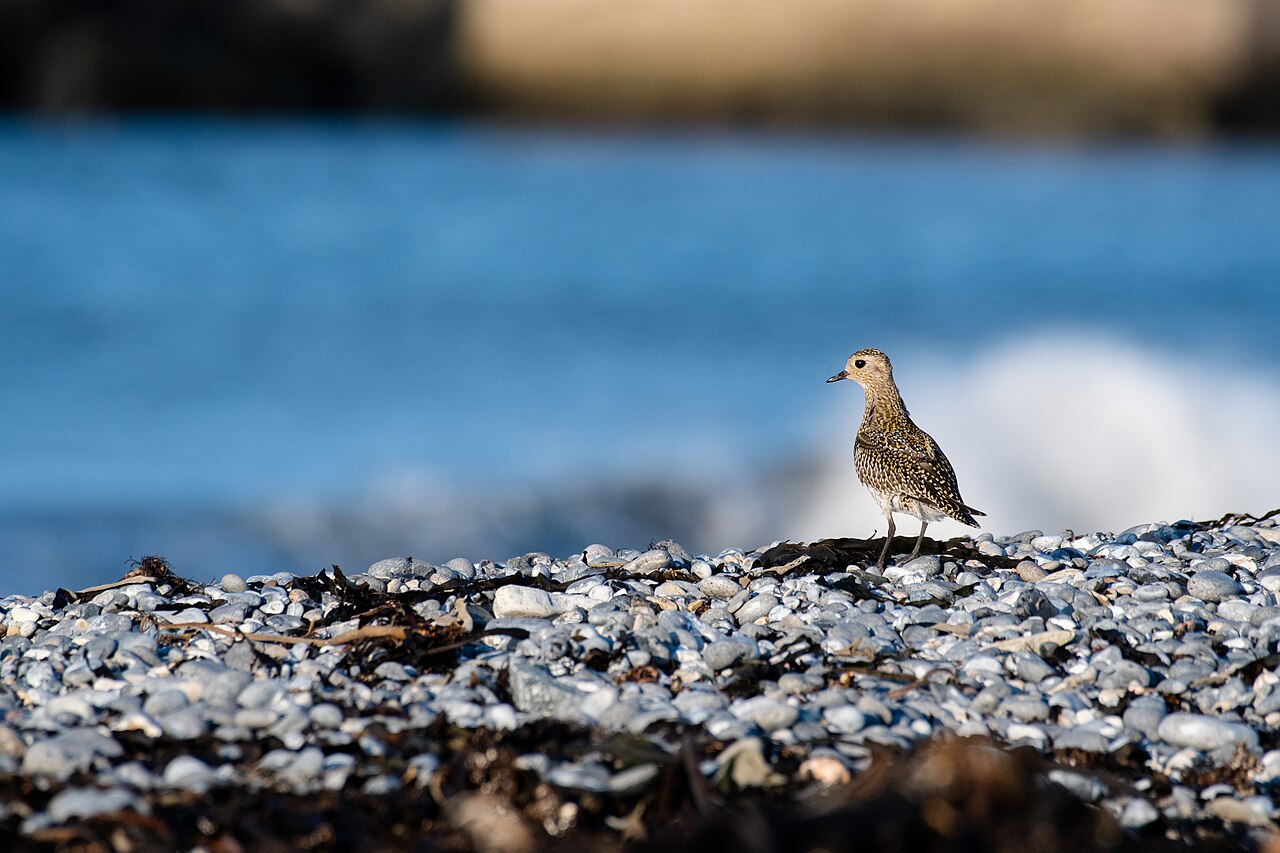
Pluvialis apricaria
ResidentFair chance
Gold-spangled plovers on high moorland in spring and summer; in autumn and winter look for tight flocks at Grindon Lough and on the Lindisfarne flats that wheel and flash white underneath.
Where: Grindon Lough, Lindisfarne NNR and Holy Island
Gold and black in summer, brown and white in winter; wintering golden plovers are one of the features Lindisfarne Special Protection Area is designated for. Source ↗
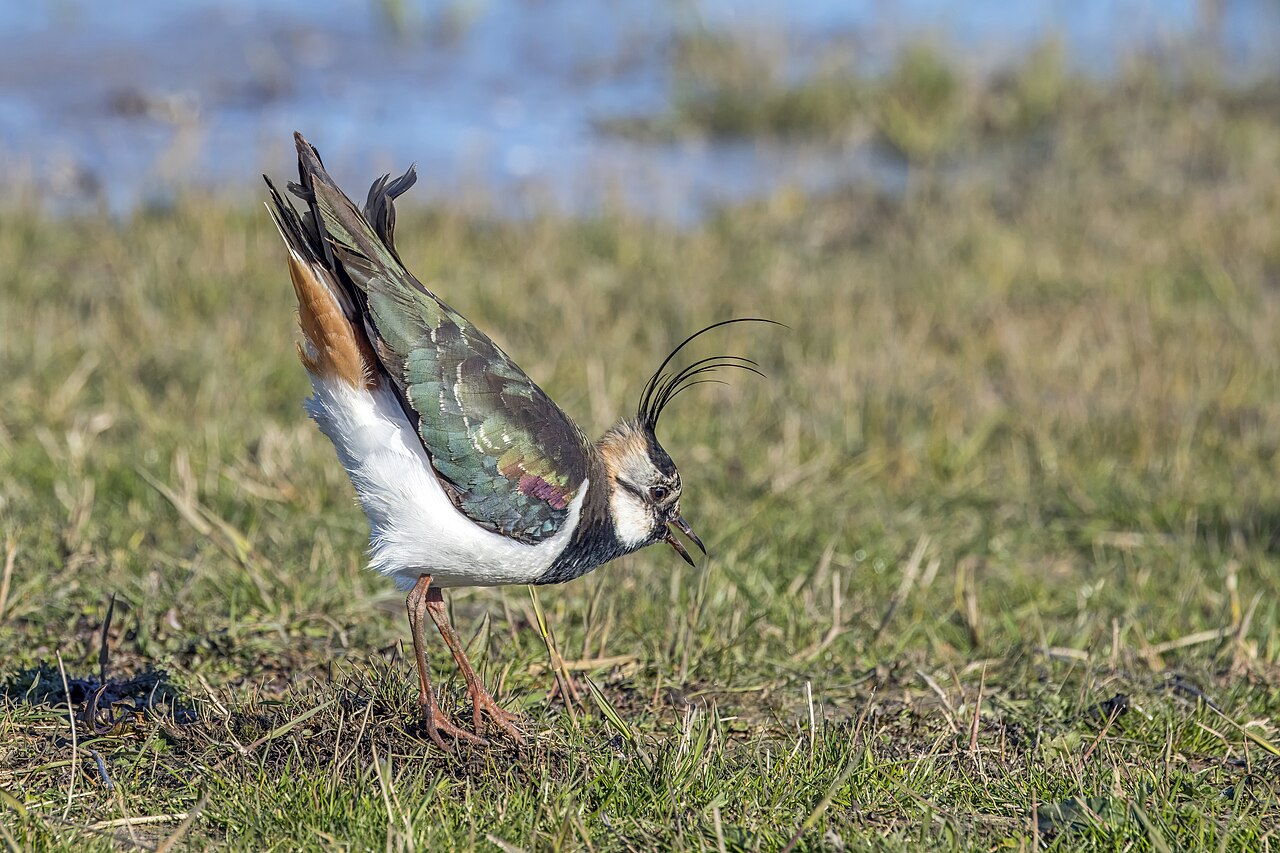
Vanellus vanellus
ResidentEasy
Tumbling display flights over wet fields in spring, big loose flocks in winter. Hauxley and Druridge Pools are the easy places, and they breed at Derwent Reservoir.
Where: NWT Hauxley, Druridge Pools and Druridge Bay, Derwent Reservoir (Northumberland side)
Also known as the peewit in imitation of its call; numbers have declined by 55 per cent since the 1960s. Source ↗
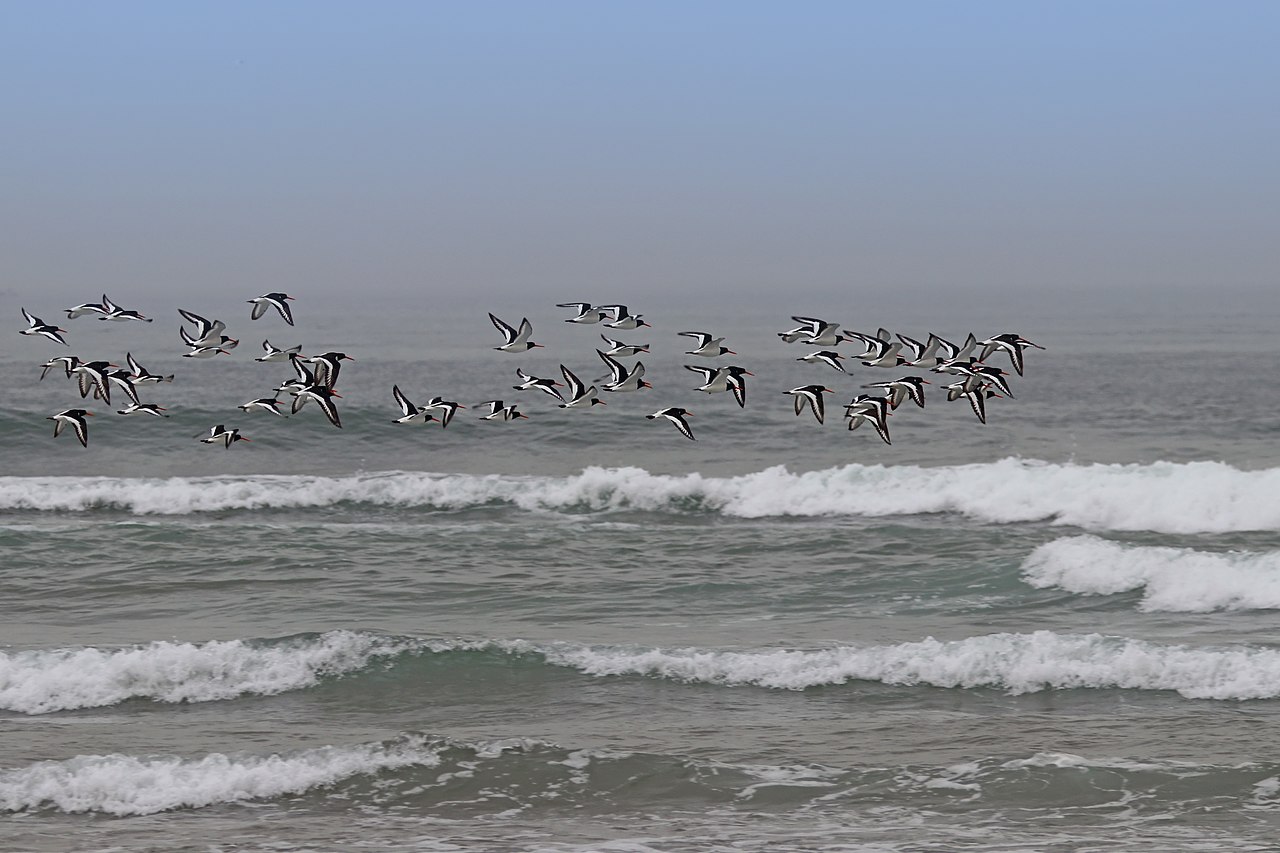
Haematopus ostralegus
ResidentEasy
Loud black and white waders with carrot bills, on Budle Bay, the Tweed estuary and most of the coast. In spring some move inland to nest in the Cheviot valleys and round Derwent Reservoir.
Where: College Valley, Budle Bay, The Tweed estuary at Berwick, Derwent Reservoir (Northumberland side)
In the College Valley oystercatchers usually arrive at Hethpool in early March to breed, a long way from the sea. Source ↗
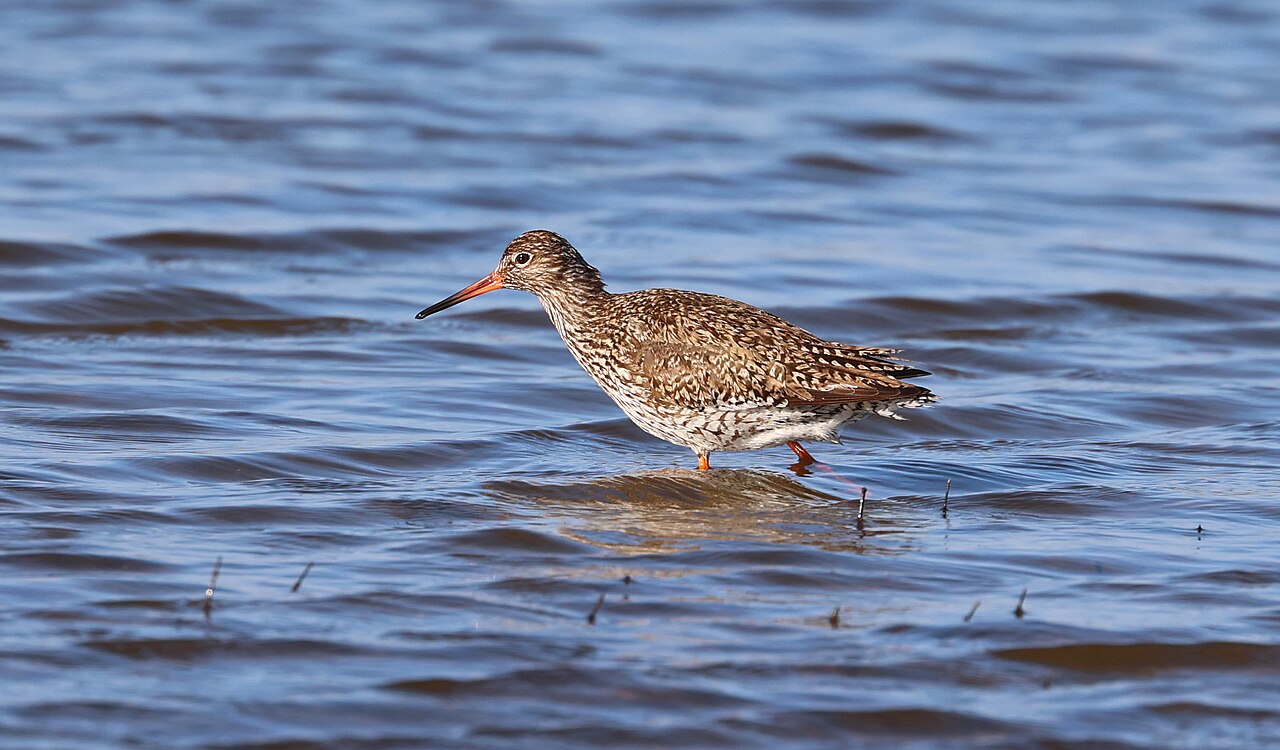
Tringa totanus
ResidentEasy
The nervy brown wader with red legs that yelps and flies off first; on every estuary and saltmarsh edge, especially around high tide.
Where: Budle Bay, Druridge Pools and Druridge Bay, NWT Hauxley, Boulmer, The Tweed estuary at Berwick
Amber listed because of breeding declines; spring storms and high tides can flood its nesting areas. Source ↗
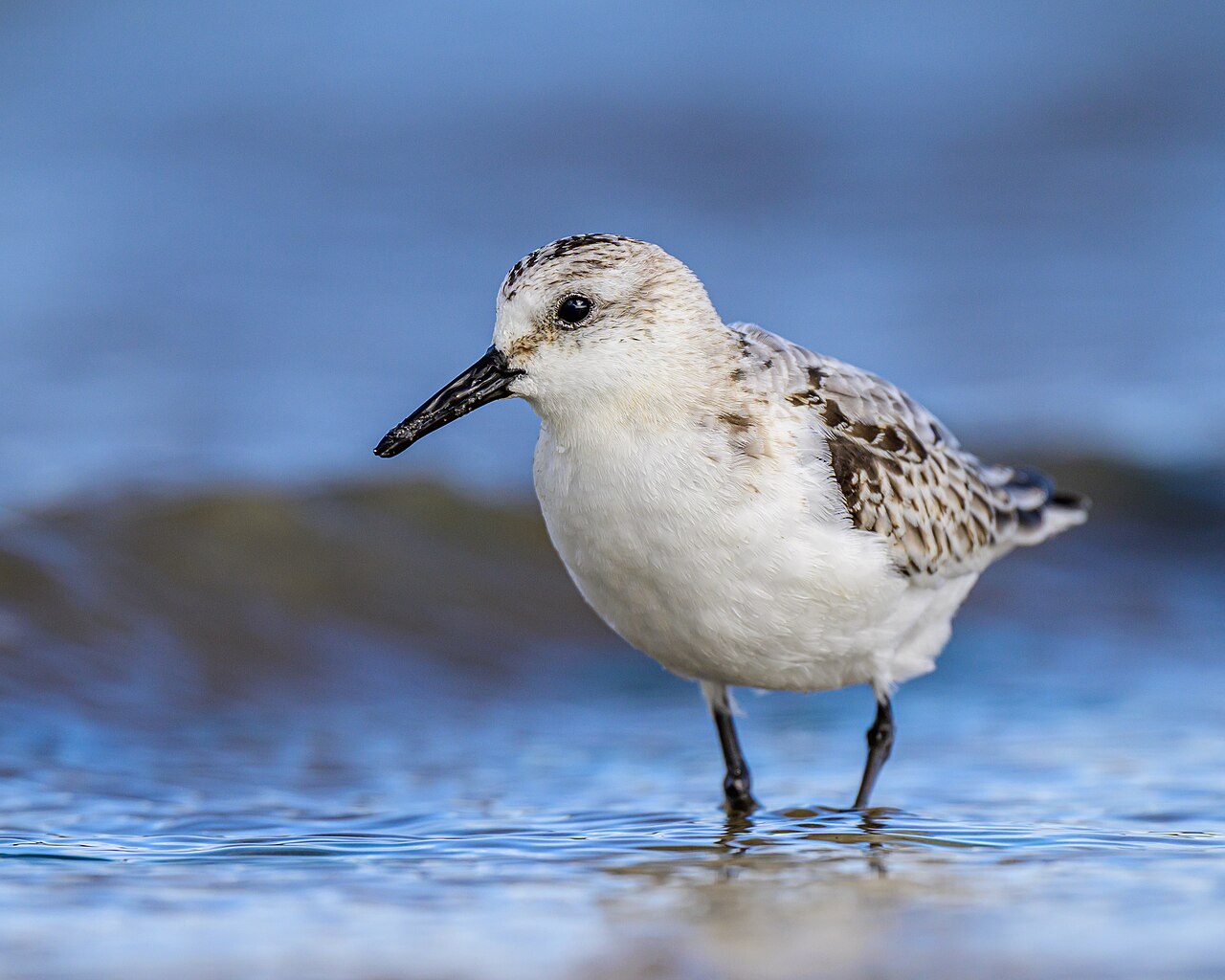
Calidris alba
Winter visitorEasy
Small pale waders running up and down the edge of the waves like wind-up toys, from late summer to spring. Try the Holy Island beaches and the rocks and sand at Bamburgh.
Where: Lindisfarne NNR and Holy Island, Bamburgh and Harkess Rocks (Stag Rocks)
Wintering sanderlings are one of the bird features Lindisfarne Special Protection Area is designated for. Source ↗
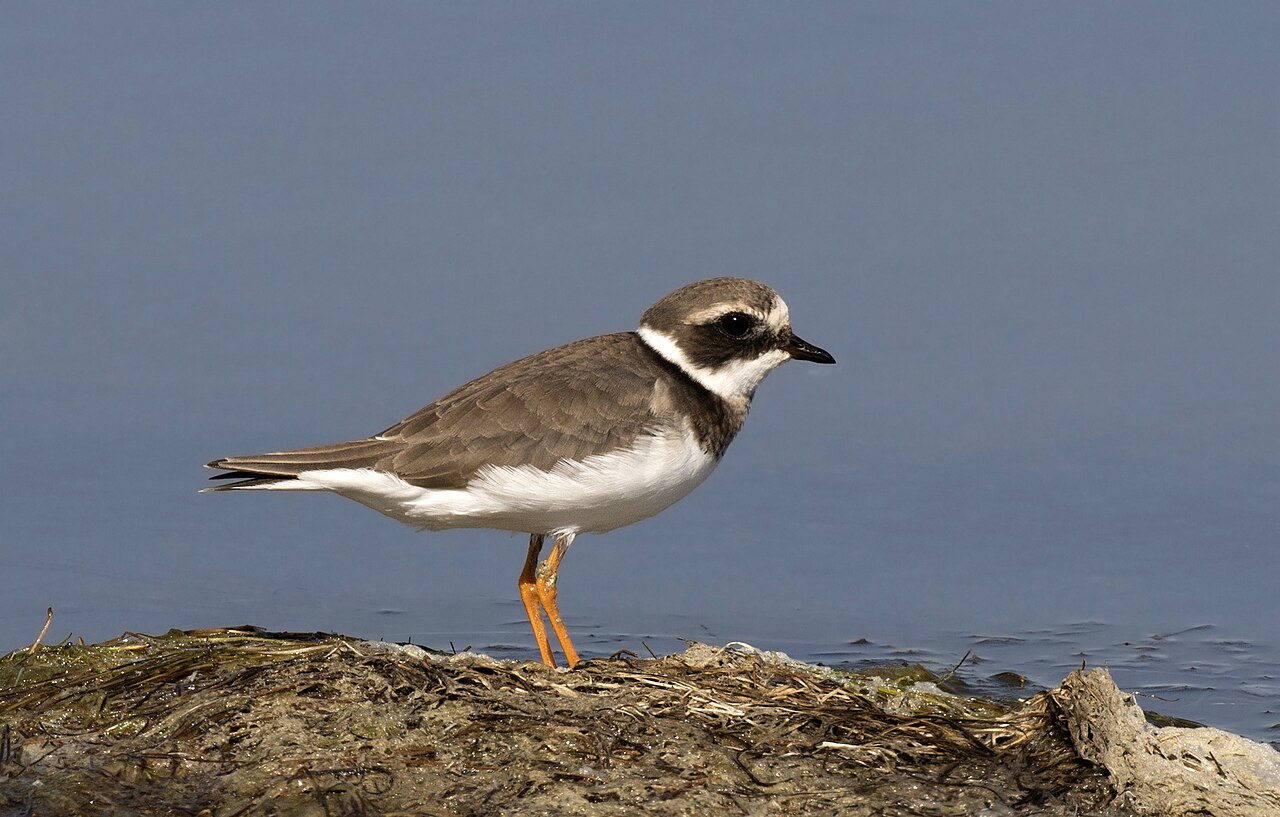
Charadrius hiaticula
ResidentFair chance
A small plover with an orange bill and a black neck ring, nesting on open beaches in summer, which is why parts of the Long Nanny are roped off; they also breed round Derwent Reservoir. Stay outside the ropes and keep dogs close.
Where: Beadnell Bay and the Long Nanny tern colony, Budle Bay, Boulmer, Derwent Reservoir (Northumberland side)
The National Trust says ringed plovers nest at the Long Nanny shorebird site alongside the Arctic and little terns. Source ↗
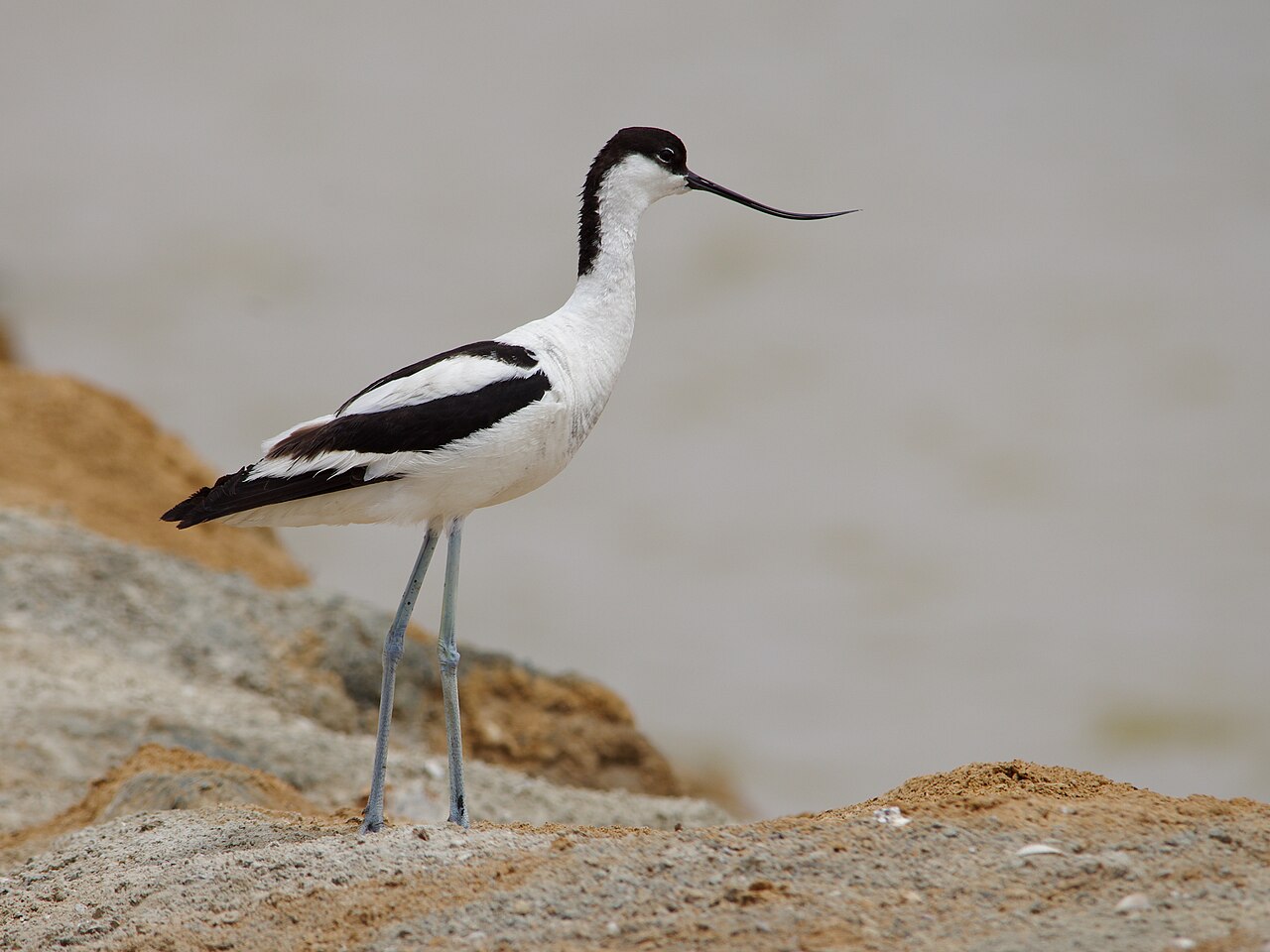
Recurvirostra avosetta
Summer visitorFair chance
Black and white with an upturned bill, sweeping side to side in the shallow water of Cresswell Pond from the hide in spring and summer.
Where: Cresswell Pond, Low Newton and Newton Pool
Avocets have nested at Cresswell Pond since 2011, historically the UK's most northerly nesting site, according to Northumberland Wildlife Trust. Source ↗
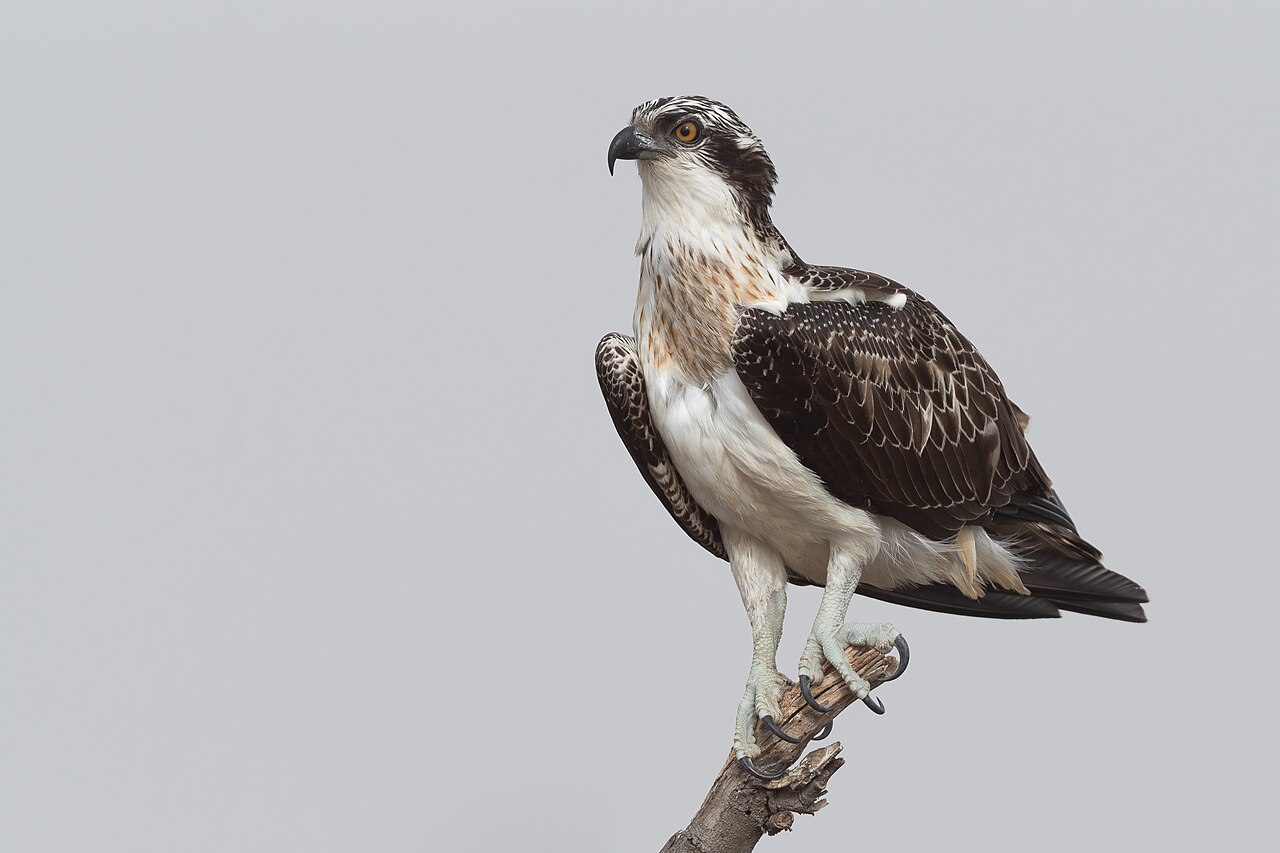
Pandion haliaetus
Summer visitorFair chance
Watch the 4K nest camera and scopes at the Tower Knowe osprey watch at Kielder (Saturday, Sunday and Wednesday, 11am to 4pm, April to mid August) or take a Wild Intrigue osprey cruise on the Osprey ferry from Kielder Waterside. Do not go looking for nests in the forest. Ospreys also turn up at Derwent Reservoir in summer and pass through Whittle Dene and East Chevington.
Where: Kielder Water and Forest Park (and the Kielder ospreys), Derwent Reservoir (Northumberland side), Whittle Dene reservoirs, East Chevington
Ospreys recolonised Kielder naturally in 2009, and Visit Kielder says 130 young have migrated from the forest since. Source ↗
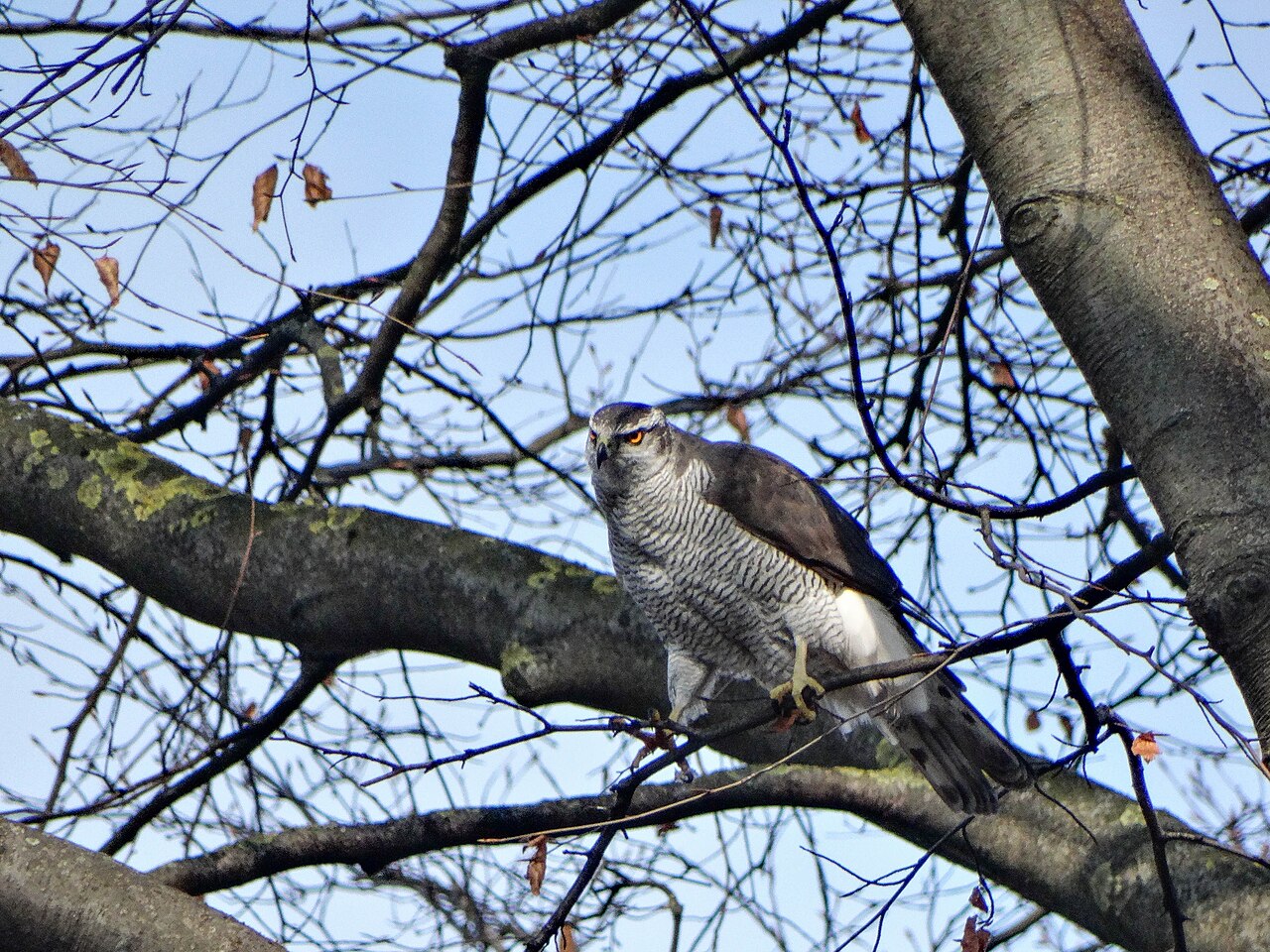
Accipiter gentilis
ResidentLucky
A big, powerful hawk of the conifer forests. Your best chance is a still, sunny morning in late winter or early spring, scanning over the trees from an open viewpoint at Kielder or from Thrunton Crag, where The Dipper's Nest says they display in March. Never go looking for nests.
Where: Kielder Water and Forest Park (and the Kielder ospreys), Thrunton Woods
A Schedule 1 species that is still persecuted; in late winter and spring it performs a sky-dance display, and it is now most common in southern Scotland, northern England and Wales. Source ↗
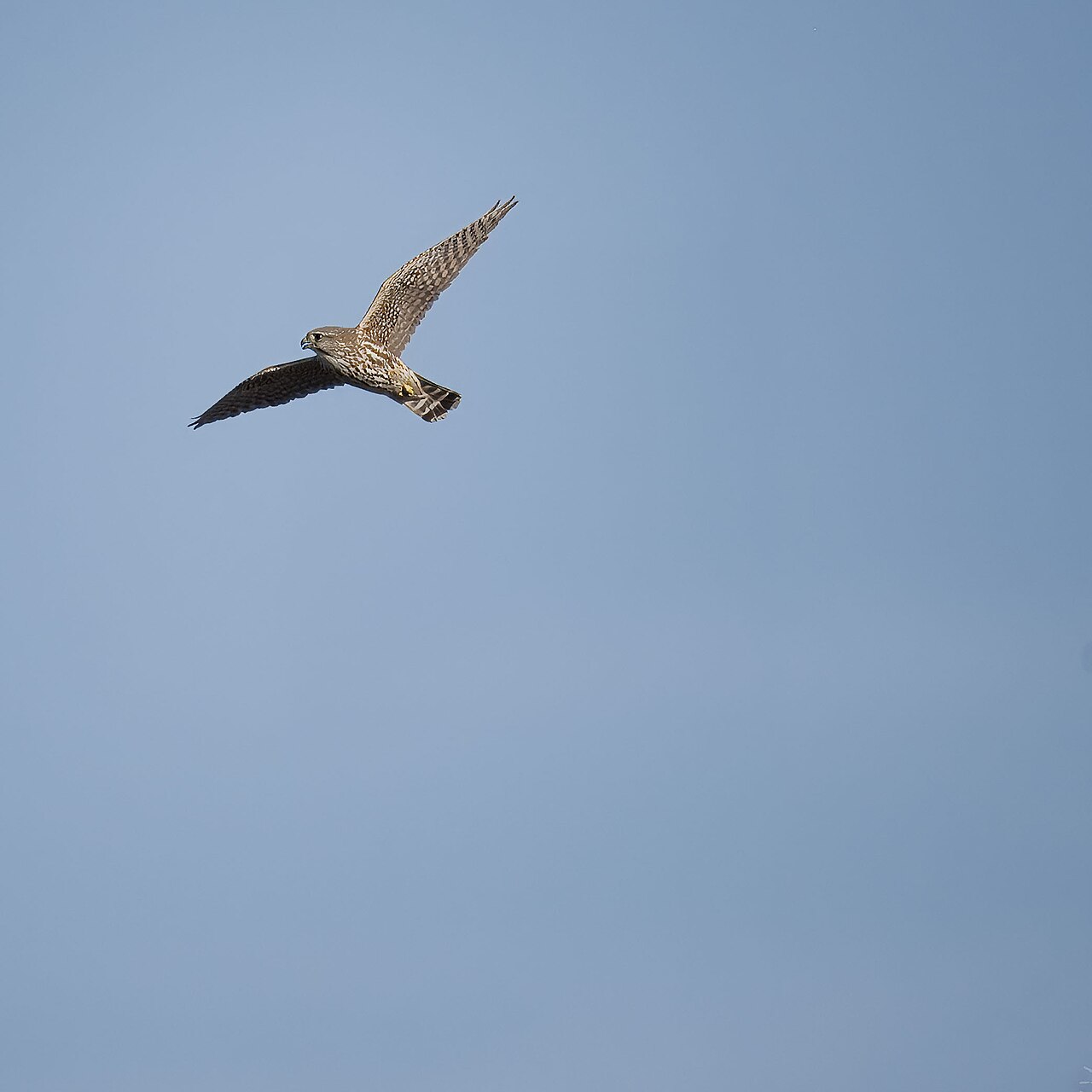
Falco columbarius
ResidentLucky
A small, fast falcon that dashes low over the heather in the Cheviots and at Kielder in summer; in winter it hunts small birds over Budle Bay and Lindisfarne. Usually a brief view as it shoots past.
Where: College Valley, Harthope Valley, Kielder Water and Forest Park (and the Kielder ospreys), Budle Bay, Lindisfarne NNR and Holy Island
The UK's smallest bird of prey, Red listed but recovering from a late 20th century crash; in winter birds from Iceland join ours on lowland farmland and coastal marshes. Source ↗
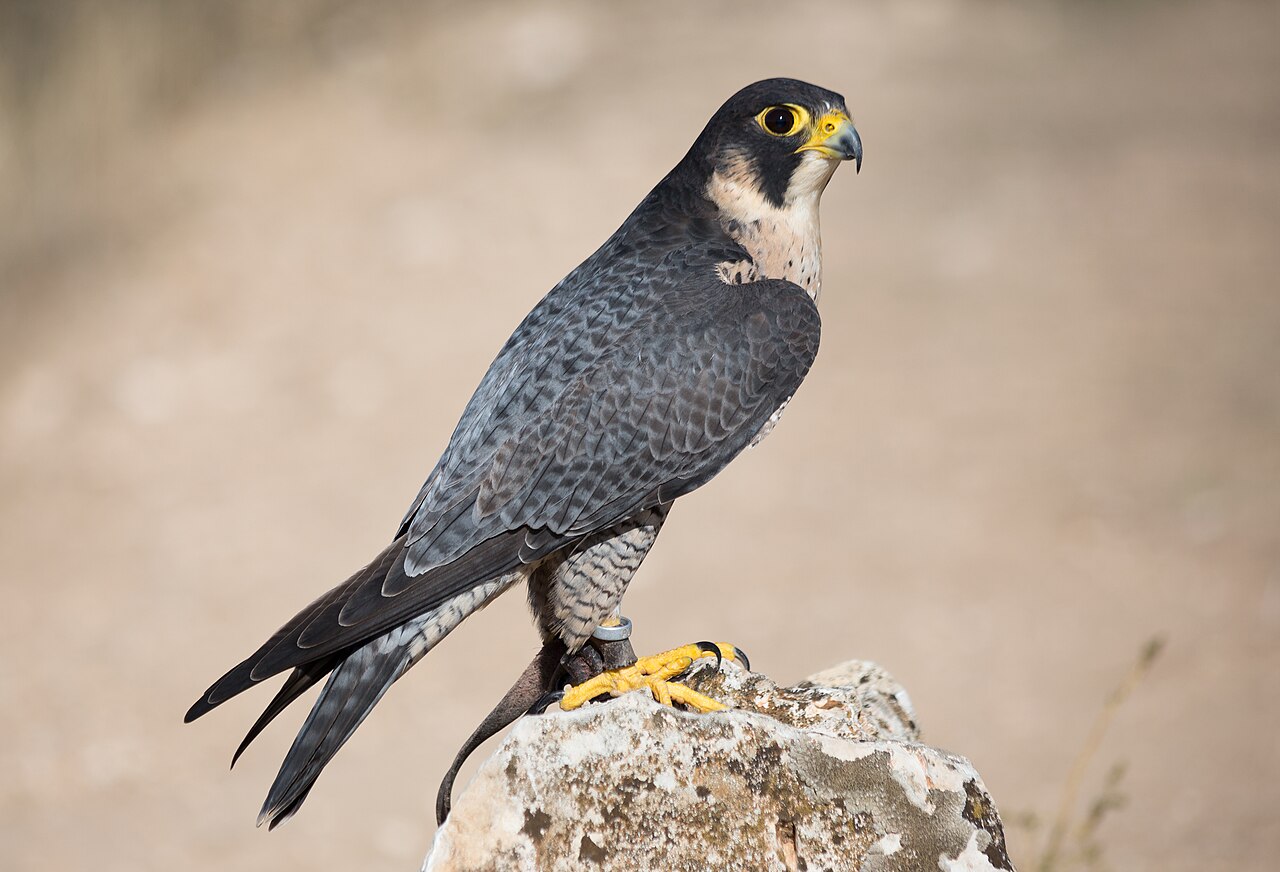
Falco peregrinus
ResidentFair chance
They breed on the Whin Sill crags by Hadrian's Wall and in the Cheviot valleys; in winter watch for sudden panics among the waders at Budle Bay and Lindisfarne, which often mean one is hunting.
Where: Greenlee Lough and the Wall crags, College Valley, Budle Bay, Lindisfarne NNR and Holy Island
The fastest animal on the planet, reaching around 200 miles per hour in a stoop, with a third eyelid that works as built-in goggles. Source ↗
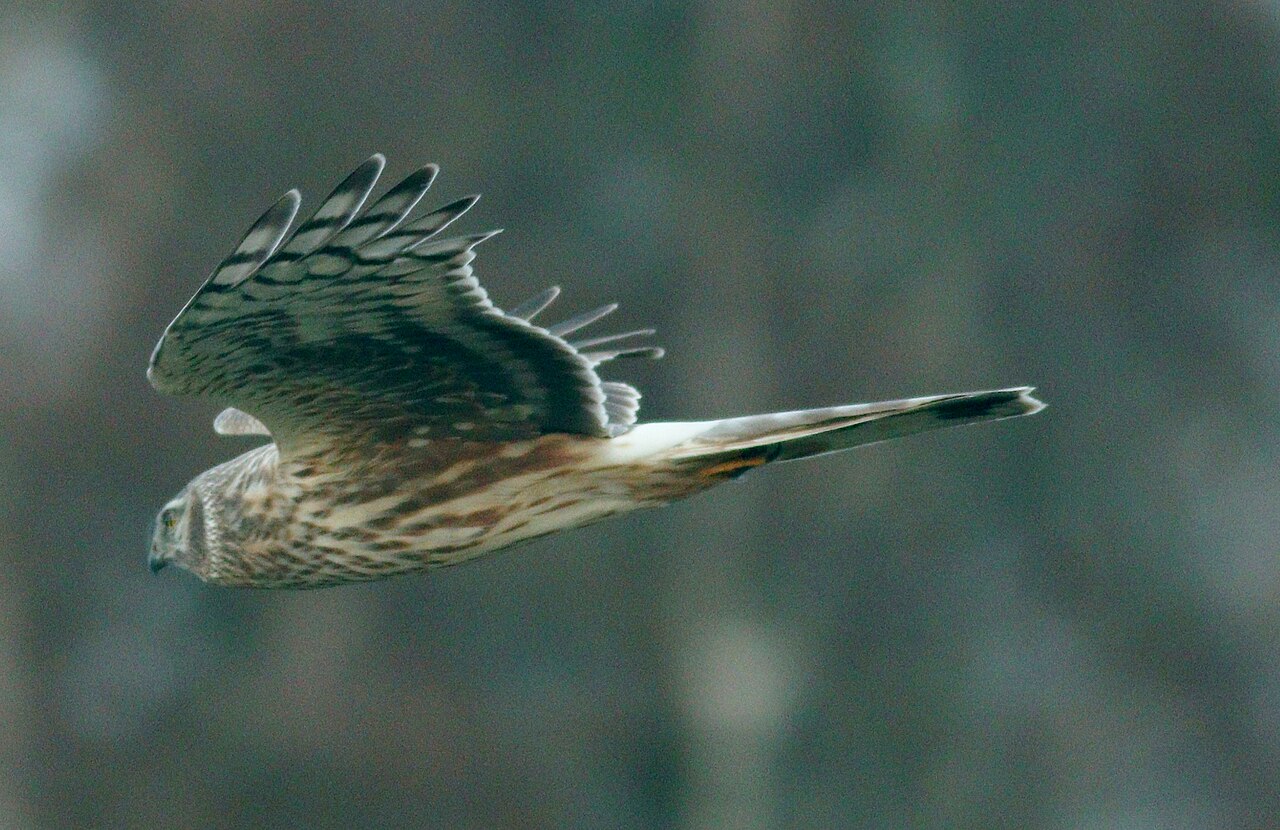
Circus cyaneus
ResidentLucky
Northumberland's nests are on open ground within Forestry England's forests and are watched over by the Northumberland Hen Harrier Protection Partnership, so there is no public site and you should never go looking. A pale grey male or a brown ringtail female quartering rough ground in spring and summer is a bonus, not something to plan a day around.
Forestry England calls Northumberland a key stronghold for hen harriers in England, with a growing number of successful nests on open habitat within its forests. Source ↗
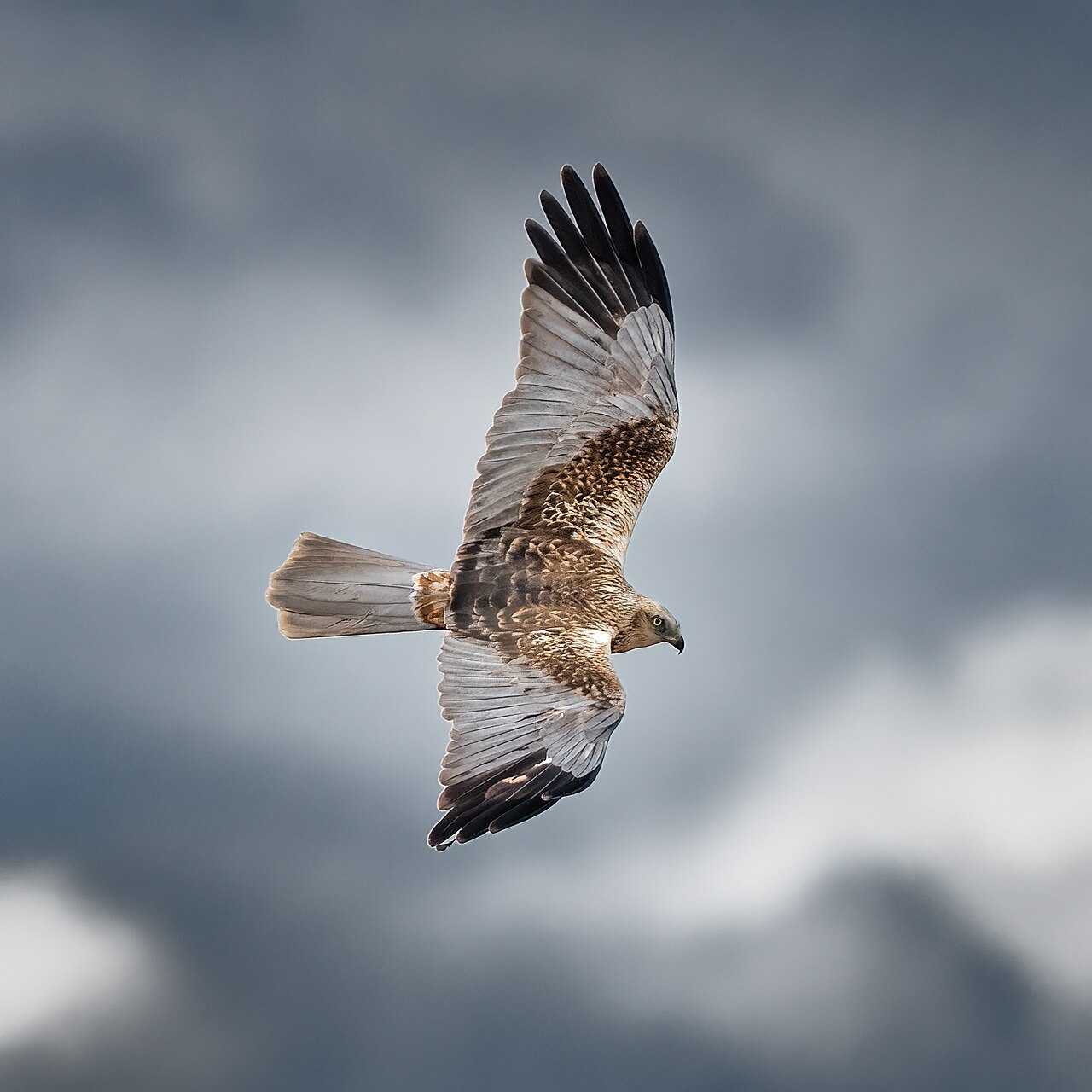
Circus aeruginosus
Summer visitorFair chance
Watch over the reedbeds at East Chevington from the hides or the boardwalk viewing platform for a big brown harrier gliding low with its wings held in a shallow V, from spring to early autumn; the bird club lists them breeding at Newton Pool too.
Where: East Chevington, Low Newton and Newton Pool
Marsh harriers first bred at East Chevington in 2009, the first record of them breeding in Northumberland for 130 years. Source ↗
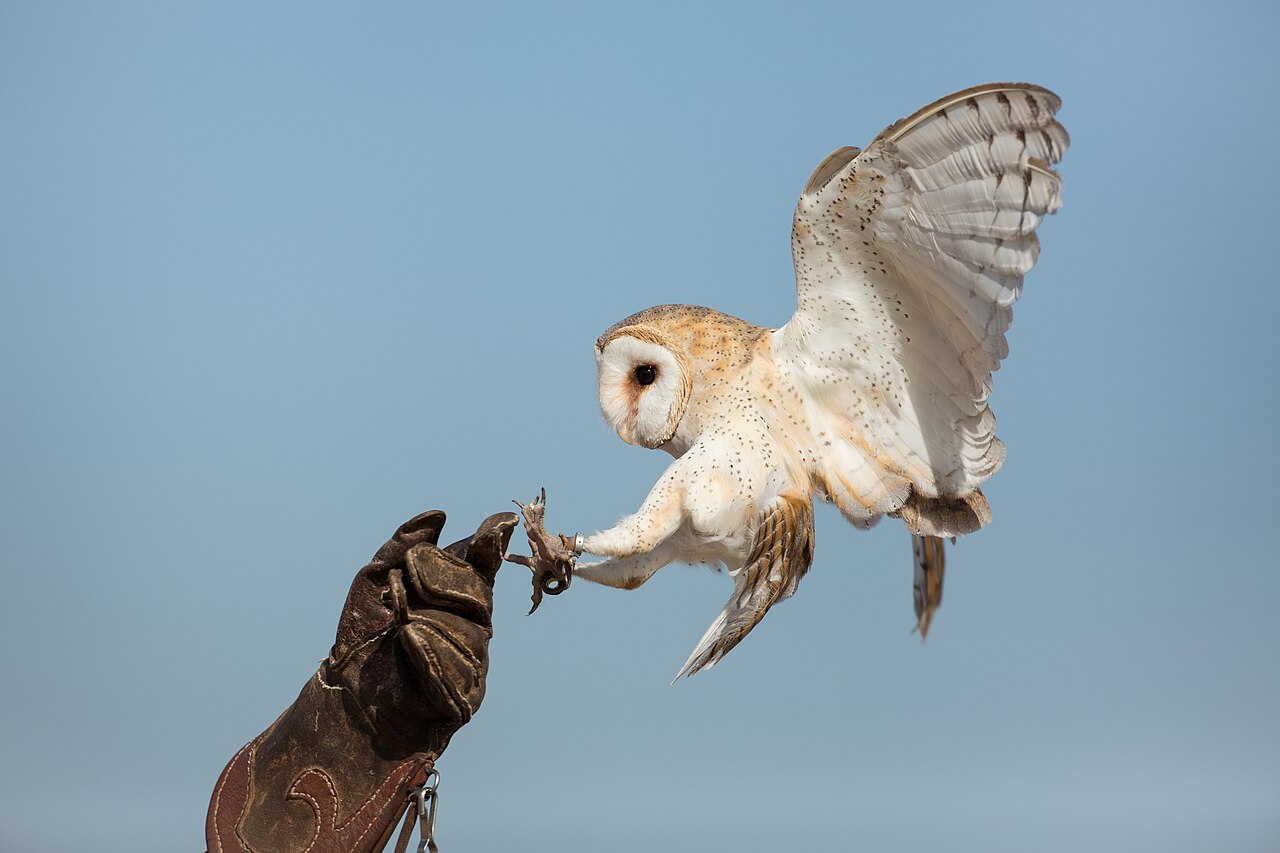
Tyto alba
ResidentLucky
A pale shape quartering rough grassland at dusk, and in winter often in daylight, at East Chevington, Cresswell Pond and round the nest boxes near the Derwent Reservoir hide. Watch from a hide or the car and never approach a nest; barn owls have the strongest legal protection.
Where: East Chevington, Cresswell Pond, College Valley, Derwent Reservoir (Northumberland side)
Barn owls sometimes hunt along country roads, so look for a ghostly white shape in your headlights. Source ↗
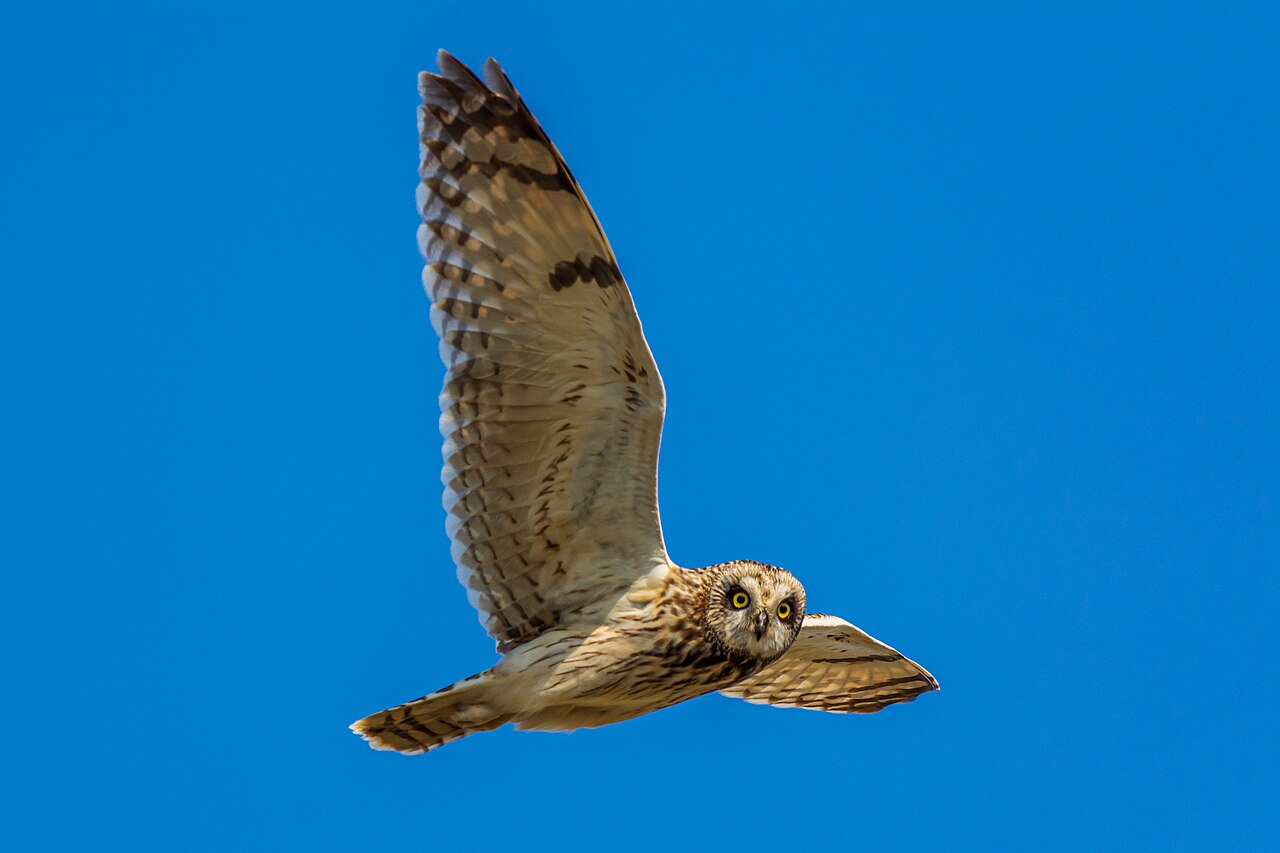
Asio flammeus
ResidentLucky
Hunts by day over dunes, rough grassland and marsh in winter, flying low with long wings and deep, floppy beats: East Chevington, Holy Island, Boulmer and the Long Nanny dunes. Late afternoon on a calm day is best.
Where: East Chevington, Lindisfarne NNR and Holy Island, Boulmer, Beadnell Bay and the Long Nanny tern colony
Active during the day, which makes it easier to spot than most owls; winter numbers are boosted by birds from Scandinavia, Russia and Iceland. Source ↗
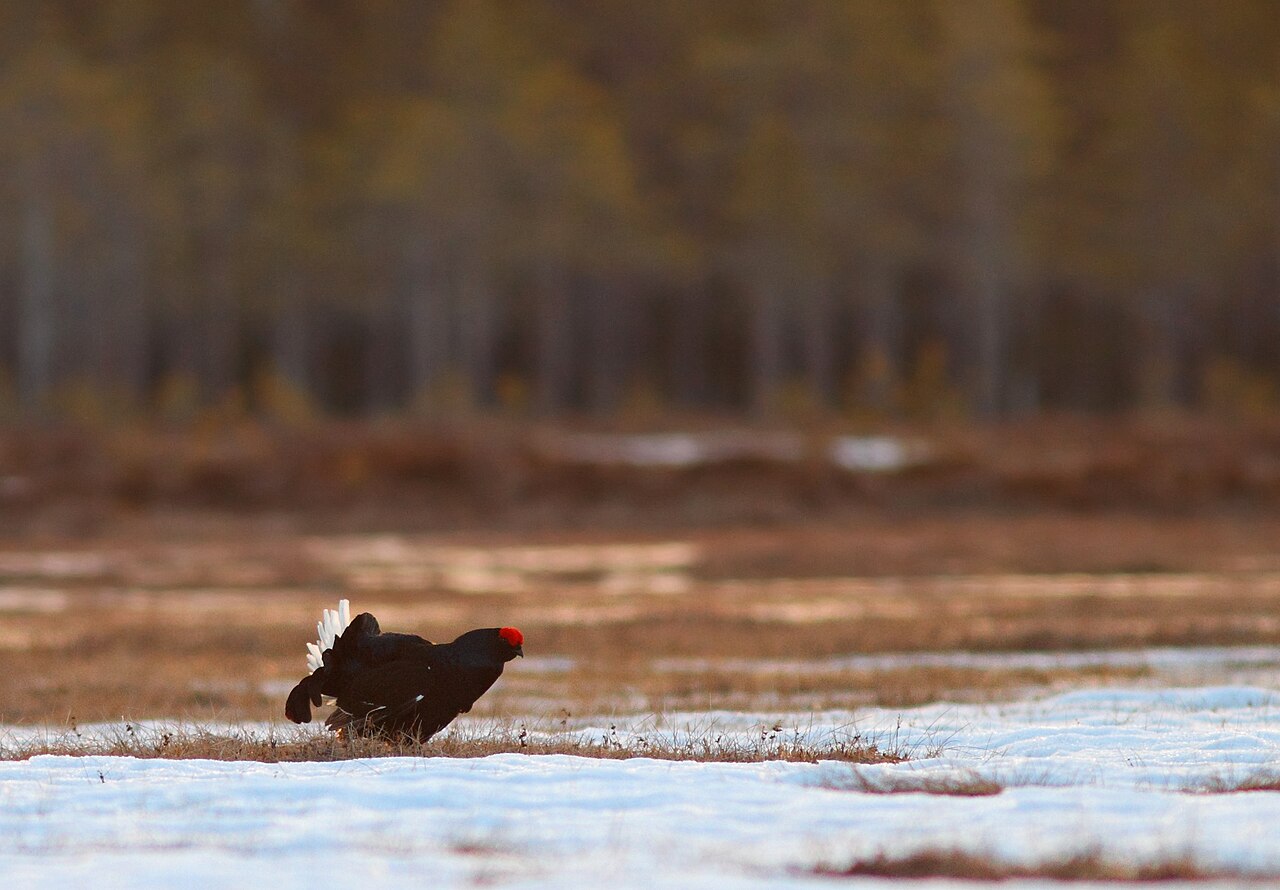
Lyrurus tetrix
ResidentLucky
Only a few remain in the National Park, in Redesdale, along Hadrian's Wall and in the Cheviots. Males display at dawn at traditional lek sites in April and May, but please do not go looking for leks; disturbance matters with so few birds. If you see one, the National Park wants to know.
Northumberland National Park says black grouse were once very numerous in the Park and only a few now remain. Source ↗
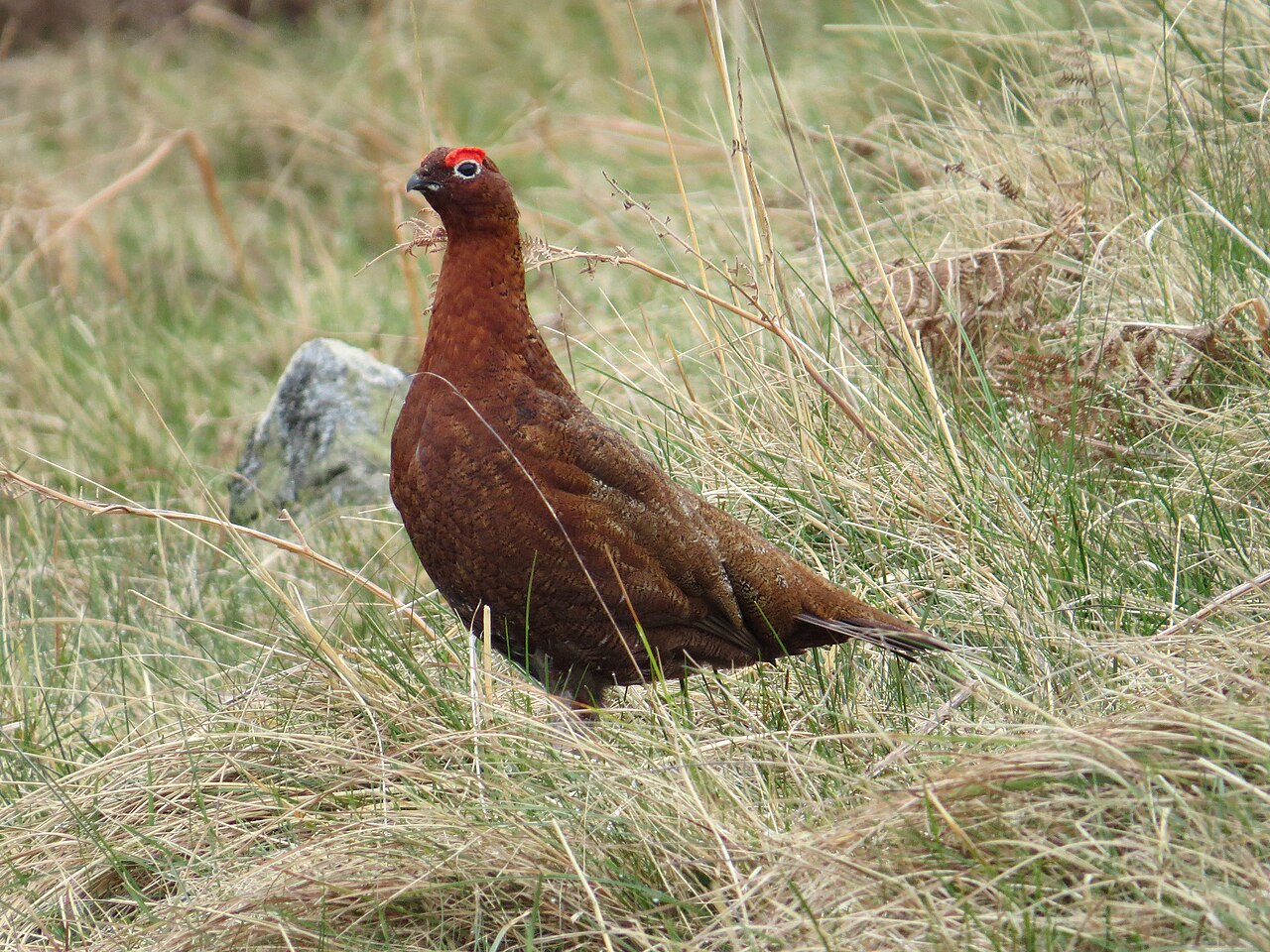
Lagopus lagopus
ResidentEasy
Heather moorland all year: the College Valley estate reports a healthy population, and Northumberland Wildlife Trust lists them at Ford Moss. You usually hear one first, rocketing up from your feet with a go-back, go-back call; males have a bright red wattle over the eye.
Where: College Valley, Ford Moss
Adults eat young heather shoots and the chicks eat insects, according to Northumberland National Park. Source ↗
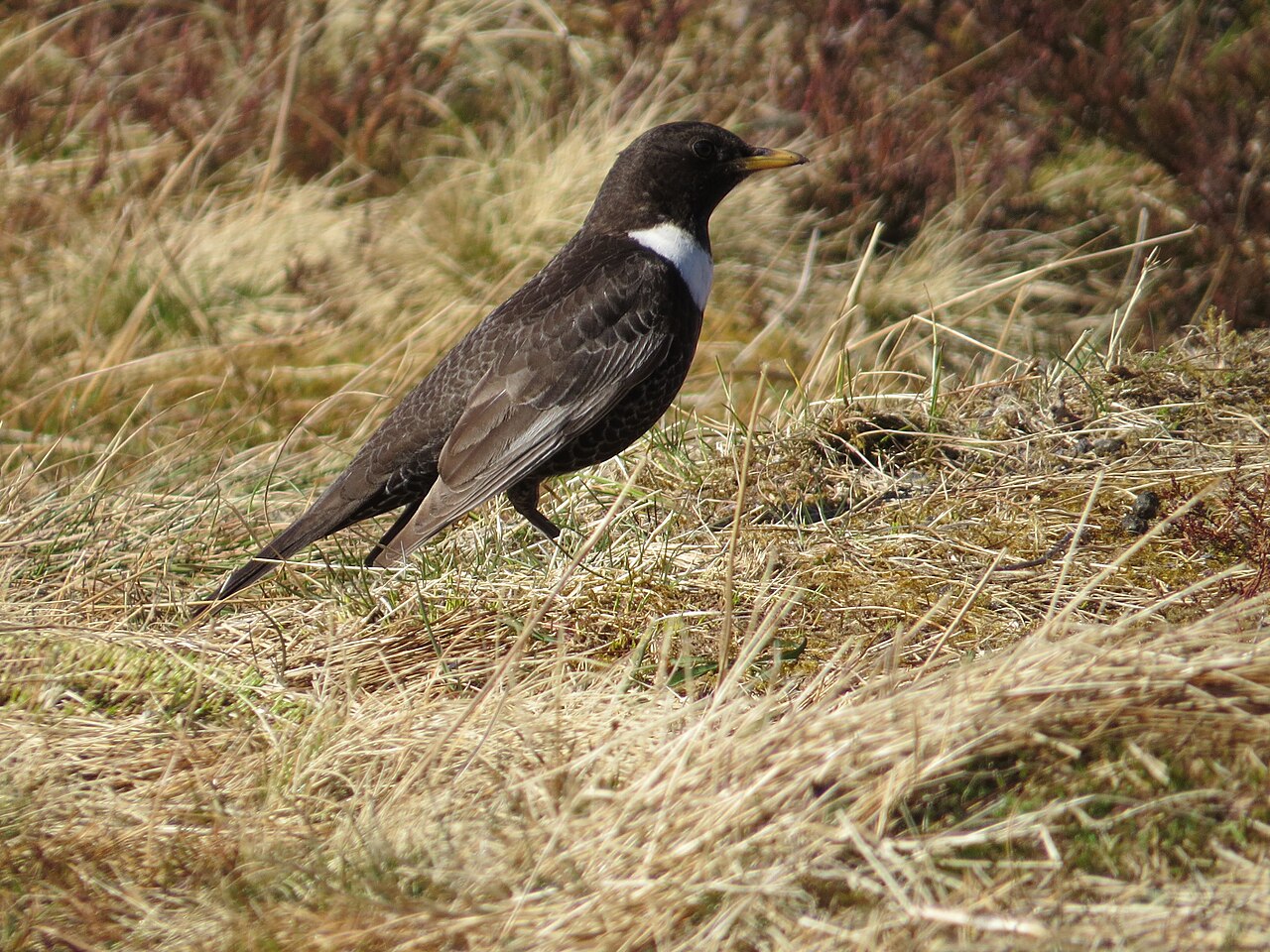
Turdus torquatus
Summer visitorLucky
The mountain blackbird, with a white crescent on the chest, in the Harthope Valley under the Cheviot in spring and summer. Listen for its loud, piping song from the rocky slopes, and don't linger near a singing bird in the nesting season.
Where: Harthope Valley
Nicknamed the mountain blackbird, it arrives from Africa in late March and flies back in September; it is on the UK Red List. Source ↗
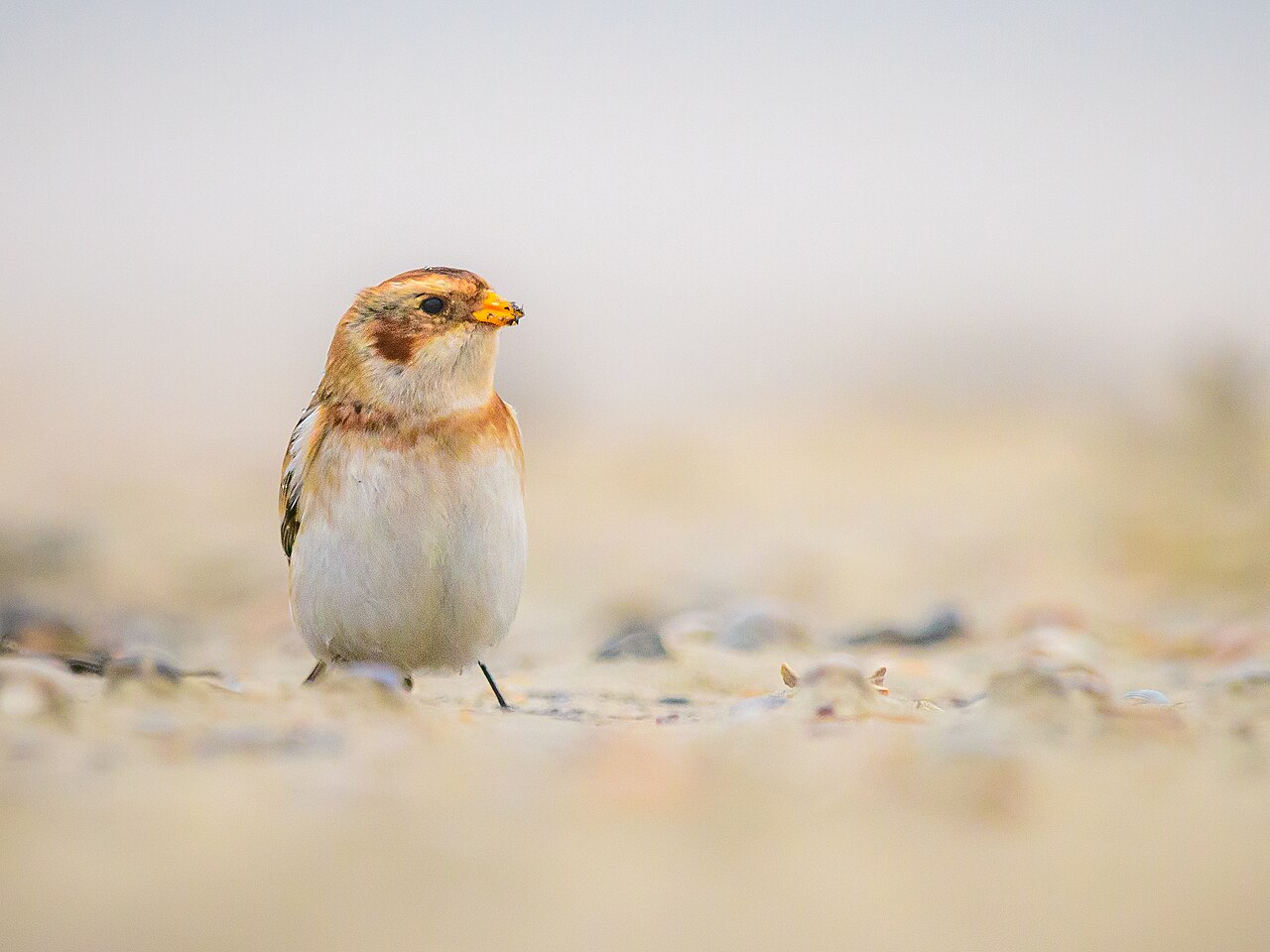
Plectrophenax nivalis
Winter visitorLucky
Small winter flocks that flicker white in flight, feeding along strandlines and dune edges from November to February: the dunes and burn mouth at the Long Nanny, the Aln estuary at Alnmouth and the beach east of the Coquet estuary at Warkworth. They move around, so check the sightings pages first.
Where: Beadnell Bay and the Long Nanny tern colony, The Aln estuary at Alnmouth, The Coquet estuary at Warkworth
Listed under Schedule 1 of the Wildlife and Countryside Act, so it is illegal to disturb them; a scarce breeder in Scotland, more widespread in winter when continental birds arrive. Source ↗
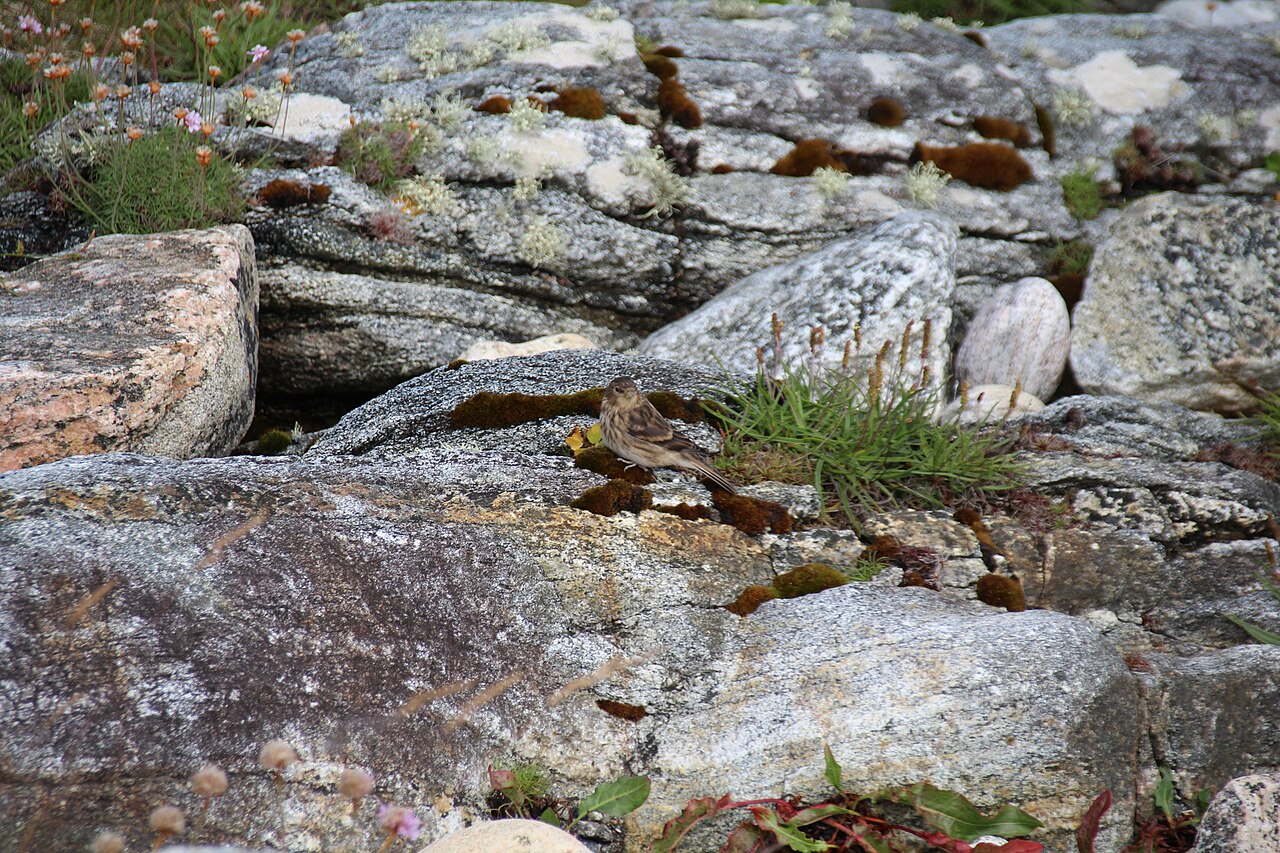
Linaria flavirostris
Winter visitorLucky
A small brown finch with a yellow bill in winter, feeding on seeds on saltmarsh and dune edges. The Dipper's Nest lists winter twite at Boulmer and the Aln estuary, and the Long Nanny dunes get them too, but flocks are small and irregular, so treat one as a bonus.
Where: Boulmer, The Aln estuary at Alnmouth, Beadnell Bay and the Long Nanny tern colony
Red listed and closely related to the linnet; like the linnet it feeds on seeds all year round. Source ↗
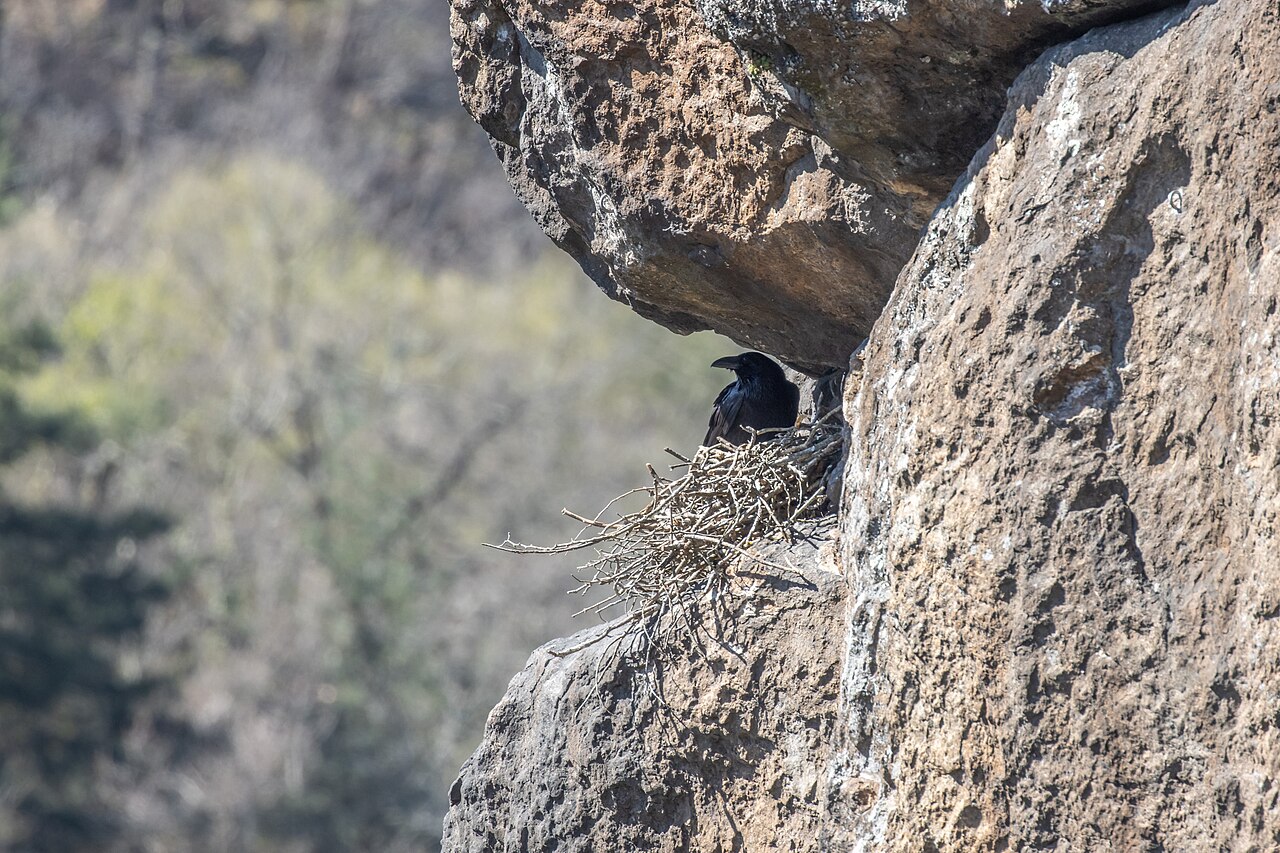
Corvus corax
ResidentFair chance
Listen for a deep, echoing croak over the Cheviot crags in the College Valley, or over the ridges round Grindon Lough, and watch for the tumbling display flights in late winter.
Where: College Valley, Grindon Lough
In one recent year the College Valley had two pairs of ravens nesting, fledging four young between them. Source ↗
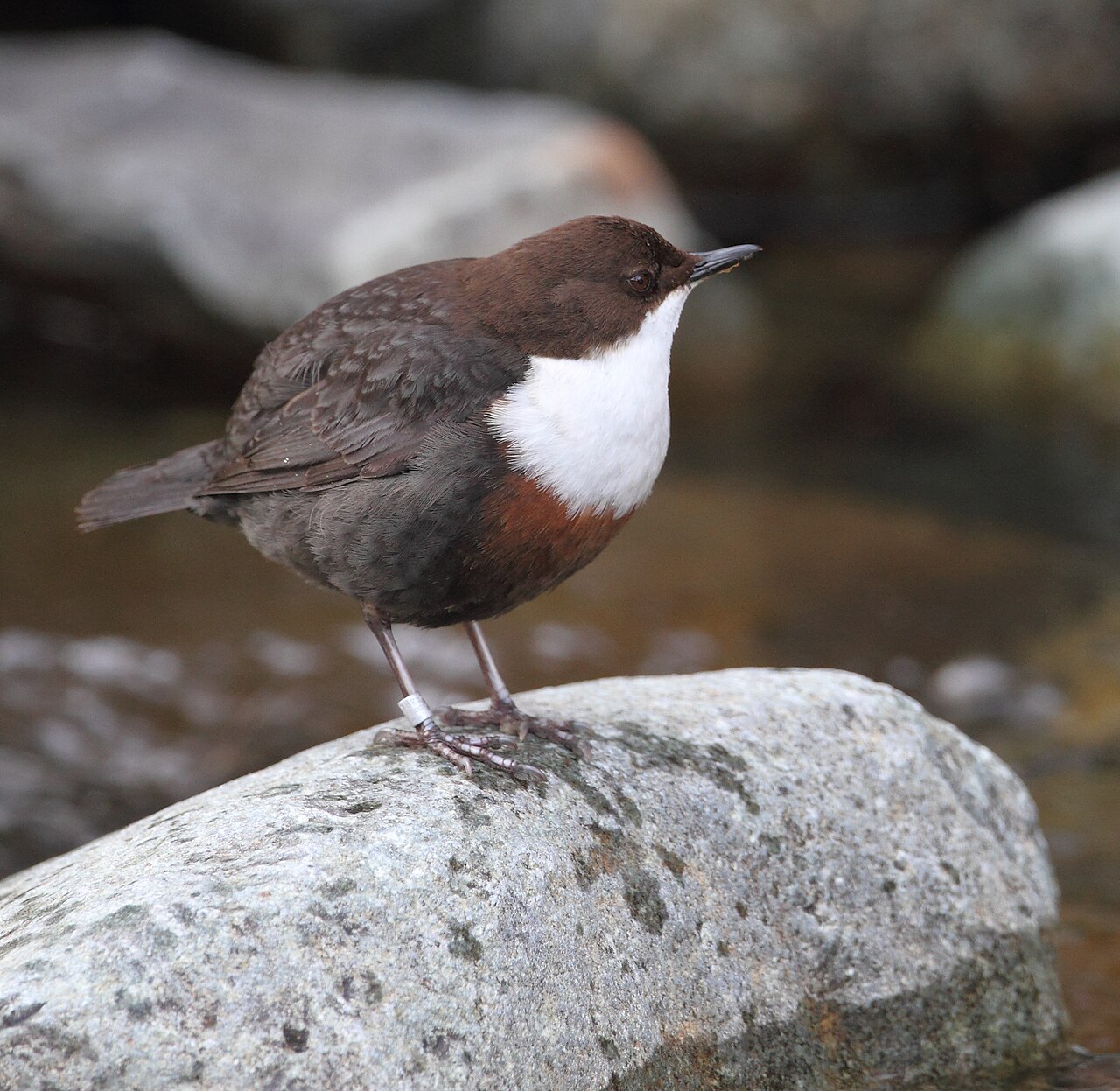
Cinclus cinclus
ResidentEasy
A dumpy brown bird with a white bib, bobbing on rocks in fast water and walking straight in under the surface. Walk slowly along the burn and check every mid-stream boulder.
Where: Harthope Valley, Hareshaw Linn, Allen Banks and Staward Gorge, Plessey Woods Country Park
The UK's only aquatic songbird; the name comes from its bobbing action on land, not from diving. Source ↗
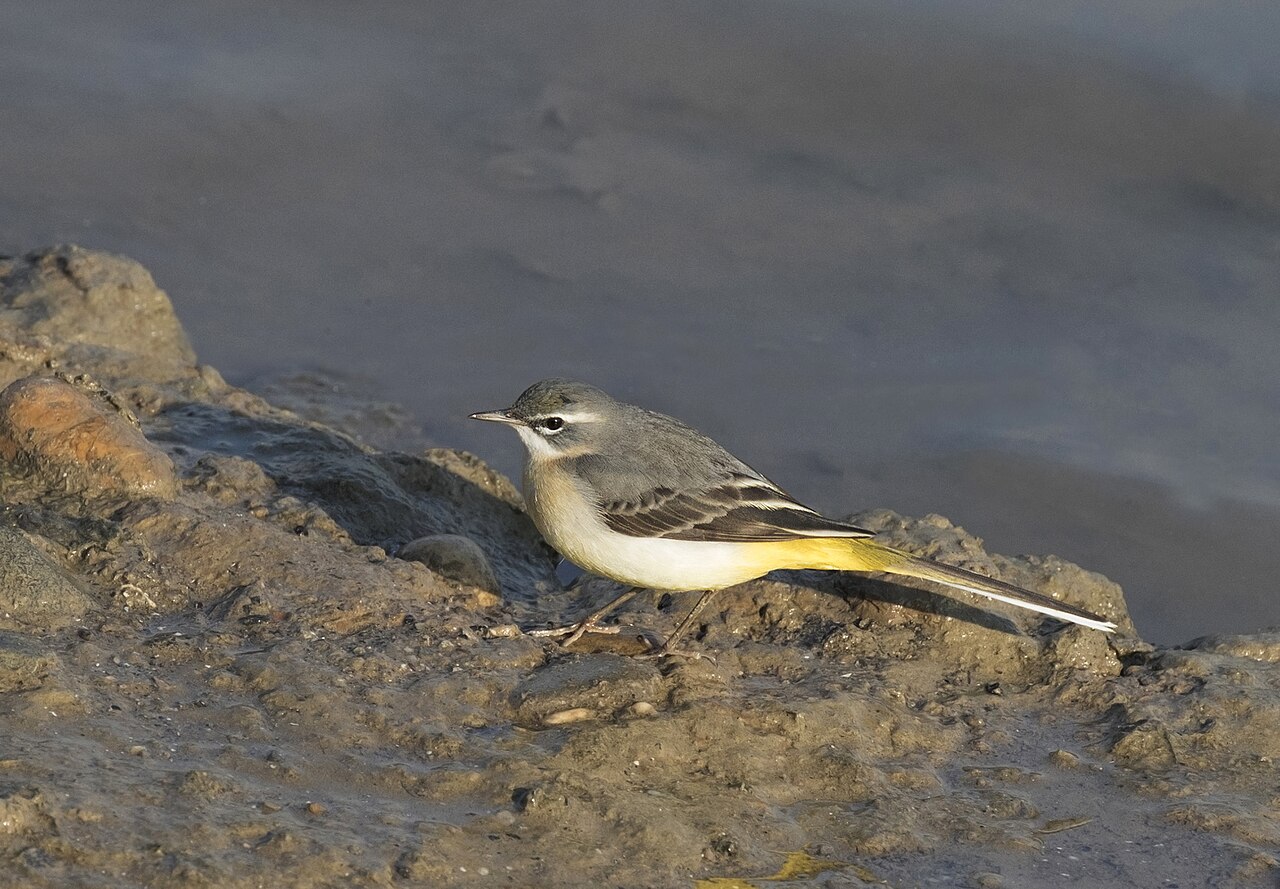
Motacilla cinerea
ResidentEasy
Yellow underneath (it is the grey wagtail, the naming is a mystery) with a very long tail, flicking along the edges of fast rivers and burns.
Where: Allen Banks and Staward Gorge
Its tail is noticeably longer than those of the pied and yellow wagtails, and the species has spread from the northern and western uplands into the English lowlands over the past 150 years. Source ↗
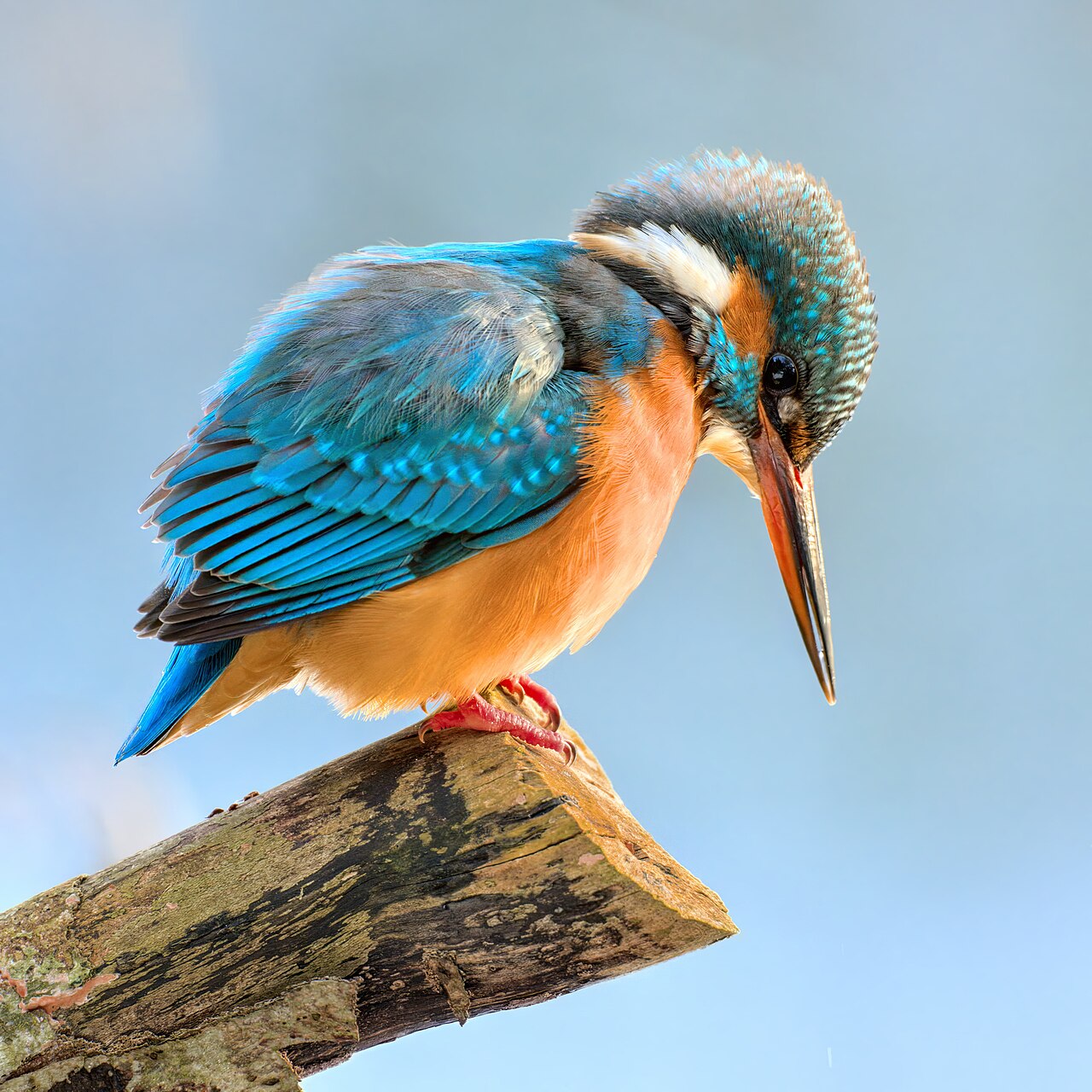
Alcedo atthis
ResidentLucky
Usually a blue streak low over the water and a high whistle. Find a quiet spot by the River Blyth in Plessey Woods, or check the pools on the Aln estuary at Alnmouth, and wait.
Where: Plessey Woods Country Park, The Aln estuary at Alnmouth
A kingfisher's feathers contain no blue pigment; the colour comes from the way tiny structures in the feathers scatter light. Source ↗
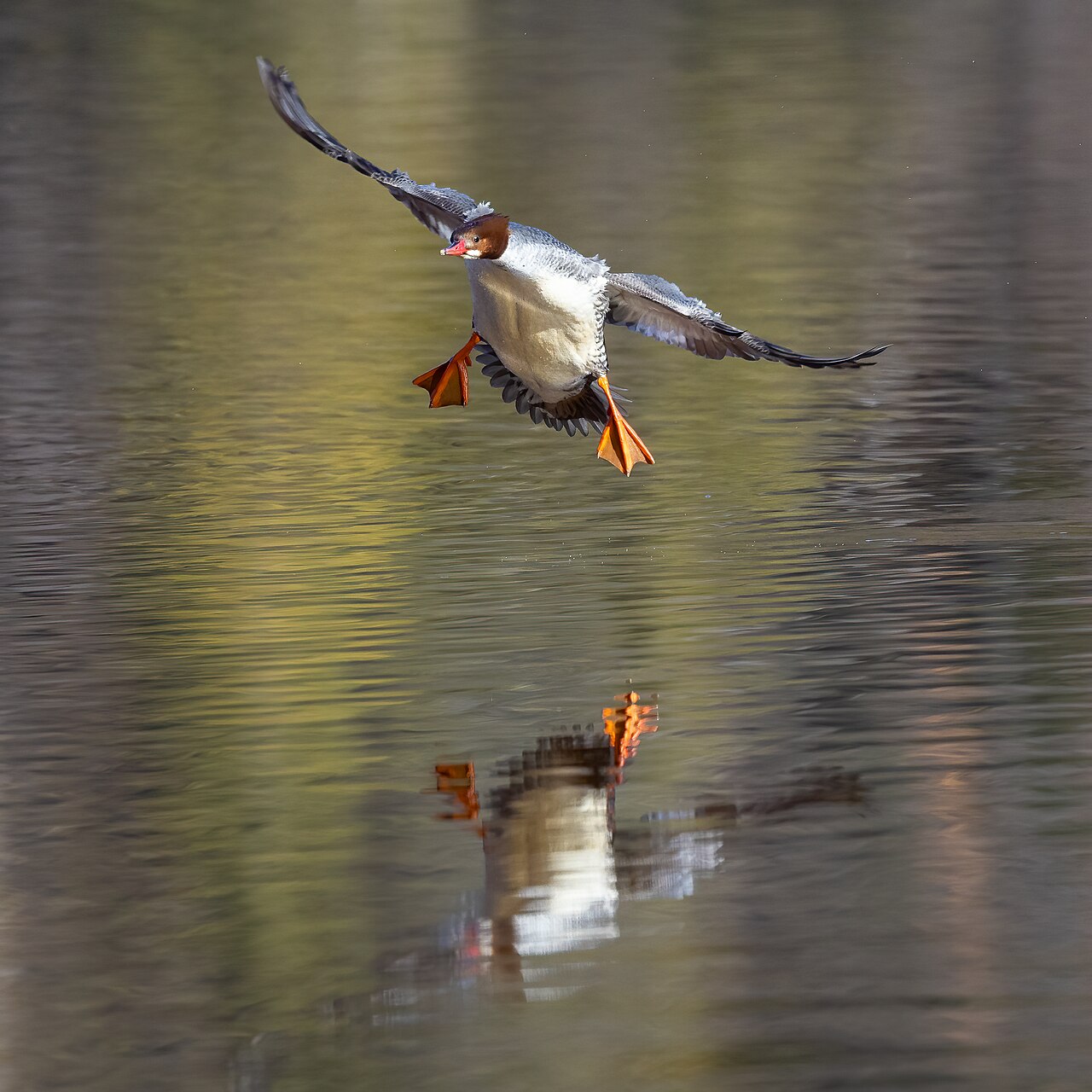
Mergus merganser
ResidentFair chance
A long, low diving duck on the bigger rivers; the male is white with a dark green head, the female grey with a shaggy ginger crest. In winter try the Tweed estuary at Berwick or the River Blyth at Plessey Woods.
Where: The Tweed estuary at Berwick, Plessey Woods Country Park
A largely freshwater bird, the goosander first bred in the UK in 1871. Source ↗
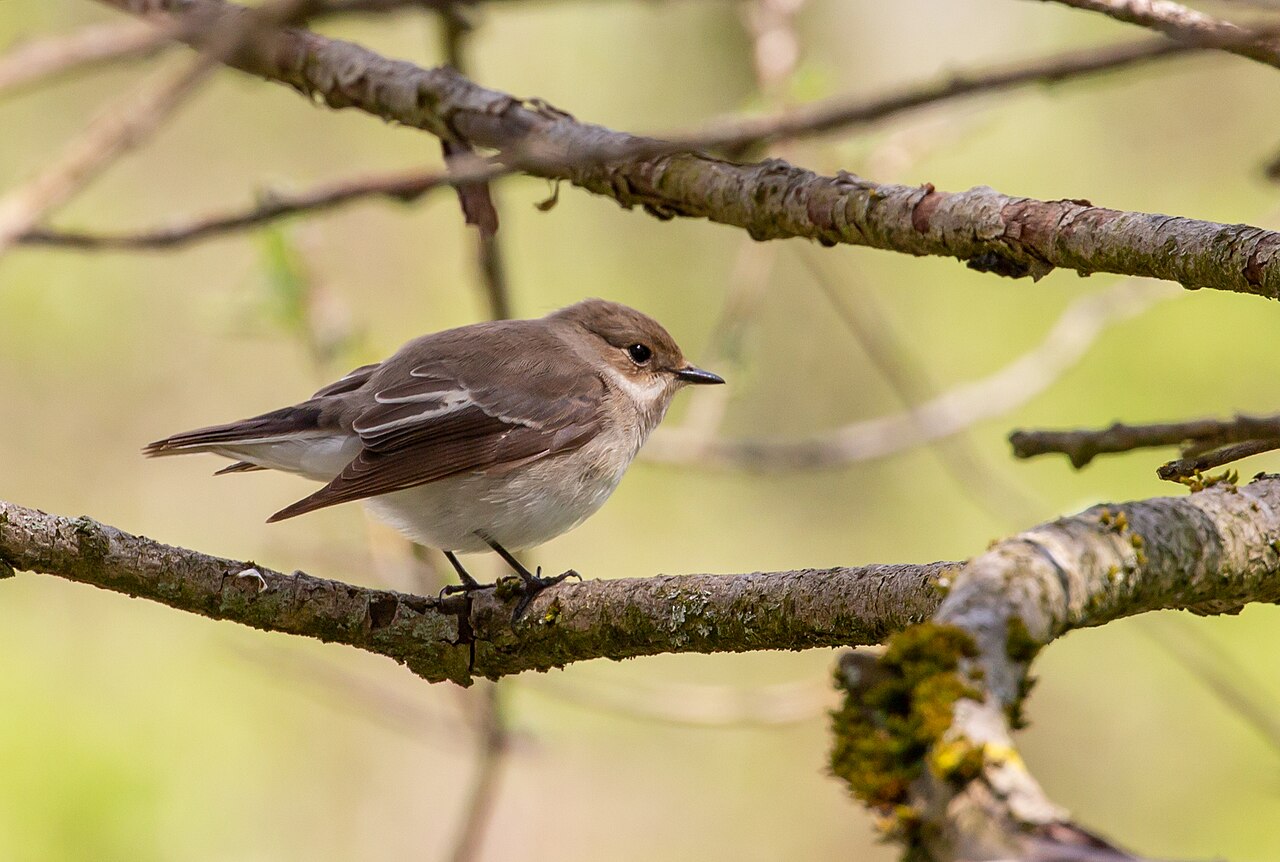
Ficedula hypoleuca
Summer visitorFair chance
Black and white males singing from the canopy at Allen Banks and in the Harthope Valley in May. Go early on a calm morning while the leaves are still thin.
Where: Allen Banks and Staward Gorge, Harthope Valley
Males are black above and white below with a bold white wing patch; the species spends the winter in West Africa. Source ↗
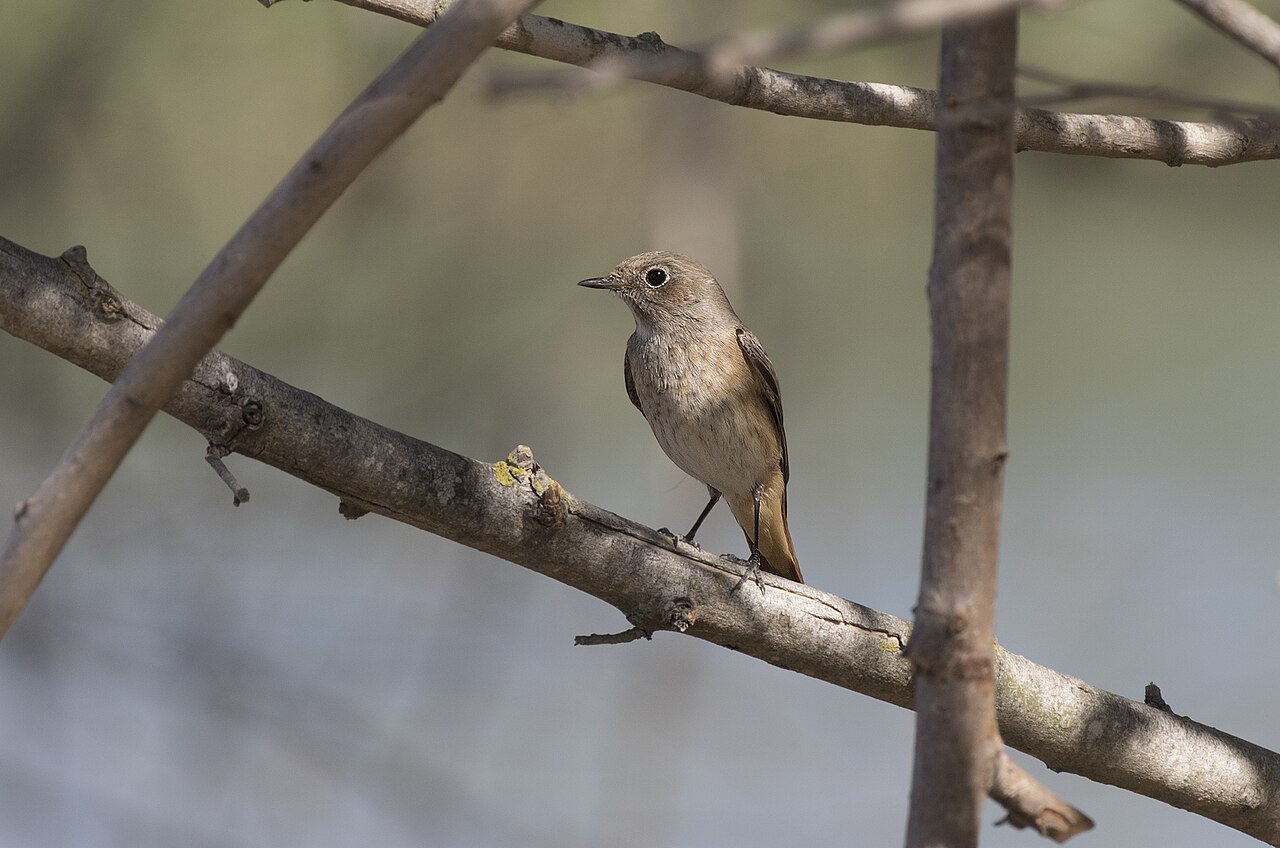
Phoenicurus phoenicurus
Summer visitorFair chance
Watch for a flash of orange-red tail that shivers constantly, in old woodland from late April. Males have a black face and orange chest.
Where: Hareshaw Linn, Allen Banks and Staward Gorge, Harthope Valley
Redstarts bob in a very robin-like manner but spend little time at ground level. Source ↗
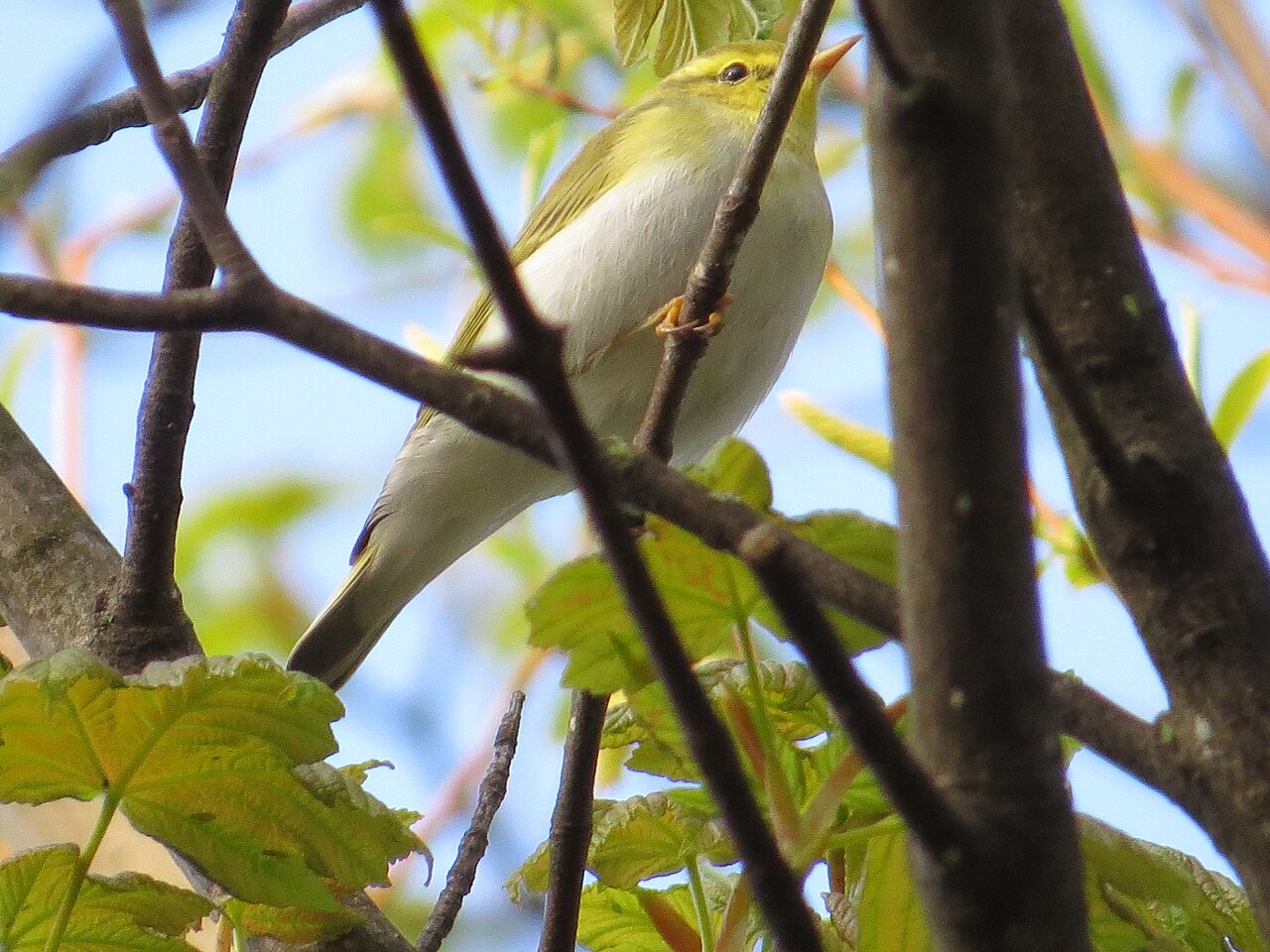
Phylloscopus sibilatrix
Summer visitorLucky
A yellow and green warbler whose song sounds like a coin spinning on a plate. The Dipper's Nest names Allen Banks, where it sings in April and May alongside pied flycatchers and redstarts, but it has declined so steeply that you should not count on one.
Where: Allen Banks and Staward Gorge
Red listed and an RSPB priority species after steep declines since the 1990s; it can be seen in the UK between April and September. Source ↗
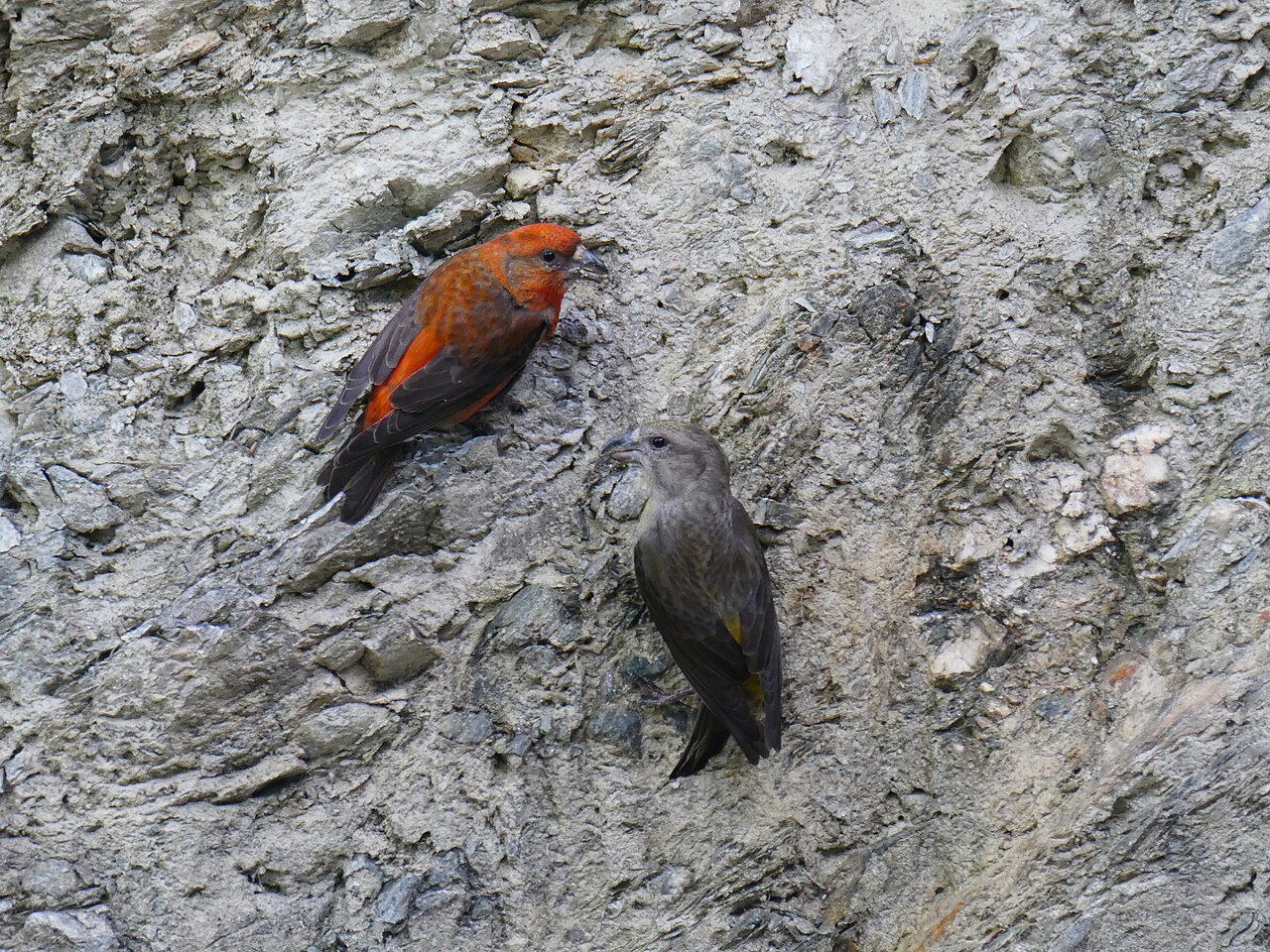
Loxia curvirostra
ResidentFair chance
Listen for hard chip-chip calls as a flock passes over the spruce tops, then find them hanging off cones. Visit Northumberland names Kielder as the place.
Where: Kielder Water and Forest Park (and the Kielder ospreys), Thrunton Woods
The crossed bill is used to extract seeds from conifer cones, and the bird flutters from cone to cone as it feeds. Source ↗
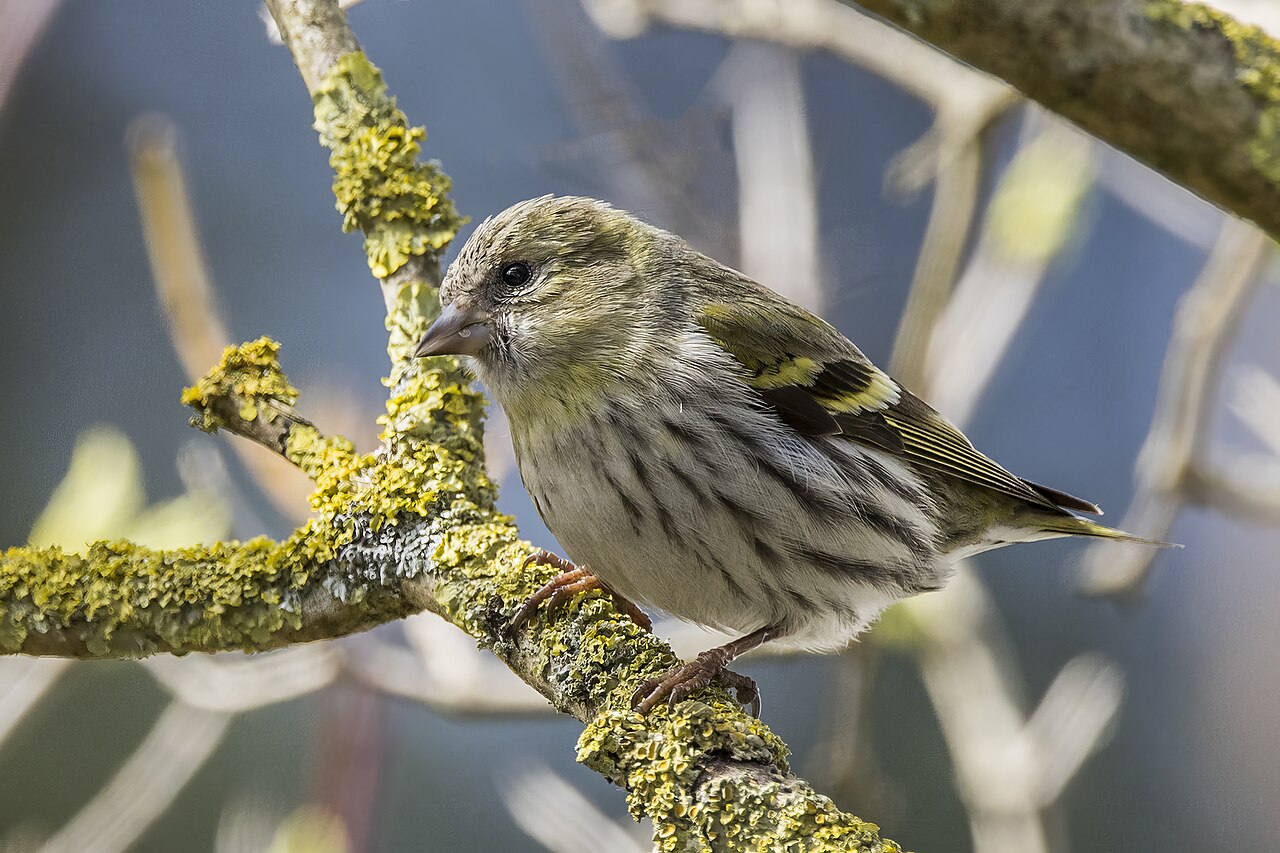
Spinus spinus
ResidentEasy
Small streaky yellow-green finches in the conifers and at woodland feeders, often in chattering flocks in winter.
Where: Kielder Water and Forest Park (and the Kielder ospreys)
Many breeding siskins are residents but in winter birds also arrive from Europe. Source ↗
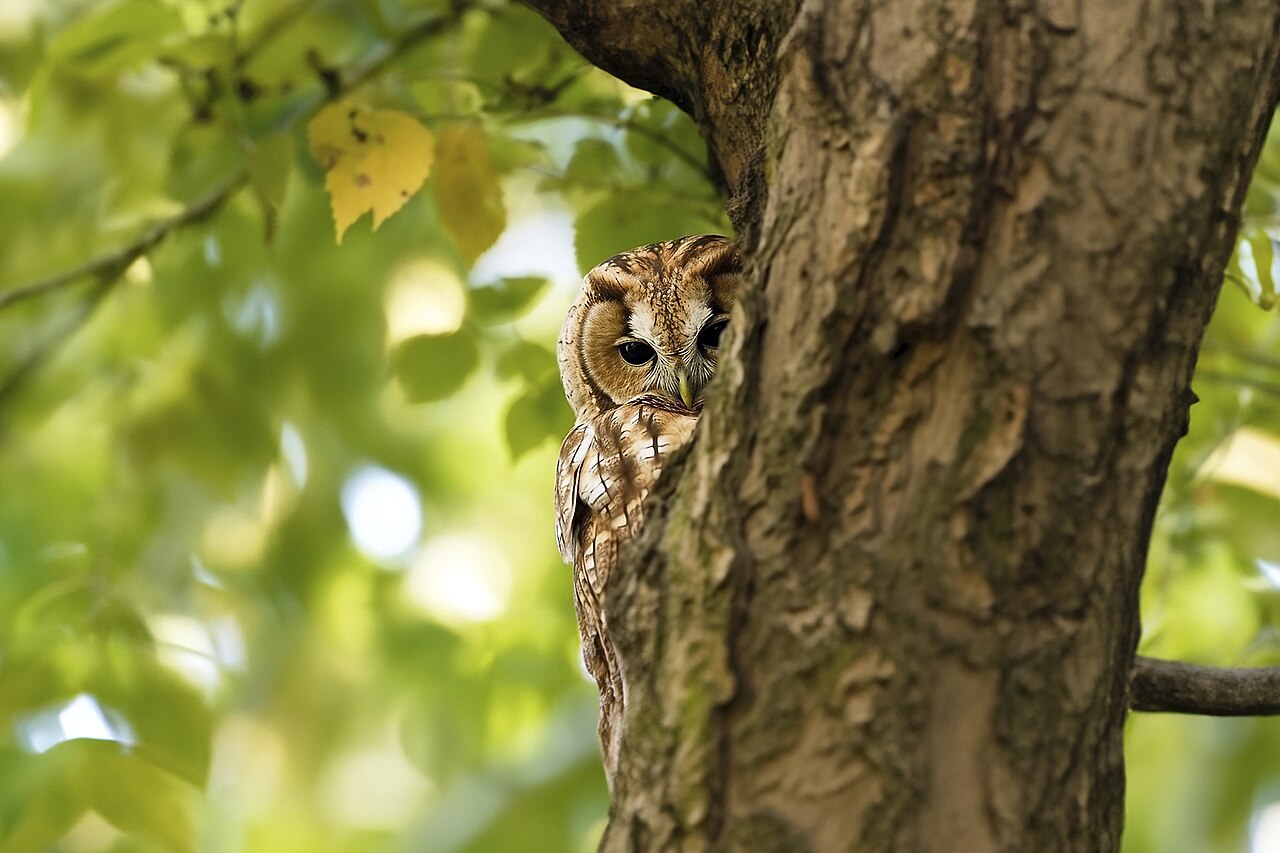
Strix aluco
ResidentFair chance
Heard far more than seen: the female's ke-wick and the male's hoo-hoo at dusk from any mature wood, loudest in autumn and late winter when they set up territories.
The most common owl in the UK, yet it declined by more than 40 per cent between 1995 and 2023. Source ↗
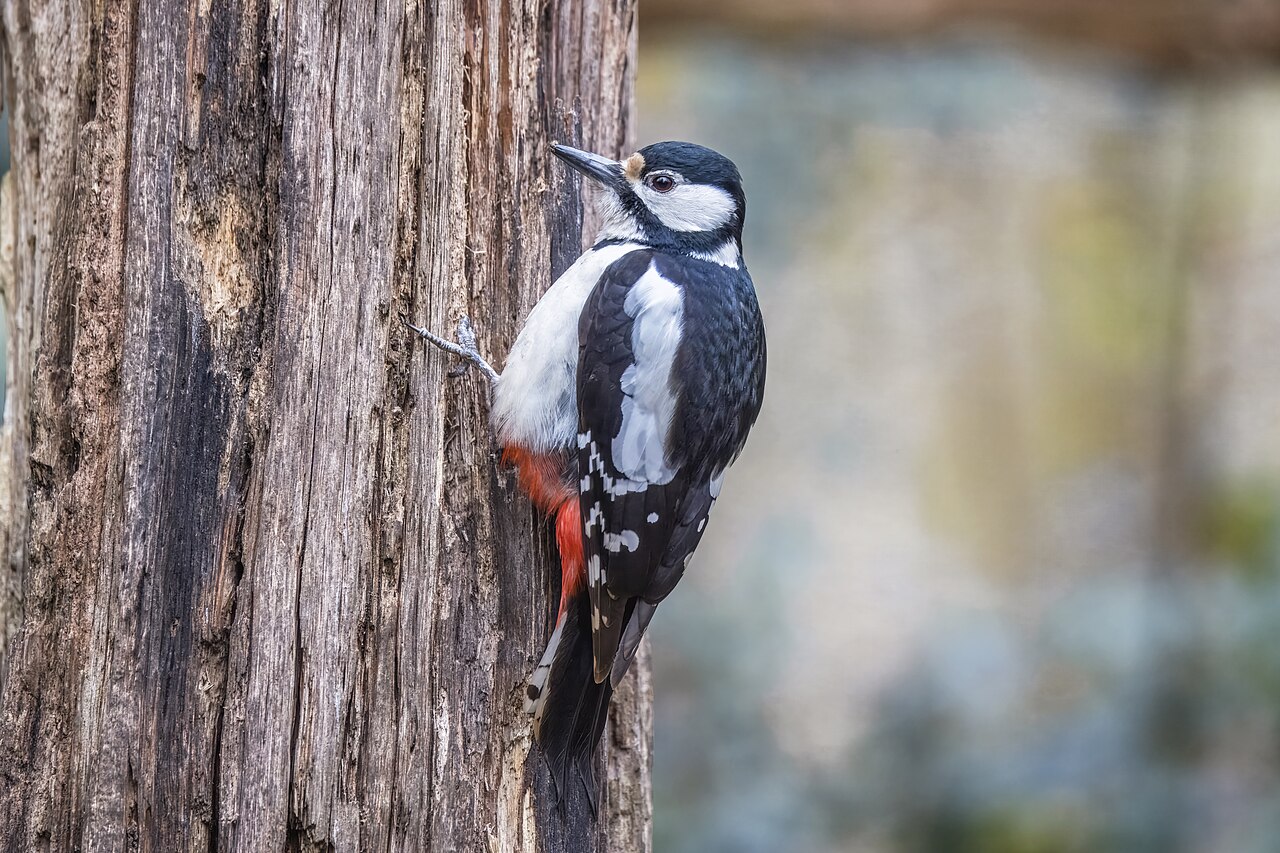
Dendrocopos major
ResidentEasy
Listen for drumming in late winter and spring and a sharp tchik call all year. The feeding station and hide by the car park at Bolam Lake is the easiest view, often with red squirrels and nuthatches too.
Where: Bolam Lake, Plessey Woods Country Park, Hareshaw Linn
Over 100,000 pairs in the UK, with the range expanding northwards in Scotland and now into Northern Ireland. Source ↗
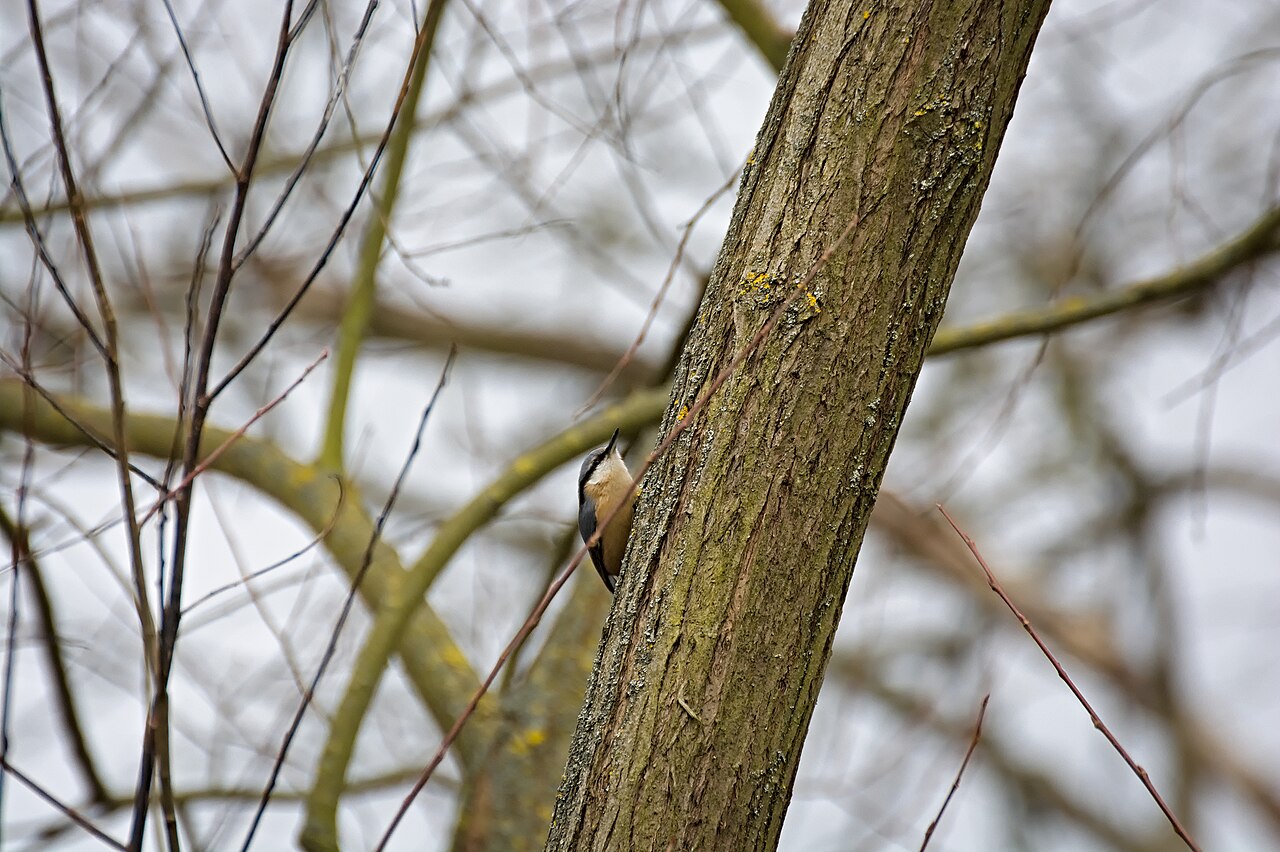
Sitta europaea
ResidentEasy
Blue-grey above, peachy below, with a black bandit stripe, and loud. The feeding station by the car park at Bolam Lake brings them in close, and they are in the woods along the Blyth at Plessey all year.
Where: Bolam Lake, Plessey Woods Country Park
The only bird in the UK that can climb down trunks head first; numbers rose 291 per cent between 1967 and 2023 and it now breeds in southern Scotland. Source ↗
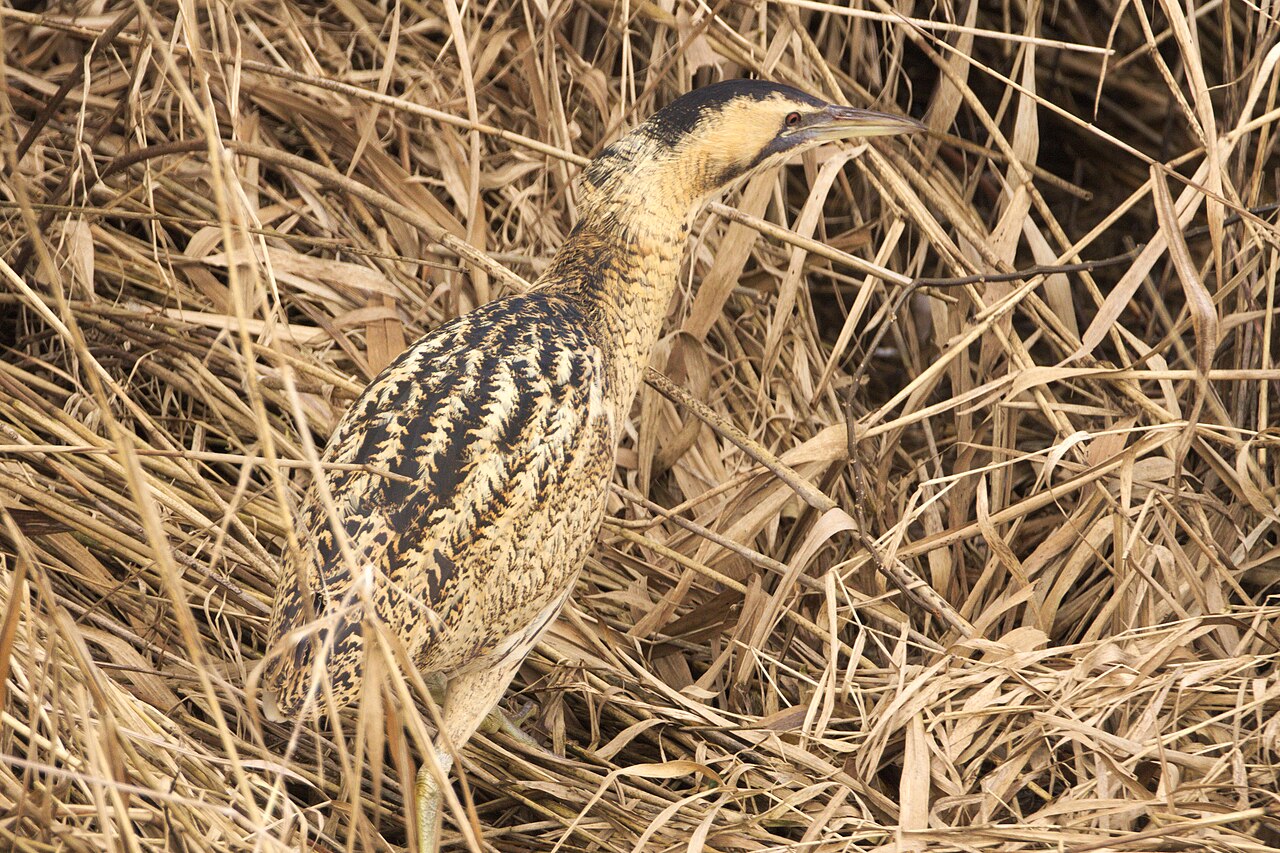
Botaurus stellaris
Winter visitorLucky
Northumberland Wildlife Trust says bitterns overwinter at East Chevington. Sit in a hide overlooking the reed edge on a cold, still day and watch for a brown bird creeping out or flying low over the reeds. It can take hours.
Where: East Chevington
A secretive, Amber listed reedbed bird protected under Schedule 1; the male's far-carrying boom is heard in spring. Source ↗
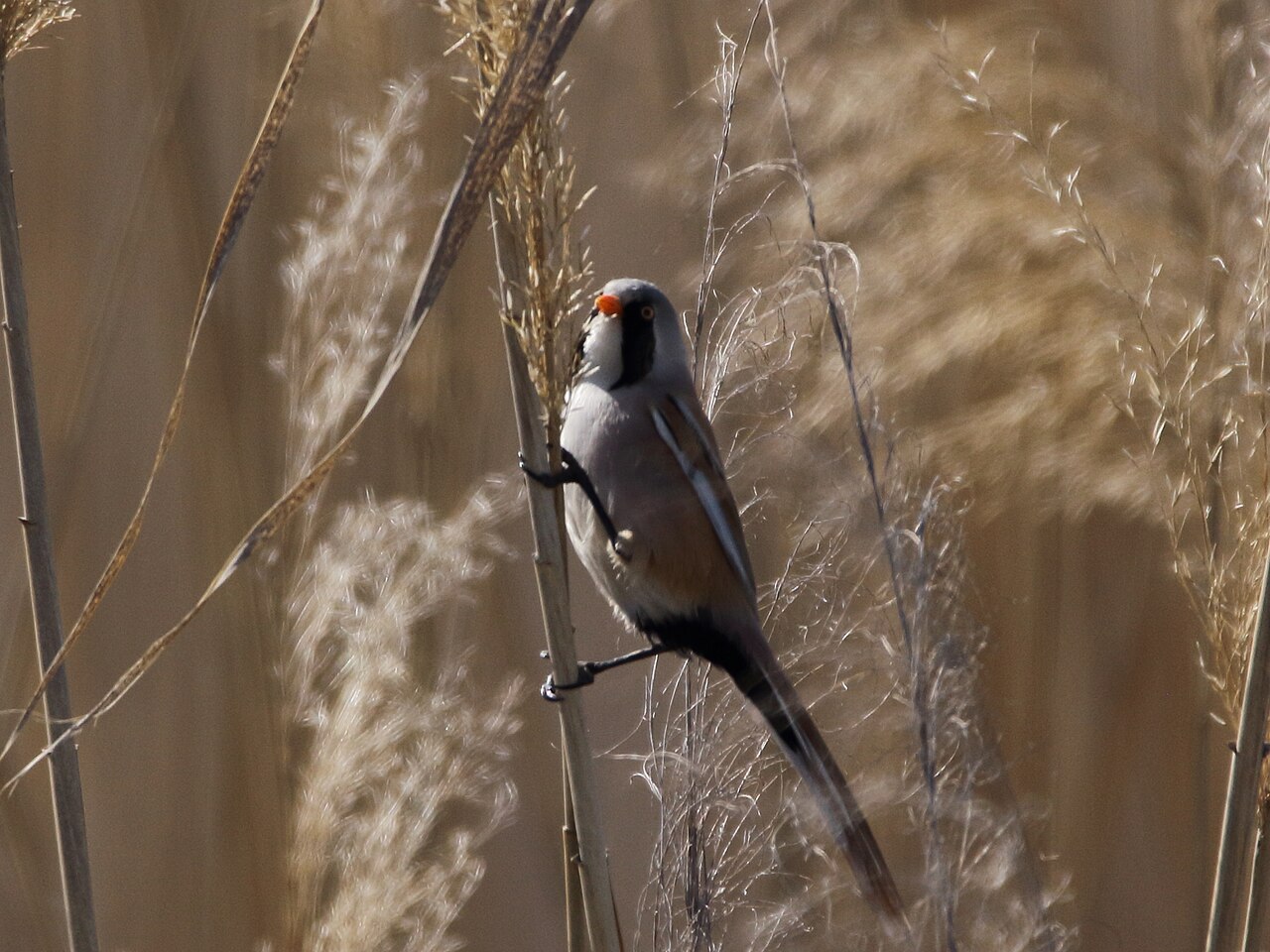
Panurus biarmicus
ResidentLucky
Listen for a pinging call in the reedbeds at East Chevington and watch for small tawny long-tailed birds whirring across the reed tops, easiest on calm autumn days.
Where: East Chevington
Neither a tit nor bearded: it sits in a family of its own and the males wear black moustaches; birds are easiest to see in autumn during excitable group flights. Source ↗
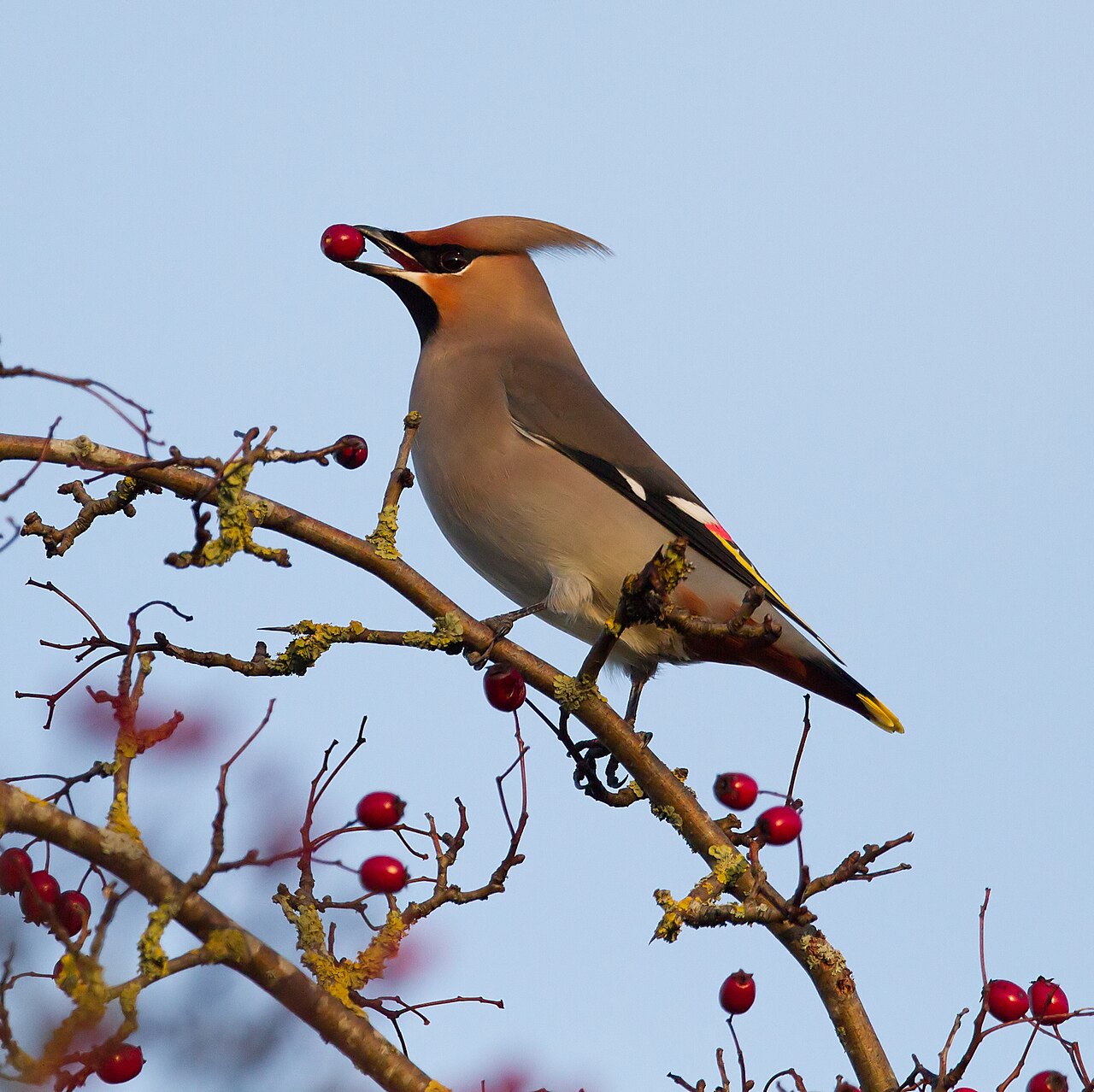
Bombycilla garrulus
Winter visitorLucky
Some winters bring flocks from Scandinavia that strip rowan and hawthorn berries in supermarket car parks and on housing estates; other winters bring almost none. When they come, they are tame and noisy, and the sightings pages light up.
In some years only a few hundred reach the UK, in irruption years thousands; the RSPB says the best chance is in northern and eastern England where there are rowan and hawthorn trees. Source ↗
Odds are for someone who goes to the right place in the right month and gives it an hour. Species facts are linked to the page they came from.
Back to the overview
Where to go
Boats and islands
Free, two short emails a week, and you choose which. Read the latest one first.
No spam, no ads. Unsubscribe from any email with one click. Privacy